English
 Español
Every packaging project starts with the same simple question: what should this product sit in? The answer becomes less obvious when you compare two 50 ml bottles placed side by side. One is an airless pump that releases a cream without letting oxygen touch the formula still inside. The other is a dropper bottle that delivers a serum in exact drops, but pulls air back in with every use. Both are legitimate skincare bottles, and both could work for the same product at a stretch. Yet the brand that chooses the wrong one pays for the mistake in oxidation complaints, sticky residues, or simply a user experience that feels awkward.
The conclusion of this guide is simple: there is no single best skincare bottle, but there is always a best bottle for a given formula. The industry classifies bottles mostly by their dispensing system, then by material, capacity, and surface finish. Once you understand what each dispensing system does from a preservation, dosage, and usability standpoint, you can quickly reduce dozens of packaging options to one or two realistic candidates.
A practical way to look at skincare bottle categories
When packaging engineers talk about a bottle type, they usually mean the combination of a bottle body and a closure that controls how the product comes out. The same PET bottle body can become a spray bottle, a lotion pump bottle, or a flip-top bottle depending on which neck finish and cap are fitted. That is why the dispensing mechanism is the most useful starting point for classification.
The main skincare bottle families used across the industry include:
- Lotion pump bottles for milky, low-viscosity formulas and daily-use body care;
- Airless pump bottles for serums, creams, sunscreens, and active-rich formulas;
- Spray bottles for toners, mists, setting sprays, and hair styling products;
- Dropper bottles for oils, essences, and precise-dose serums;
- Foam pump bottles for cleansers, hand soaps, and mousse textures;
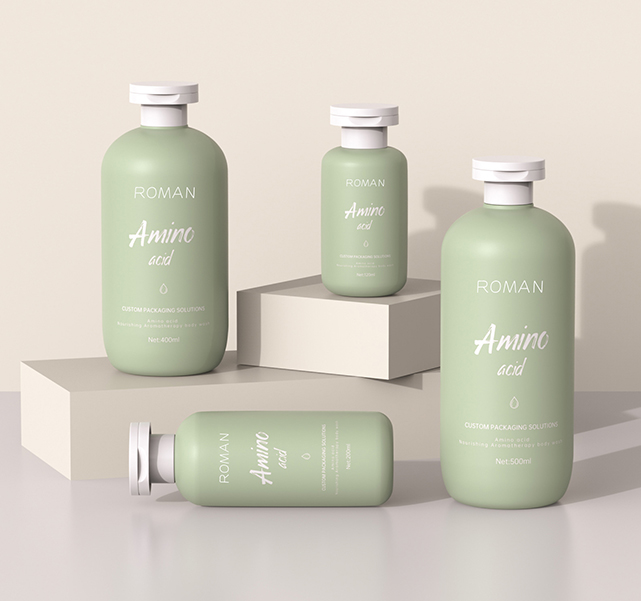
- Flip-top and disc-top bottles for shampoos, body washes, and squeeze-dispensed liquids;
- Syringe-shaped and deodorant stick containers for targeted, hygienic applications;
- Jars, which are not strictly bottles but compete with them for cream, balm, and mask formulas.
Capacity is the second distinguishing factor. Typical skincare bottle sizes run from 5 ml sample vials to 1000 ml refill sizes, with 30 ml, 50 ml, 100 ml, 150 ml, 200 ml, 300 ml, and 500 ml covering most commercial launches. Material choice comes third. PET, PETG, PP, PE, HDPE, PCR recycled resins, and glass each change the weight, barrier properties, clarity, and cost of the final package.
Lotion pump bottles: the workhorse of creams and lotions
Lotion pump bottles are the most common plastic container in personal care, and for good reason. The format consists of a rigid or slightly squeezable bottle body combined with a screw-on or snap-on pump head that draws liquid up through a dip tube. When you press the actuator, a piston pushes the liquid out; when you release it, the spring returns the actuator and prepares the next dose.
This bottle type suits a broad range of products including body lotion, moisturizing milk, micellar water, facial cleanser, sunscreen lotion, shampoo, shower gel, and hand wash. Common capacities range from 30 ml for travel sets to 500 ml and 1000 ml for family-size or salon-use refills. The bottle body is usually PET when clarity matters or PE/HDPE when the formula needs a squeezable body. Some producers also offer PCR PET versions for brands with recycling goals.
The strengths of lotion pump bottles are their cost efficiency, wide neck-size compatibility, and ease of filling. Most standard pump closures deliver between 1 ml and 3 ml per stroke, which is a comfortable dose for a cream or lotion spread across the face or body. Their main limitation is air exchange. When the pump returns to its resting position, air enters the bottle through the dip tube or venting ring. For stable emulsions and basic moisturizers this is perfectly acceptable; for oxygen-sensitive actives it is not.
Watch-outs when sourcing lotion pumps also matter. Check the pump's dosage volume against your recommended application amount, verify that the dip tube reaches the deepest point of the bottle, and confirm that the gasket material inside the pump is compatible with your formula's oil phase. A pump designed for a 30 mm neck will not fit a 24 mm neck, so neck finish standardization early in development helps reduce tooling and assembly problems later.
Airless pump bottles: when protection is the priority
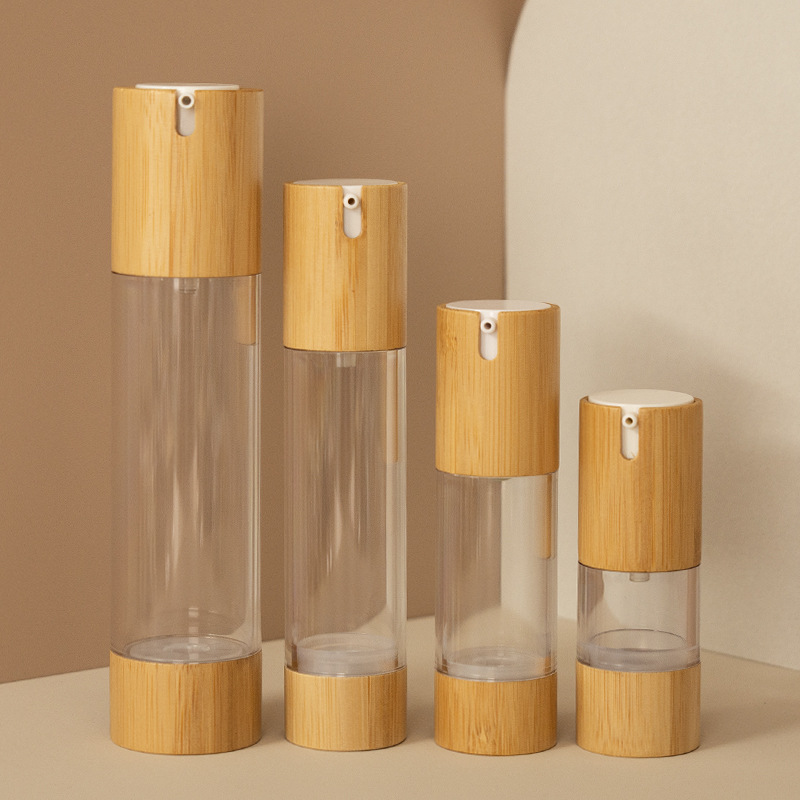
Airless pump bottles answer the main weakness of standard lotion pumps: they keep the product away from oxygen. Inside the bottle, a piston at the base rises as the product is dispensed, so the remaining formula fills the space without drawing air in. This makes the airless bottle the default choice for vitamin C, retinol, peptides, enzymes, and other ingredients that degrade quickly when exposed to air or light.
Typical products packaged in airless bottles include face creams, eye creams, serums, ampoule treatments, sunscreens, foundations, and BB creams. Capacities usually sit between 5 ml and 120 ml, with 15 ml, 30 ml, and 50 ml being the most requested sizes for prestige skincare. The bottles are available in transparent and frosted finishes, double-wall designs, and mono-material configurations that use a TPE spring instead of a metal spring to improve recyclability.
Three practical advantages explain why airless packaging has moved from a specialty option to a default choice. First, it protects actives from oxidation, which helps the brand maintain efficacy and reduce the need for high preservative levels. Second, it dispenses a precise amount with each press, which improves consumer satisfaction for premium serums and creams. Third, the piston system evacuates nearly the entire formulation, wasting less product than a regular pump that struggles with thick creams near the bottom.
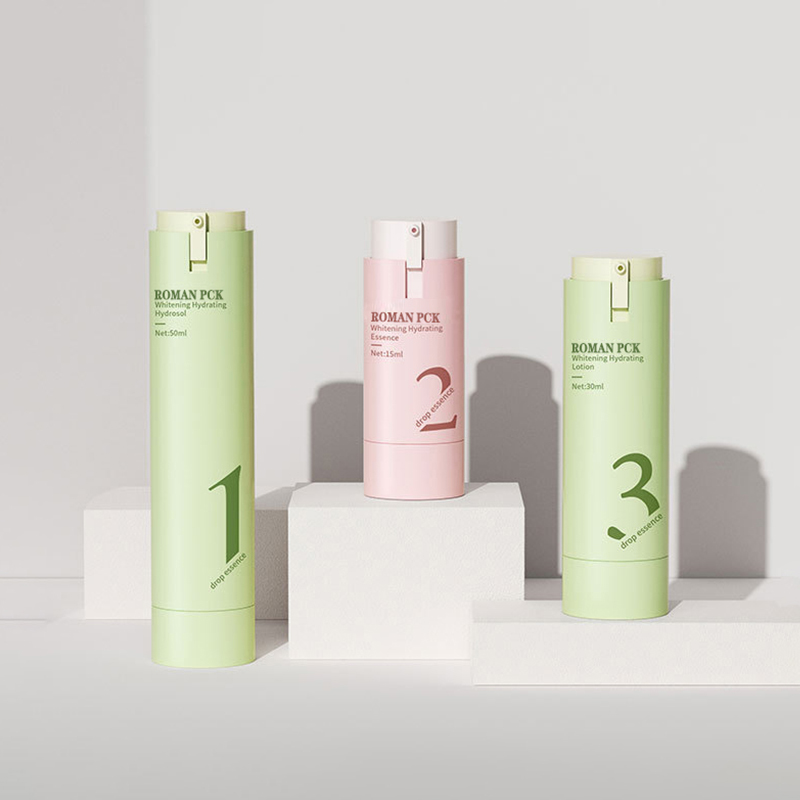 Airless Pump Bottle 15ml 30ml 50ml Refillable Cosmetic Container Best Makeup Foundations aAirless Pump Bottle 15ml 30ml 50ml Refillable Cosmetic Container Best Makeup Foundations and Serums Skin Care Packing Bottle, mainly used in antioxidant-rich, vitamin ...View Product →
Airless bottles are not without constraints. They cost more than an equivalent lotion pump bottle because the piston and special pump add components. They can also struggle with very thick formulas or products containing abrasive particles that clog the pump channel. If your formula is a low-viscosity toner, a lotion pump or spray bottle is more economical. If it is a dense butter or balm, a jar with an airless pump lid may serve you better. Test the actual formula at the proposed pump spring tension before committing to a full production run.
Spray bottles: for toners, mists, and fine-mist application
Spray bottles convert a liquid formula into a fine mist or a coarser spray through a mechanical pump that forces the liquid through a small nozzle. They are the first choice for toners, facial mists, setting sprays, hair mists, scalp tonics, and body sprays. They also appear in hand sanitizer and first-aid products because they deliver quick coverage without direct skin contact.
Capacity for skincare spray bottles normally ranges from 30 ml to 500 ml. The body is usually PET because clarity and chemical compatibility matter for watery formulas, though colored and matte PET finishes are common for brand differentiation. The pump type, not just the bottle, determines the spray character. A fine-mist pump with a small orifice produces a uniform cloud ideal for facial mist; a lotion spray pump with a wider stem handles slightly thicker fluids such as toning milks; a trigger sprayer is reserved for high-volume household or salon use.
When choosing a spray bottle, consider particle size, spray rate, and leak-proof performance. The same bottle body can spray differently with a different actuator. You should also ask the supplier for a crimping or screwing specification that prevents the pump from detaching during shipping. In our own production experience, spray bottles with 20 mm to 24 mm necks and standard fine-mist pumps are easy to source, while custom actuator colors and continuous-spray mechanisms require longer lead times and higher minimum quantities.
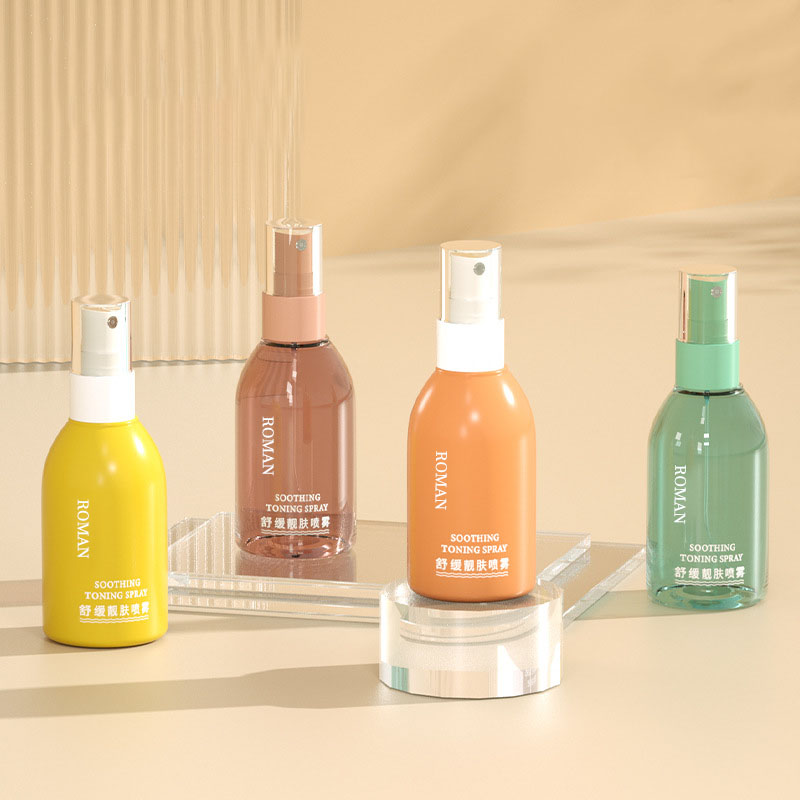 100ml 120ml 150ml Plastic Spray Bottle with Fine Mist Press Inventory Toner Refill Travel 100ml 120ml 150ml Plastic Spray Bottle with Fine Mist Press Inventory Toner Refill Travel Bottle for Perfume Lotion Cream Cosmetics, the spray bottle has revolutionize...View Product →
The major limitation of spray bottles is that they do not suit viscous formulas. If the product cannot pass through the dip tube and nozzle, it will clog, sputter, or require the user to pump repeatedly. For thicker products, consider a lotion pump with a wider channel or a flip-top squeeze bottle instead. Also remember that many spray formulas contain alcohol or essential oils; confirm that the pump's plastic and sealing materials are resistant to your solvent system.
Dropper bottles: precision for serums and oils
Dropper bottles are the classic packaging for facial essence, serum, essential oil, and hair oil. The format combines a bottle with a dropper closure made of a rubber bulb and a glass or plastic pipette. When the bulb is squeezed and released, the product rises into the pipette; the user then squeezes the bulb again to release a controlled number of drops. This precise dosing is the main reason dropper bottles survive despite the rise of airless pumps.
Dropper bottles come in glass and plastic versions. Glass, especially amber or cobalt blue, is preferred for light-sensitive oils and gives a premium pharmacy aesthetic. Plastic dropper bottles in PET or PETG are lighter and safer for travel, while still providing good clarity. Common sizes are 5 ml, 10 ml, 15 ml, 20 ml, 30 ml, and 50 ml, with 30 ml being a near-standard for facial serums.
The drawbacks of the dropper format are real. Every opening admits air, which can oxidize delicate actives over time. The dropper itself can also become contaminated when it touches the skin or the bottle rim. Brands that need truly airtight protection for a vitamin C serum should prefer an airless pump; brands that want the familiar ritual and precise drop control of an oil-based formula should stay with a dropper. In many Asian skincare markets, the dropper is still the expected format for essence and ampoule products.
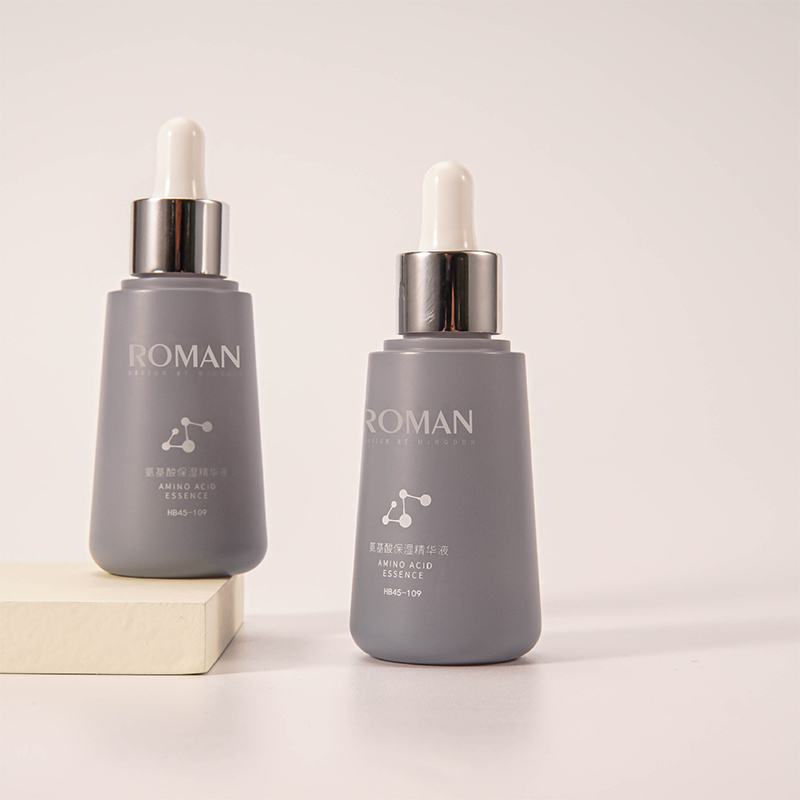 Empty 1oz 5ml 10ml 15ml 30ml 50ml Thick Cone Colorful Frosted Plastic Cosmetic Serum DroppEmpty 1oz 5ml 10ml 15ml 30ml 50ml Thick Cone Colorful Frosted Plastic Cosmetic Serum Dropper Bottle For Skin Care,In the realm of cosmetic formulations harnessing pote...View Product →
When specifying a dropper bottle, verify the dropper's volume accuracy and the compatibility of the rubber bulb with your formula. Natural rubber, silicone, and synthetic bulbs differ in chemical resistance and clarity. Also ask for a leak test in the inverted position because dropper caps are a frequent source of complaints during shipping. If the formula is too thick to rise into the pipette easily, switch to a pump or airless format rather than forcing the dropper design.
Foam pump bottles: texture and controlled aeration
Foam pump bottles are a specialized category that turns a liquid cleanser or lotion into a dense foam as it passes through a mesh or sieve inside the pump. The resulting texture feels lighter on the skin, helps the product spread more easily, and often allows the brand to use a lower concentration of thickeners while still delivering a rich lather. Foam dispensers are used for facial cleansers, foaming hand soaps, shaving creams, baby shampoos, and eyelash cleansers.
Capacities for foam pump bottles generally range from 50 ml to 650 ml. The bottle is almost always PET or PP, and the foamer pump is a precision component that should be tested with the exact formulation. A product that foams beautifully in one pump may barely foam in another because the mesh density, pump chamber, and air-to-liquid ratio are calibrated differently.
The most important technical point about foam packaging is that the formulation itself must be foam-friendly. If the formula does not contain the right balance of surfactants, no pump can rescue it. During development, test the ratio of liquid to air, the foam density, and the amount of product consumed per pump. Some suppliers offer foamers with colored sleeves, transparent chambers, or a silicone brush head that provides gentle physical exfoliation during cleansing. These additions raise the unit cost but can differentiate the product on the shelf. Foam pumps are less suitable for oil-heavy serums or thick creams, so reserve the category for genuinely low-viscosity cleansing textures.
Flip-top, disc-top, and squeeze bottles: simple daily performance
Flip-top and disc-top bottles solve a different problem: how to open, dispense, and close a bottle with one hand. A flip-top cap has a hinged lid that opens upward and exposes a dispensing orifice; a disc-top cap has a flat disc that flips open to reveal a hole. Both are operated with a single finger, which is why they dominate shampoo, body wash, hand soap, and baby care packaging.
Squeeze bottles in PET, HDPE, or PE are the most cost-effective option for high-volume products. The user squeezes the flexible body to push the liquid out through the cap, and the bottle regains its shape as air re-enters through a small vent. A disc-top cap is often paired with an inverted bottle so that gravity helps the last portion of the product reach the opening. Flip-top caps with wider orifices work better for thicker gels and conditioners, while narrower orifices suit watery toners and cleansing waters.
The practical strengths of this bottle family are durability, low weight, low cost, and suitability for large sizes from 100 ml to 1000 ml. Hotel amenities, gym products, and family-size refill packs almost always use flip-top or disc-top bottles because they survive intensive handling and repeated opening. Their limitation is dosage control: without a pump or dropper, the amount of product released depends on the strength of the user's squeeze. That makes them a poor fit for high-cost serums where precise dosage is part of the brand promise.
Syringe bottles and other specialty formats
Beyond the mainstream categories, a few specialty formats address narrow but valuable use cases. Syringe-shaped airless bottles combine the protection of an airless system with the precision of a medical-looking applicator. They are used for eye creams, acne spot treatments, teeth-whitening gels, and ampoule-style skincare because they deliver a small, controlled dose without the user contacting the product with a finger. Capacities are small, usually 5 ml to 30 ml, and the design can be customized with a narrow metal or plastic tip for targeted application.
Deodorant and stick containers are another specialty group. They use a twist-up mechanism that raises a solid or semisolid formula through the top opening. The category covers deodorant sticks, solid perfume, sunscreen sticks, and body balm bars. Sizes typically range from 6 ml to 75 ml, and the containers can be made from PP or PCR plastic depending on the brand's sustainability target.
Roll-on bottles, with a rotating ball applicator, suit deodorants, roll-on serums, and cooling eye treatments. The ball applicator provides gentle massage while dosing a thin, even layer. Each of these specialty formats has a smaller pool of suppliers and often requires a higher minimum order than standard bottles, but they can create a distinct shelf identity that justifies the extra development effort. If your formula needs hygienic targeted application, the syringe or roll-on route is worth exploring; if it needs a thick layer of a cream or balm, a jar remains the simpler answer.
Jars versus bottles: a decision that depends on texture
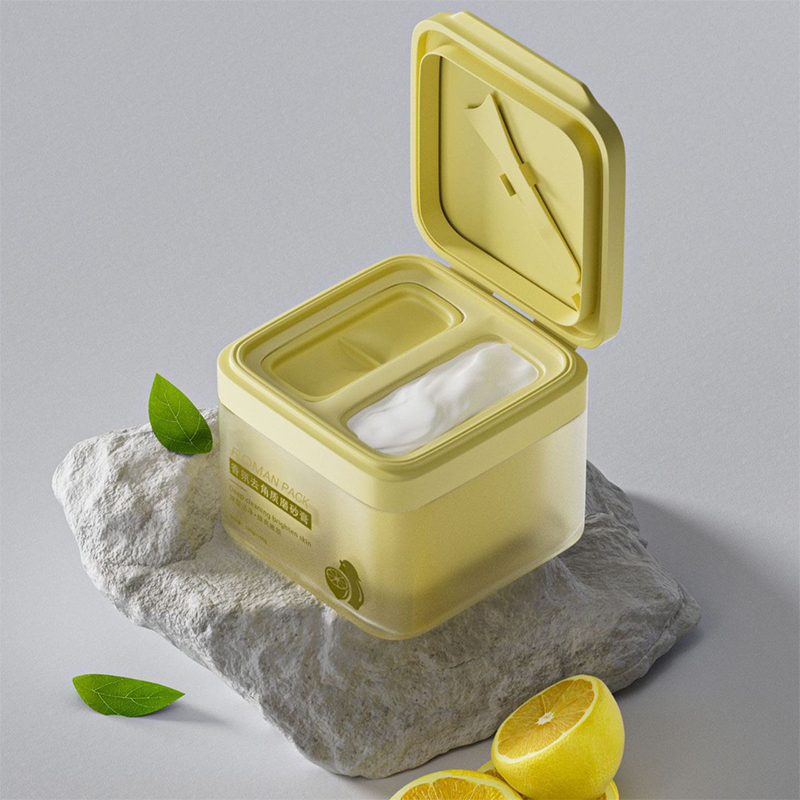
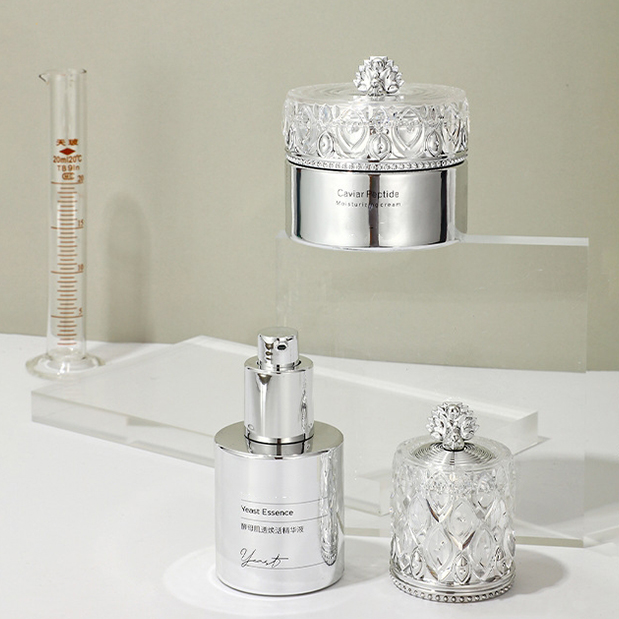
Although the question is about bottles, no practical discussion can ignore jars because many skincare products sit exactly on the boundary between the two formats. A jar gives a wide opening that makes it easy to scoop out a rich cream, a sleeping mask, a body butter, or a lip balm. Glass jars convey a premium spa feel; plastic jars are lighter and safer for everyday use; bamboo-lid jars combine a natural aesthetic with a recyclable plastic or aluminum inner container.
Jars have two important weaknesses. First, the user's fingers come into contact with the formula, introducing bacteria and increasing the risk of microbial contamination. Second, the large surface area of product is exposed to air every time the lid is removed, which accelerates oxidation. If the formula contains high levels of active antioxidants or peptides, a jar may shorten its effective shelf life. Manufacturers and brands address this with airless jar pumps or with inner lids and spatulas that reduce direct contact.
As a general rule, use a bottle with a pump, dropper, or sprayer when the formula is liquid or moderately viscous, and reserve jars for thick creams, butters, and wax-based balms. If you want the sensory experience of a jar without the preservation risk, an airless pump jar is the best compromise. The jar category covers dozens of formats from 5g sample jars to 400g body butter pots, including glass, PET/PP, and environmental PCR versions, so you can match both texture and shelf presence.
Materials: plastic, glass, and sustainable options
Every skincare bottle is defined as much by its material as by its closure. Four plastic families, glass, and a range of recycled or bio-based options account for nearly all commercial packaging in the category. Understanding their differences prevents expensive mistakes early in product development.
| Material | Where it is commonly used | Strengths | Watch-outs |
|---|---|---|---|
| PET | Spray bottles, lotion pump bottles, dropper bottles, flip-top bottles | High clarity, lightweight, low cost, widely recyclable | Moderate barrier; not suitable for strong solvents or high-temperature filling |
| PETG | Serum bottles, dropper bottles, premium clear containers | Better chemical resistance and toughness than PET | Higher cost; recycling stream less established in some regions |
| PP | Airless bottles, closures, cosmetic jars, cream containers | Excellent chemical resistance, flexible, autoclave-capable, printable | Lower clarity than PET; sometimes feels less premium |
| PE / HDPE | Squeeze bottles, lotion pump bottles, shampoo and body wash containers | Flexible, durable, good moisture barrier, recyclable | Translucent rather than crystal clear; can crack under stress if not properly processed |
| PCR plastics | Eco-friendly pumps, spray bottles, jars, and deodorant containers | Reduces virgin plastic use; supports brand sustainability claims | Color and clarity vary by source; supply and price are less stable |
| Glass | Essential oil droppers, premium serum bottles, perfume bottles, luxury jars | Inert, impermeable, visually premium, fully recyclable | Heavy, fragile, more expensive shipping and handling |
| Bamboo / wood | Decorative caps, sleeves, and outer shells for airless bottles, lotion bottles, and jars | Natural look, renewable material, strong shelf appeal | Already combined with plastic or aluminum interiors; consistency of natural grain varies |
Sustainability has changed how brands choose materials. Post-consumer recycled PET and PP are now common in skincare packaging, and some suppliers offer mono-material airless bottles with a TPE spring that can be recycled more easily than a conventional pump with multiple spring types. Bio-based options such as wheat straw and other agricultural fibers are used in jars and flip-top bottles for brands that want a visible environmental story. The practical advice is to verify the recycled content claim with documentation, test the compatibility of the recycled resin with your formula, and check whether the finished bottle meets the recycling guidelines for the markets where you sell.
How to match a bottle type to your formula
When a new product arrives for packaging, the fastest way to narrow the options is to look at the formula's texture and its sensitivity to air and light. The table below shows the recommended bottle families for common skincare product categories.
| Formula type | Recommended bottle type | Why it works |
|---|---|---|
| Watery toner or facial mist | Spray bottle | Fine-mist pump creates even coverage; preserves light watery texture |
| Light serum or essence | Dropper bottle or airless pump bottle | Precise dosage; airless option blocks oxidation |
| Concentrated active serum | Airless pump bottle | Protects vitamin C, retinol, and other unstable actives |
| Lotion, milk, or body lotion | Lotion pump bottle | Easy high-volume dispensing; compatible with large capacities |
| Cream or gel cream | Airless pump bottle or pump jar | Keeps thick formula hygienic and prevents air exposure |
| Balm, butter, or mask | Wide-mouth jar | The fingers can easily scoop thick textures; high perceived value |
| Foaming cleanser or mousse | Foam pump bottle | Creates the expected foam texture and controls the dose |
| Shampoo, shower gel, hand wash | Flip-top, disc-top, or lotion pump bottle | Daily one-hand use; low cost; large capacity available |
| Eye serum or spot treatment | Syringe-shaped airless bottle | Very small, precise doses; hygienic and portable |
| Deodorant, solid balm, sunscreen stick | Twist-up stick container | Solid formats require the mechanical lift of a twist-up closure |
After narrowing the bottle family, evaluate these five criteria in order:
- Dose and application: how much product should the consumer use, and with what gesture?
- Protection: does the formula need a barrier against oxygen, light, or moisture?
- Portability and use scenario: bathroom shelf, handbag, gym bag, or travel kit?
- Branding and finish: is the brand defined by transparency, color coating, screen printing, or a natural bamboo accent?
- Cost and sustainability: what packaging budget and recycling requirements apply?
No single criterion decides the case alone. A high-end serum with fragile actives should use an airless pump even if a dropper looks more traditional; a body lotion sold in value packs should use a simple lotion pump even if an airless bottle would impress at first glance.
What to check before ordering from a supplier
Sourcing a skincare bottle is different from buying a standard bottle off a catalog. The bottle, the pump or closure, the formula, and the filling line all need to work together. The following checks prevent the most frequent failures found in real production projects.
First, ask for compatibility testing with your exact formula. A cream that works with one pump spring may be too thick for another with the same neck size. Solvents, fragrances, and essential oils can also cause plastic parts to swell or crack. Most responsible suppliers will request a formula sample or a list of ingredients before recommending a pump.
Second, verify the performance of the closure. For pump bottles, confirm the output volume per stroke, the spring material, and the gasket compatibility. For spray bottles, confirm the mist particle size and spray angle. For flip-top and disc-top caps, check that the hinge survives repeated opening without cracking. A simple closed-unit test and a leak test under both upright and inverted positions will catch most problems.
Third, clarify the customization pathway. Skincare bottles can be customized in several ways: injection color, frosted or soft-touch surface, UV coating, spray painting, screen printing, hot stamping, and adhesive labeling. Each method has different tooling costs, lead times, and decorative limits. If the brand requires a custom logo, the supplier should provide printing proofs before full production.
Fourth, review the order structure. Minimum order quantities, payment terms, and lead times are not uniform across factories. If your launch calendar is fixed, plan for the long lead items: custom mold tooling, custom pump color, printed labels, and cartons. A standard stock bottle with a standard closure can ship in weeks; a fully customized airless bottle can take months.
Finally, consider the supplier's manufacturing and quality control environment. A packaging plant with injection molding machines, assembly lines, and in-house surface treatment facilities can control quality better than a trading company that coordinates several subcontractors. Ask about internal inspection procedures, drop tests, pump cycle tests, and how the factory handles defective parts. If your company imports from Asia, proximity to major ports such as Ningbo or Shanghai reduces logistics risk and shortens shipping windows.
Conclusion
The different types of skincare bottles are not interchangeable alternatives; they are different answers to different product requirements. Lotion pump bottles deliver daily care efficiently, airless bottles protect sensitive actives, spray bottles refresh and cover large areas, droppers provide precision, foam pumps create texture, and flip-top or disc-top bottles offer durable convenience for high-volume cleansers. Around all of them, jars and specialty formats cover thick creams, balms, sticks, and roll-on applications.
Choosing well begins with the formula. Understand its viscosity, oxygen and light sensitivity, and desired dose. Then match it to the simplest packaging that protects the product and supports the brand story. Test the real formula in the real closure, document the results, and work with a supplier who can manufacture, decorate, and assemble the package under one roof. When those steps are followed, the bottle stops being an afterthought and becomes part of the product experience itself.