English
 Español
When you have locked the formula for your new lotion — a thick body butter, a rich moisturising cream or a high-oil hand treatment that will not flow through a pump — the packaging decision deserves as much attention as the formulation itself. The cosmetic jar you choose affects how long the product stays fresh, how much it costs to fill and ship, how it reads on the store shelf and whether customers finish the jar or abandon it after three uses.
The conclusion first: choose a cosmetic jar by filtering in a fixed order. Formula compatibility comes first; material performance and sealing come second; capacity, branding and sustainability come third; supplier reliability comes last. Most sourcing mistakes happen when brands reverse the order and fall in love with a jar that looks beautiful but cannot protect the lotion inside it.
When a Jar Makes Sense for Lotion
Not every lotion belongs in a jar. Thin, low-viscosity lotions pour easily and are usually better served by a lotion pump bottle with a dip tube. Jars make sense when the formula is thick enough to hold its shape: body butters, balms, cold creams, sleeping packs and high-oil hand creams. If the product can be scooped with a finger and stays on the back of the hand without running, a jar is a legitimate choice.
There is a trade-off to understand. A wide-mouth jar exposes more of the formula to air every time it is opened. If the lotion contains high levels of unsaturated oils, botanical extracts or oxygen-sensitive actives, you need a strong antioxidant system, smaller jar sizes with less headspace, or an airless jar design. Otherwise the customer opens a jar that looks fine at first, then starts to see surface oxidation after a few weeks.
Hygiene is the second consideration. Consumers dip fingers into jars, and every dip introduces bacteria. A fitted inner lid or a cosmetic spatula sold alongside the jar reduces contamination. If the brand is positioned as premium or clinical, plan for a spatula or a narrow-opening airless jar as part of the complete package.
Compare the Main Jar Materials Before You Brief the Supplier
The material decision drives unit cost, shipping weight, decoration options and the brand story. Four families cover most lotion jars on the market: PP plastic, PET/PETG plastic, glass, and jars that combine bamboo or recycled materials. Each behaves differently on a filling line and in the customer's hand, so the choice should be made deliberately, not inherited from a previous product.
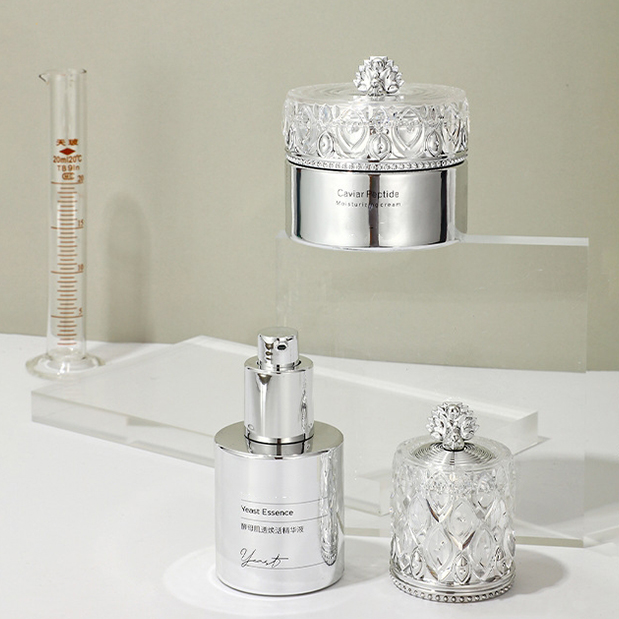
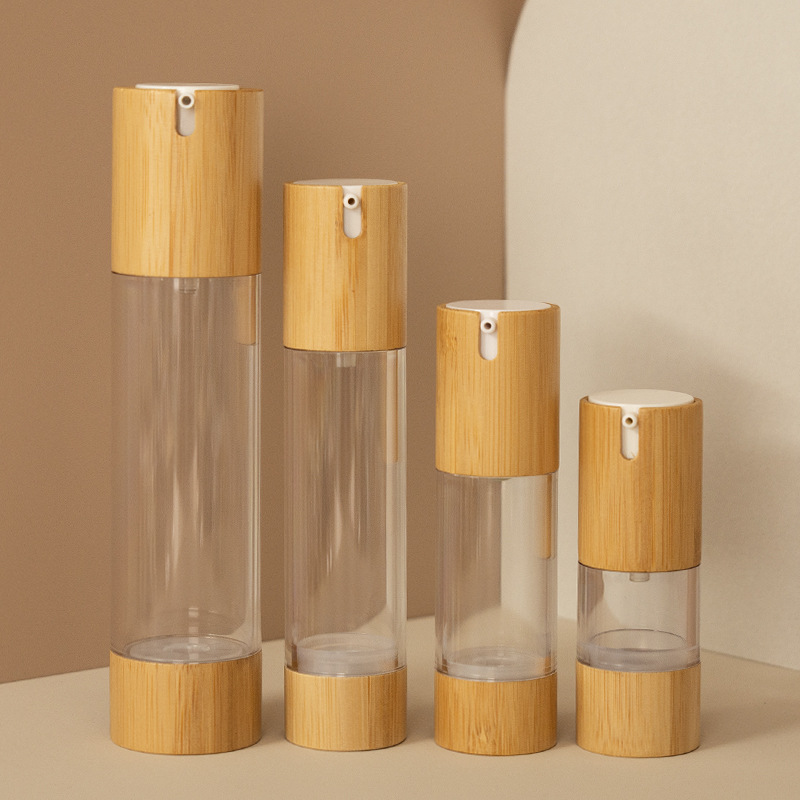
PP plastic is the default for daily-use creams and body lotions. It is lightweight, unbreakable, easy to decorate and compatible with most emulsions. PET and PETG are used when the brand wants a transparent jar that shows the texture or colour of the product. Glass gives an inert, premium container for luxury creams, but it is heavier, more expensive to ship and prone to breakage. Bamboo jars combine a bamboo outer shell with an inner PP or aluminium jar; they photograph beautifully and reinforce an eco narrative, though the unit cost is higher. PCR jars are made from recycled plastic and answer a growing retailer request for recycled content.
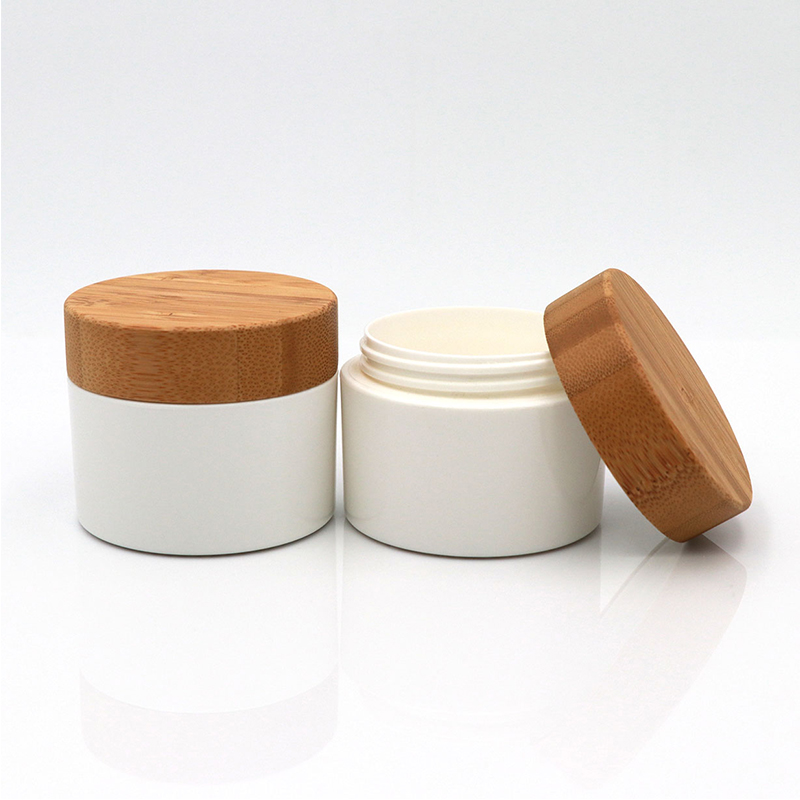 Frosted PP Body Butter Jar with Bamboo Lid in Multiple SizesThis frosted PP jar with a bamboo lid offers a lightweight, durable option for creams and balms, available in sizes from 50g to 250g, making it suitable for brands seeking eco-conscious packaging.View Product →
Material Comparison at a Glance
| Material | Best suited for | Key trade-offs |
|---|---|---|
| PP plastic | Daily creams, body lotions, budget-conscious lines | Low cost and lightweight; less premium feel |
| PET / PETG | Transparent jars, gel products, modern shelf appeal | Clear and glossy; higher cost than PP |
| Glass | Luxury creams, natural lines with premium positioning | Inert and recyclable; heavy, higher shipping cost, breakage risk |
| Bamboo shell + inner jar | Eco-positioned brands, gift sets, limited editions | Natural texture and strong story; higher unit cost |
| PCR recycled plastic | Brands with recycled-content and sustainability claims | Good credentials; colour consistency varies, matte finishes common |
Match Jar Capacity to the Way Customers Actually Use the Product
Capacity is not the same as fill weight. A 100 g jar typically holds about 95 g of lotion at most; most brands leave 5 to 10 percent headspace so the product can expand slightly under temperature change and the inner lid can fit without smearing the formulation. Choose the jar size around the serving behaviour of the customer, not around the label claim.
| Jar capacity | Typical fill weight | Common products |
|---|---|---|
| 5–15 g | 5–12 g | Samples, tester jars, lip balms |
| 30–50 g | 28–48 g | Eye cream, face cream, intensive serum lotions |
| 50–100 g | 48–95 g | Daily face moisturiser, hand cream |
| 150–250 g | 140–240 g | Body lotion, body butter, hair butter |
| 300–500 g | 280–480 g | Family-size body butter, professional spa sizes |
For sample and trial programmes, 5–15 g jars are enough. Eye creams and intensive treatments are commonly sold in 30–50 g jars. Face creams and hand creams sit in the 50–100 g range. Body lotions and body butters need 150–250 g so the customer feels the purchase has value. Family-sized jars in 300–500 g are common for professional spa use and value-positioned body butters.
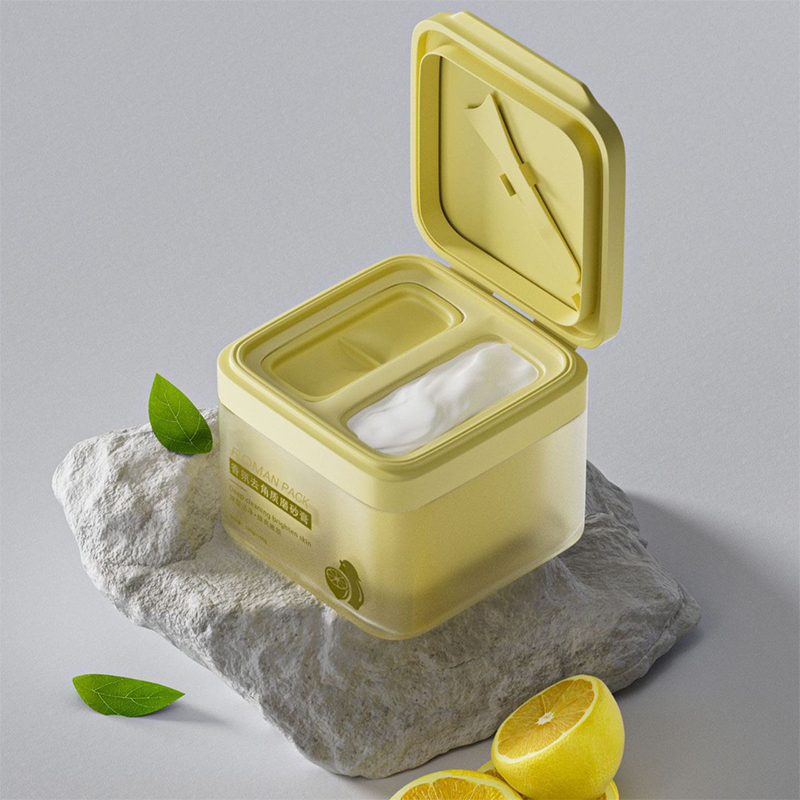
Pay attention to the opening diameter as well. A wide mouth makes the product easier to scoop, which suits thick formulas, but increases air exposure and evaporation. A smaller opening reduces air exchange and keeps the product fresher, but makes it harder for the customer to reach the bottom of the jar. Some brands use a jar with a fitted inner platform or a spatula that rests on the rim, which solves both problems at once.
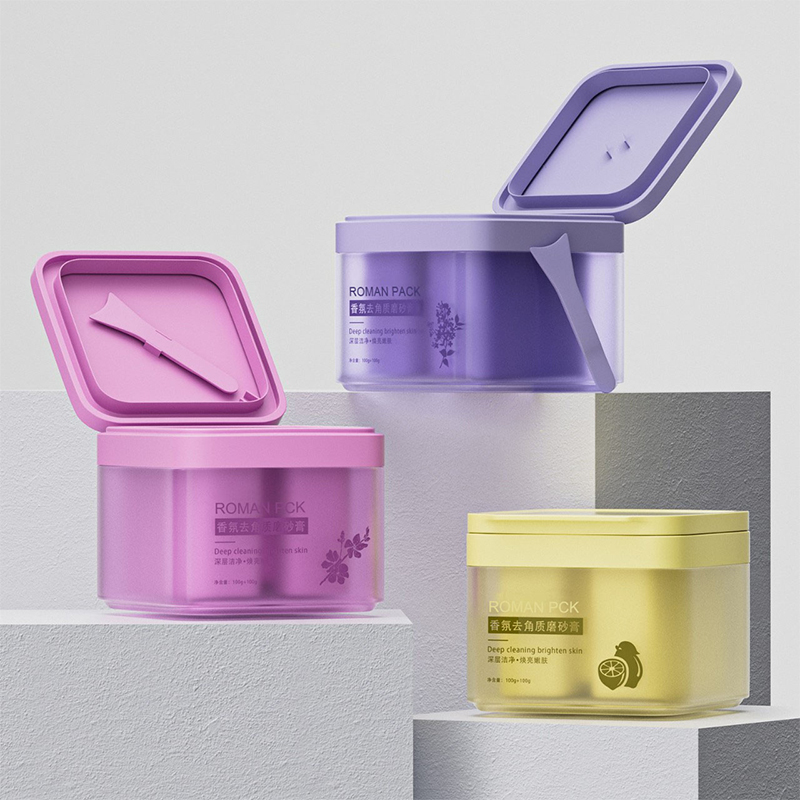 Square PP Cream Jar with Spoon for Skincare and Body ButterA square PP jar with a spoon provides sturdy, corrosion-resistant storage for creams and sunscreens, with sizes of 150g and 300g, ideal for brands emphasizing safety and portability.View Product →
Closures, Liners and the Parts That Stop Leaks
The jar body gets the attention, but the closure does the work. A lotion jar with a poor seal will leak during transit, lose moisture through the threads and fail the consumer's expectation. The most common closure is a screw cap with a continuous thread, paired with an inner disc or a liner that sits on the rim of the jar. For rich formulas, a gasket or an induction seal creates a tighter barrier and prevents the vacuum distortion that can occur when filled jars are shipped at altitude.
| Closure type | Typical use | Main benefit |
|---|---|---|
| Screw cap with inner disc | Most creams and lotions | Simple, reliable seal, easy to customise |
| Bamboo lid | Eco-branded jars | Natural look, supports the brand story |
| Aluminium cap | Glass jars, premium lines | Luxury finish, good rigidity |
| Airless vacuum pump | Oxygen-sensitive formulas | Reduces air exposure, accurate dosing |
| Flip-top or snap lid | On-the-go products | One-handed opening |
When the formula is sensitive to oxygen, an airless vacuum jar takes a different approach. A piston inside the jar pushes the product upward, so the consumer never sees an empty gap and the lotion is not exposed to air after each pump. These jars cost more than a screw-cap jar, but they extend the shelf life of formulas with less stable oils and reduce the need for high preservative loads.
Plan Customisation and Decoration Before You Choose a Stock Jar
From a plain jar on the shelf to a finished product, decoration is where the brand becomes visible. The most common methods are screen printing, hot stamping, spray colouring, UV coating and labelling. Frosted, matte, soft-touch and pearlescent finishes change the way the jar feels in the hand; the same 50 g cream in a matte PP jar with a metallic cap reads completely differently from the same cream in a transparent PET jar.
Customisation is not an afterthought. It changes the unit price, the lead time and the minimum order quantity. In an OEM/ODM project, the first decision is whether to use an existing stock mould or open a new mould. A new mould gives total design freedom but requires a much larger order and a longer development period. A stock mould with custom colour, surface finish and print artwork is the fastest route to market and remains the right choice for most new brands.
Choose a supplier that can handle moulding, surface decoration and assembly under one roof. When the same team is responsible for the thread fit, the cap torque, the print registration and the final packaging, the risk of miscommunication drops sharply.
Verify the Supplier, Not Just the Sample
Experienced purchasers know that a beautiful sample can conceal production problems: a wall that becomes thinner at the neck, a cap that strips after the third opening, a screen print that scratches off during filling. Ask the supplier directly how they check these parameters. A reliable answer should mention wall-thickness control, cap torque testing, leak testing and batch-to-batch colour checking.
Practical questions to ask before ordering: What is the minimum order quantity for stock jars and for custom-decorated jars? What is the confirmed lead time for plain and printed versions? How many samples are provided before mass production? What is the accepted defect rate, and who covers the cost of defective closures in a filled batch? How are jars packed for export so the finish is not scratched during ocean freight?
Production depth matters. A supplier such as Shaoxing Roman Plastic Co., Ltd., a China-based packaging manufacturer, runs a 13,000-square-metre plant with more than 50 injection moulding machines and more than 15 assembly and packaging lines. The company is located in Shangyu, near the ports of Ningbo and Shanghai, which shortens export lead times. Factories that mould, decorate, assemble and inspect in-house generally deliver more consistent results than trading companies that buy parts from several workshops.
Build the Sustainability Story Into the Jar
Retailers and consumers are reading the bottom of the jar. If the brand claims sustainability, the container should carry part of that message. PCR plastic jars are the most direct way to introduce recycled content without changing the filling behaviour of a conventional PP jar. Many suppliers now offer PCR jars in the same moulds as virgin PP, so a switch does not require a new mould or a separate filling trial.
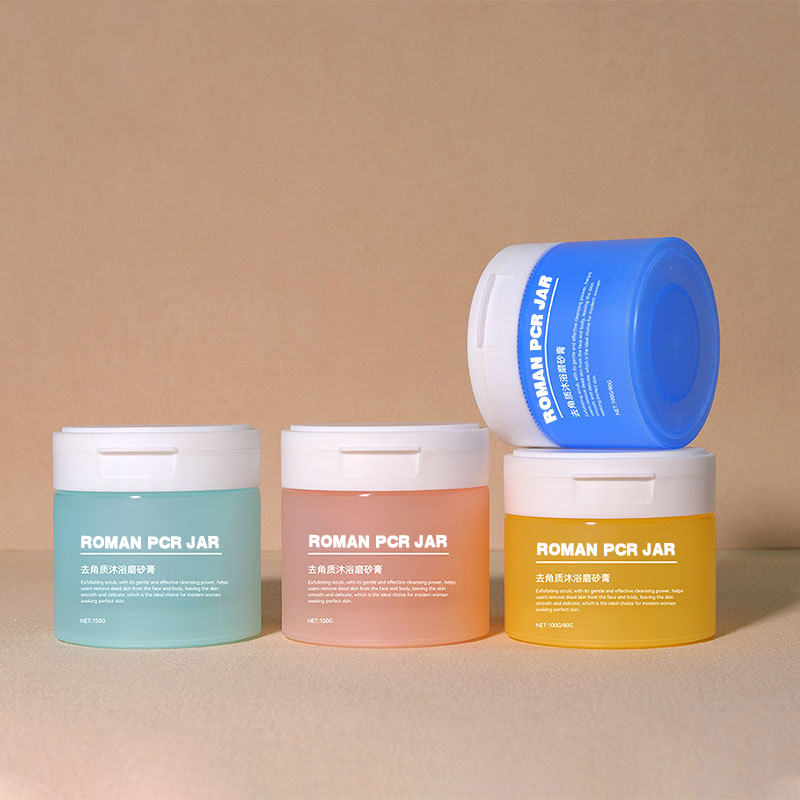 PCR Wide Mouth Matte Cosmetic Jar with Sustainable Recycled ContentThis round matte jar made from PCR plastic promotes environmental responsibility while protecting creams and masks, available in sizes from 120g to 250g, with a wide mouth for easy access.View Product →
Bamboo jars, refillable systems and mono-material packaging are the next level. A refillable jar keeps the outer shell and replaces only the inner cup, which reduces the amount of material going into recycling. Mono-material jars, made entirely from one plastic type, are easier to recycle than jars with metal springs or silicone components. If your target market has specific recycling rules, check whether the jar label can include disposal instructions.
We have covered the details in a separate article about how to choose an environmentally friendly and practical cosmetic jar. The short version: set a measurable target, such as at least 30 percent PCR content or a refill option, and ask every shortlisted supplier whether they can meet it.
Avoid These Five Sourcing Mistakes
- Choosing the jar before checking formula compatibility. A lotion with high oil or active content will stress the container; order compatibility tests before committing to a mould.
- Ignoring the closure. The cap and inner seal determine leakage, evaporation and consumer frustration more than the jar body itself.
- Focusing only on the piece price. Freight, breakage, filler waste and product returns often outweigh the pennies saved on a cheaper jar.
- Skipping a pilot run. Fill the jars on the actual filling line, with the actual product, at the actual filling temperature, before approving mass production.
- Forgetting the inner lid or spatula. A jar without an inner lid can arrive with lotion smeared inside the cap; a jar without a spatula invites dirty fingers.
A Final Checklist Before You Confirm the Order
- Formula: confirmed compatible with the jar material, closure liner and filling temperature.
- Capacity: the chosen jar leaves enough headspace; the fill weight matches the label claim.
- Sealing: the cap, inner disc and optional gasket pass a leak test and a torque test.
- Decoration: print, hot stamping or labelling approved on the actual jar surface, not on a flat sheet.
- Sustainability: recycled content or refillability decided and communicated on the label.
- Supplier: MOQ, lead time, defect policy and export packaging confirmed in writing.
- Samples: production-run samples approved before shipment.