English
 Español
Selecting the correct container for personal care formulations represents a critical decision in product design, chemical preservation, and user experience. Among modern packaging innovations, the airless pump bottle has established itself as an essential solution for protecting delicate ingredients and ensuring consistent delivery. Unlike traditional container designs that rely on internal dip tubes and gravity feed mechanisms, an airless packaging architecture utilizes a non-pressurized vacuum system. This engineering design isolates the internal formulation from ambient air exposure throughout the operational life of the product.
Understanding what can be safely packaged inside an airless pump bottle requires examining the physical properties of the formulation, including viscosity, chemical stability, particle size, and sensitivity to oxygen. Cosmetic chemists and packaging engineers utilize airless technology across a broad spectrum of products, ranging from potent active serums and anti aging creams to specialized dermatological topicals. This guide provides an in-depth analysis of the compatible formulation categories, material considerations, filling techniques, and performance factors that govern the effective use of airless pump bottle packaging.
Understanding the Mechanical Function of an Airless Pump Bottle
To evaluate which product formulations thrive within airless packaging, one must first understand the mechanical principles that drive airless dispensing systems. Traditional pump bottles pull liquid upward through a plastic dip tube, introducing ambient air into the bottle chamber to fill the empty space left behind by the dispensed fluid. This introduction of atmospheric air exposes the remaining product to oxygen, moisture, and potential airborne micro-organisms.
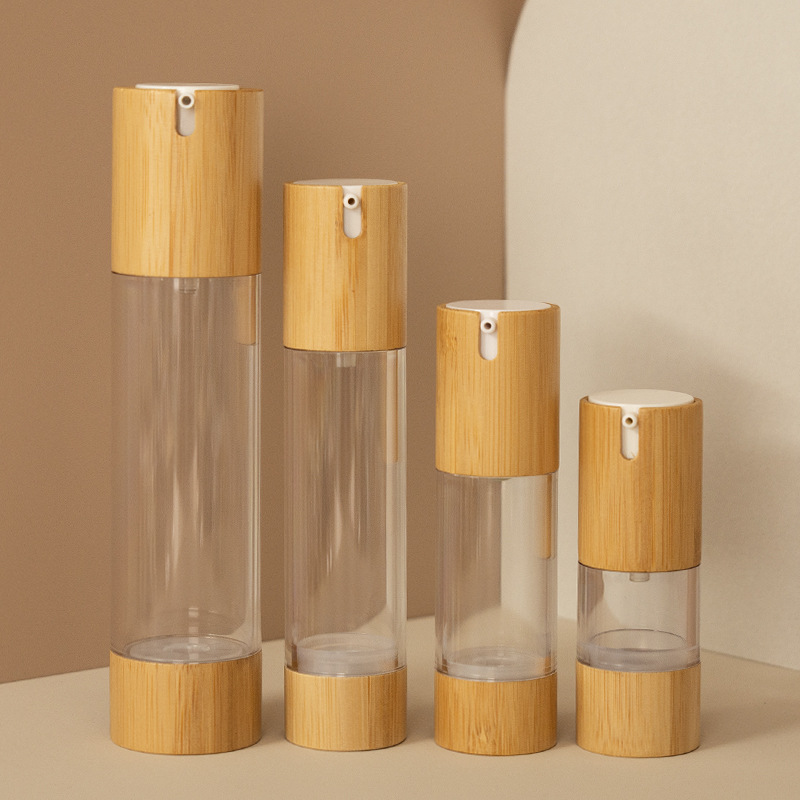
An airless pump bottle operates through a completely different physical mechanism. The container structure consists of a sealed internal cavity, an engine assembly with a one-way outlet valve, and a movable disc or piston located at the base of the bottle. When the user depresses the actuator, the internal pressure drops, creating a vacuum effect inside the chamber. This vacuum draws the fluid upward through the dispensing nozzle while simultaneously pulling the bottom piston upward. Because no air is allowed to enter the container chamber to replace the displaced product, the internal contents remain entirely isolated from atmospheric oxygen.
The Vacuum Piston Mechanism and Airless Dispensing Principles
The seamless movement of the bottom piston is central to the operation of an airless pump bottle. As product is systematically evacuated through the pump head, atmospheric pressure beneath the bottle pushes the piston upward, maintaining direct contact with the base of the liquid column. This continuous upward movement ensures that the internal void volume remains zero, effectively preventing air pockets from forming within the container.
This mechanical design provides an exceptionally high product evacuation rate. Traditional dip tube containers often leave significant residue stuck to the interior walls and lower corners of the bottle, resulting in substantial product waste. In contrast, a well-engineered airless pump bottle achieves clean evacuation, often clearing more than ninety-five percent of the internal contents. This efficiency is particularly valuable for high-value formulations where consumers expect to utilize every drop of product.
Key Benefits of Airless Packaging for Sensitive Formulations
The primary functional benefit of an airless pump bottle is its ability to eliminate atmospheric contact. Many active cosmetic ingredients degrade rapidly when exposed to oxygen, light, or ambient humidity. By creating a hermetic seal around the product mass, airless packaging prevents oxidative degradation, helping maintain chemical potency over extended shelf periods.
Furthermore, removing air contact reduces the reliance on heavy synthetic chemical preservatives. In conventional packaging, robust preservative systems are required to prevent bacterial and fungal growth introduced by ambient air exchange. With airless containers, manufacturers can utilize milder, natural preservative systems or formulate lower preservative concentrations while preserving product safety and hygiene.
Primary Skincare Formulations Suitable for Airless Pump Bottles
The unique environmental protection provided by an airless pump bottle makes it the preferred packaging standard for advanced facial skincare formulations. Products containing sensitive botanical extracts, pure vitamins, and delicate active complexes require stable packaging environments to retain their therapeutic efficacy.
High Potency Serums and Antioxidant Treatments
Facial serums often represent the most active and chemically sensitive products within a skincare routine. Formulations rich in antioxidants, such as Vitamin C derivatives, Ferulic Acid, Resveratrol, and Niacinamide, are highly susceptible to color shifts and chemical breakdown when exposed to ambient air. Packaging a serum in a clear airless pump bottle or an opaque airless vessel shields these active compounds from both light radiation and atmospheric oxygen.
Viscosity management is equally critical for serums. Concentrated liquid serums possess medium-to-low viscosity, allowing them to flow smoothly through the internal channels of an airless pump engine. The precise dosing delivered by an airless pump bottle ensures that users receive a consistent volume of active serum with every stroke, eliminating the guesswork associated with traditional pipette droppers.
Retinol Creams and Anti Aging Emulsions
Retinoids, including pure Retinol, Retinaldehyde, and Hydroxypinacolone Retinoate, are renowned for their skin renewing properties, yet they are notoriously unstable molecules. Exposure to light and oxygen breaks down the retinoid structure rapidly, rendering the product ineffective and potentially increasing skin irritation risks. Placing a retinol cream within an opaque acrylic airless pump bottle safeguards the active ingredients throughout the intended usage period.
Anti aging emulsions often combine retinoids with peptides, ceramides, and lipid complexes to support barrier repair. These rich, emulsion-based formulas possess a medium-to-high viscosity that benefits directly from the rising piston system. The smooth mechanical lift ensures consistent dispensing of thick creams without clogging the internal valve assembly.
Vitamin C Solutions and Brightening Formulations
L-Ascorbic Acid is the most biologically active form of Vitamin C, but it is exceptionally prone to oxidation. When exposed to oxygen, L-Ascorbic Acid transforms into Dehydroascorbic Acid, turning from a clear or pale liquid into a dark yellow or brown shade. This discoloration indicates a loss of potency.
Utilizing a refillable airless pump bottle engineered with light-blocking outer layers creates an ideal protective shell for Vitamin C solutions. Isolating the liquid from air prevents premature browning, extending the functional freshness of the product. Brightening treatments containing Kojic Acid, Arbutin, and Licorice Root Extract similarly maintain their chemical integrity when stored in airless environments.
Hydrating Creams, Moisturizers, and Barrier Repair Balms
Moisturizing creams and barrier repair formulations form the backbone of daily skin health. These products range from fluid hydration lotions to dense, lipid-rich barrier balms designed to nourish dry skin. A standard plastic airless pump bottle easily handles medium-to-heavy cream textures, dispensing clean portions without requiring users to dip their fingers into an open jar.
Eliminating finger contact is a major hygienic advantage for daily facial moisturizers. Traditional open-mouth jars expose the product mass to bacterial contamination from skin contact every time the cream is applied. An airless pump bottle cosmetic container ensures that the remaining formula remains completely untouched and pristine from the first application to the last.
Cosmetic and Personal Care Applications Beyond Facial Skincare
While facial skincare represents the largest market for airless packaging, the technology extends across a broad range of color cosmetics, body care products, and specialized personal care items. Any fluid or semi-solid product that requires precise application, clean handling, and protection from drying out can benefit from an airless pump bottle.
Liquid Foundations and Tinted Moisturizers
Complexion products such as liquid foundations, concealers, BB creams, and tinted moisturizers rely on stable pigment suspensions and uniform emulsion structures. When stored in standard containers, air exposure can cause volatile carrier oils to evaporate, leading to skin formation around the opening, shade shifting, or drying out of the fluid foundation.
An airless pump bottle for foundation maintains formula consistency by preventing fluid evaporation and pigment settling. The smooth actuation allows users to measure exact quantities, which is essential for achieving customizable makeup coverage. Furthermore, double-wall acrylic airless pump bottle designs provide a luxurious weight and crystal-clear clarity that highlights the foundation shade while protecting the product inside.
Natural Botanical Oils and Plant Extract Formulations
Natural cosmetic formulations often feature cold-pressed botanical oils, essential fatty acids, and unrefined plant extracts. Oils such as Rosehip Seed Oil, Evening Primrose Oil, and Argan Oil contain high concentrations of polyunsaturated fatty acids. While highly beneficial for skin health, these unsaturated lipids oxidize quickly when exposed to air, leading to rancidity and unpleasant odors.
Packaging delicate plant oils in an airless pump bottle delays rancidity significantly. Unlike traditional dropper bottles that draw ambient air into the reservoir during every use, an airless bottle keeps the oil mass protected under a continuous vacuum seal, maintaining fresh scent profiles and beneficial lipid properties.
Organic and Preservative Free Personal Care Products
The growing demand for organic, clean, and preservative free personal care products has created unique packaging challenges. Formulations that omit traditional synthetic preservatives such as parabens, phenoxyethanol, or formaldehyde donors possess a shorter natural resistance to microbial growth.
An airless pump bottle acts as a physical barrier against external contamination, making it possible to commercialize preservative-free or low-preservative formulations safely. By eliminating air transfer and manual contact, the container minimizes microbial risks, allowing organic brands to offer clean personal care options with commercial shelf stability.
Eye Creams and Concentrated Target Treatments
The skin surrounding the eye area is thin and delicate, requiring specialized treatment formulations containing targeted peptides, caffeine, and soothing botanical agents. Eye creams are typically formulated with high viscosity to provide deep nourishment, yet they are packaged in small volumes ranging from ten to fifteen milliliters.
Miniature airless pump bottle containers provide precise dosage control for eye treatments, dispensing microscopic portions suitable for localized application. This prevents over-dispensing and product wastage, ensuring that consumers can use concentrated eye creams efficiently over extended periods.
Dermatological and Topical Pharmaceutical Products
Beyond consumer cosmetics, the medical and dermatological sectors rely heavily on an airless pump bottle to package prescription topicals, compounding formulas, and post-procedure recovery ointments. Medical applications demand high standards of dosing accuracy, packaging hygiene, and formulation stability.
Prescription Dermatological Ointments and Medicated Gels
Compounding pharmacies and pharmaceutical manufacturers utilize an airless pump bottle to deliver metered doses of prescription dermatological topicals. Products such as bioidentical hormone creams, topical acne treatments, hydroquinone skin lighteners, and prescription corticosteroid gels require consistent dosage delivery to ensure patient safety and therapeutic efficacy.
An airless pump bottle can be engineered with calibrated pumps that deliver exact milligram or milliliter outputs per stroke. This precision allows patients to apply correct therapeutic dosages reliably without needing external measuring tools. The sealed environment also prevents cross-contamination in medical clinic settings where multiple healthcare providers handle packaging samples.
Sunscreen Emulsions and Mineral Sun Care Products
Sun protection products contain active UV filters such as Zinc Oxide, Titanium Dioxide, Avobenzone, or Octisalate suspended within liquid emulsions. Exposure to air and heat can disrupt the physical balance of sunscreen emulsions, causing phase separation where oil and water layers split.
Utilizing a heavy wall plastic airless pump bottle for mineral sunscreens maintains structural emulsion stability. The controlled mechanical discharge prevents fluid separation at the nozzle and guards volatile carrier fluids against evaporation. Additionally, airless packaging prevents beach sand and environmental dust from entering the bottle during outdoor application.
Post Treatment Recovery Serums and Healing Creams
Following dermatological procedures such as chemical peels, laser resurfacing, or microneedling, the skin barrier is temporarily compromised. Post-treatment creams and healing gels applied to recovering skin must remain completely free from bacterial contamination to prevent skin irritation or infection.
Packaging post-procedure healing serums in a sterile clear airless pump bottle ensures that the formula remains uncompromised throughout the recovery phase. Patients can apply soothing balms to healing skin with confidence, knowing the product has not been exposed to external pollutants or unsterilized hands.
Formulations That Are Not Recommended for Airless Packaging
While an airless pump bottle accommodates a wide variety of personal care products, certain physical textures, particle compositions, and chemical structures are incompatible with airless pump mechanisms. Attempting to package unsuitable formulations can result in pump failure, clogging, leakage, or incomplete dispensing.
Watery Fluids and Ultra Low Viscosity Toners
Ultra-low viscosity fluids, such as watery facial toners, liquid micellar waters, and thin splash essences, present distinct mechanical challenges for standard airless pump engines. Because airless pumps rely on internal pressure differentials and rubber or silicone check valves, extremely thin fluids may bypass internal seals, leading to fluid leakage around the actuator nozzle.
For watery liquid formulations, traditional fine mist spray bottles, liquid pour spouts, or specialized low-viscosity pump engines are far more suitable. Conducting viscosity testing ensures that the selected fluid possesses sufficient body to interact correctly with the airless valve mechanism.
Heavy Exfoliating Scrubs with Large Solid Particles
Exfoliating scrubs, body polishes, and cleansing pastes that contain physical abrasive particles such as walnut shell powder, coarse sugar crystals, silica beads, or mineral salt grains are entirely unsuitable for an airless pump bottle. Physical particles can lodge within the microscopic gaps of the internal pump engine, jamming the spring assembly and damaging fluid seals.
When solid particles clog the check valves, the pump loses its ability to create a vacuum, causing mechanical failure. Formulations featuring physical exfoliants should always be packaged in wide-mouth jars, flexible squeeze tubes, or specialized open-aperture containers designed to accommodate solid particulates.
Highly Volatile Solvent Base Liquids and Pure Alcohol Extracts
Formulations containing high percentages of volatile organic solvents, pure ethanol, or acetone can degrade internal plastic components and synthetic elastomeric gaskets within an airless pump bottle. Volatile solvents can cause internal silicone seals to swell, soften, or lose mechanical elasticity, leading to vacuum failure.
Furthermore, aggressive solvents can interact with specific plastic resins, leading to stress cracking or chemical leaching. Products with high alcohol content or volatile solvent bases require rigorous chemical compatibility testing or specialized metal containers with compatible chemical-resistant linings.
Compatibility Matrix of Formulations and Airless Containers
Evaluating formula parameters against container features helps ensure operational success. The following comparative matrix outlines how different product categories interact with airless pump packaging systems.
|
Formulation Category |
Viscosity Profile |
Sensitivity to Oxygen |
Product Compatibility |
Key Performance Advantage |
|---|---|---|---|---|
|
Antioxidant Serums |
Medium to Low Viscosity |
High Sensitivity |
Highly Compatible |
Prevents color shifts and active degradation |
|
Retinol Creams |
High to Medium Viscosity |
High Sensitivity |
Highly Compatible |
Shields light-sensitive molecules from decay |
|
Daily Moisturizers |
High to Medium Viscosity |
Moderate Sensitivity |
Highly Compatible |
Eliminates manual jar dipping and bacteria |
|
Liquid Foundations |
Medium Viscosity |
Moderate Sensitivity |
Highly Compatible |
Prevents shade shifting and fluid drying |
|
Botanical Oils |
Low to Medium Viscosity |
High Sensitivity |
Highly Compatible |
Delays lipid rancidity and odor shifts |
|
Medicated Topicals |
Medium to High Viscosity |
High Sensitivity |
Highly Compatible |
Delivers precise, metered dosage output |
|
Watery Toners |
Ultra Low Viscosity |
Low Sensitivity |
Incompatible |
Risk of seal leakage around pump engine |
|
Particle Scrubs |
High Viscosity with Solids |
Low Sensitivity |
Incompatible |
Solid grains jam internal pump valves |
Selecting the Right Airless Container Material and Design
Choosing an airless pump bottle requires evaluating not only the formula inside, but also the physical material structure of the outer packaging shell. Different packaging materials offer distinct visual properties, weight characteristics, chemical barrier resistance, and environmental profiles.
Polypropylene and Polyethylene Terephthalate Airless Vessels
Polypropylene, abbreviated as PP, is one of the most widely used polymers for an airless pump bottle. PP exhibits high chemical resistance, excellent flexural strength, and robust thermal stability. It is non-reactive with a broad range of cosmetic ingredients, making a polypropylene airless pump bottle cosmetic container an affordable, functional choice for mainstream skincare lines.
Polyethylene Terephthalate, known as PET, provides crystal-clear transparency combined with strong impact resistance. A clear airless pump bottle made of PET allows consumers to view the remaining product level and enjoy the visual texture of colorful serums or creams. PET also provides a strong barrier against moisture and atmospheric gases, preserving product stability.
Dual Chamber Airless Packaging for Two Part Formulations
Certain advanced cosmetic treatments rely on two distinct reactive formulations that must remain separated until the moment of application. For instance, high potency Vitamin C may be isolated from an activating peptide gel, or an alpha hydroxy acid liquid may be kept separate from a neutralizing cream.
A dual chamber airless pump bottle contains two independent internal reservoirs, each fitted with its own piston mechanism leading to a unified dual-nozzle actuator head. Depressing the actuator dispenses equal portions of both formulas simultaneously, allowing fresh mixing directly on the skin. This dual-chamber architecture maximizes ingredient stability and expands formulation possibilities for complex skin treatments.
Acrylic Airless Packaging and Heavy Wall Aesthetic Structures
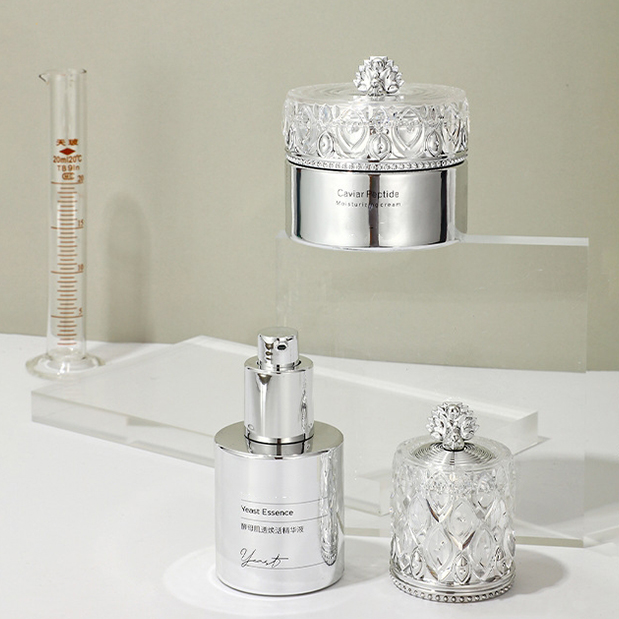
Luxury cosmetics often utilize acrylic, also known as Polymethyl Methacrylate, to construct heavy wall airless containers. An acrylic airless pump bottle features a double-wall design, where an inner bottle made of PP or PETG holds the liquid formula, while a thick, transparent acrylic outer chassis provides weight, depth, and glass-like visual elegance.
This double-wall architecture provides aesthetic advantages while adding an extra layer of thermal insulation around the product. The outer acrylic wall protects the inner chamber from ambient heat fluctuations, helping maintain formula temperature stability during international shipping and travel.
Operational Guidelines for Filling and Maintenance
Achieving flawless performance from an airless pump bottle requires adhering to precise filling procedures, proper sanitization, and correct operational techniques. Because airless dispensing relies on a true vacuum environment, improper filling or maintenance can compromise container functionality.
Operational Handling and Dispensing Parameters
|
Operational Stage |
Primary Technical Objective |
Mandatory Guideline |
Risk of Improper Handling |
|---|---|---|---|
|
Container Filling |
Eliminate interior air voids |
Fill liquid directly to designated fill line |
Trapped air causes initial pump sputter |
|
Piston Placement |
Ensure lower seal integrity |
Verify base piston rests flat before filling |
Tilted piston leads to fluid bypass |
|
Actuator Assembly |
Create hermetic top seal |
Snap or thread pump head securely |
Loose assembly breaks internal vacuum |
|
First Use Priming |
Purge residual air in pump head |
Press actuator repeatedly until fluid flows |
Incomplete priming causes erratic dosing |
|
Container Cleaning |
Maintain hygienic reuse |
Wash with warm water and soft cloth |
High heat distorts plastic structural fit |
Proper Filling Procedures to Prevent Air Pockets
Filling an airless pump bottle requires careful attention to fluid levels and air displacement. Liquid formulations must be filled directly into the container chamber without introducing large air bubbles. Manufacturing facilities utilize bottom-up filling nozzles that submerge into the bottle before discharging liquid, gradually rising as the container fills to prevent air entrapment.
It is critical to fill the airless pump bottle to its recommended capacity line. Under-filling leaves a large air gap between the top surface of the liquid and the bottom of the pump engine. When the user depresses the pump, they must execute dozens of empty strokes to purge this trapped air before fluid reaches the nozzle. Conversely, over-filling can force fluid into the pump engine threads during assembly, causing overflow and messy exterior residue.
Cleaning, Sanitizing, and Refilling Protocols for Reusable Containers
Many modern consumers prefer a refillable airless pump bottle to reduce personal plastic consumption. Refillable designs feature removable inner cartridges or threaded pump heads that allow users to clean and replenish the bottle with fresh product.
When preparing a reusable clear airless pump bottle for refilling, the container must be thoroughly sanitized. Disassemble the pump head, inner fluid cartridge, and base piston. Wash all components with mild liquid soap and warm water, avoiding boiling water that could warp precision plastic tolerances. Sanitizing the interior with a seventy percent isopropyl alcohol solution eliminates residual bacteria. Ensure every part is completely dry before reassembling and pushing the base piston back down to the bottom of the chamber using a clean, blunt rod.
Priming the Dispensing Engine and Maintaining Vacuum Integrity
Upon filling a fresh or refilled airless pump bottle, the dispensing engine must undergo a initial priming process. Priming involves depressing the actuator head repeatedly to push out tiny amounts of air trapped within the internal pump chamber itself. Depending on the engine design, priming typically requires between five to fifteen strokes before a solid stream of product dispenses.
Once primed, the internal vacuum system operates smoothly. Users should avoid unscrewing the pump head during routine daily use. Removing the pump head breaks the hermetic seal, introducing ambient air into the head space and forcing the user to re-prime the system. Keeping the pump engine securely fastened ensures continuous vacuum integrity and maintains optimal product protection throughout the lifespan of the bottle.