English
 Español
A 50 ml serum bottle can look flawless on a retail shelf and still cause complaints in the bathroom: the pump drags, the shoulder scuffs, or the label wrinkles after two weeks. Most of those issues are not decoration problems. They start with the material specified for the bottle, cap, pump, and inner components. The practical answer is to match each resin or glass type to the formula, the filling line, the use environment, and the price the brand can defend. The sections below explain how that decision works in real packaging projects.
Start With the Formula, Not the Resin
Material selection begins with what goes inside the bottle. A water-based toner, an anhydrous facial oil, a silicone-heavy primer, and a high-alcohol setting spray place different demands on the container. PET gives excellent clarity and works well for many alcohol-free or low-alcohol formulas, but it can be vulnerable to certain solvents and to stress cracking around the shoulder. PP is cloudier and less glossy, yet it handles many aggressive ingredients and is a natural choice for caps, pumps, and hinged closures. Glass is inert and premium in feel, but weight, breakage, and shipping cost need to be priced in. A useful brief states the formula's pH, alcohol content, oil phase, fragrance level, fill temperature, and expected shelf life. Without those details, a supplier can only quote a shape, not the right material.
PET and PETG: Clarity, Shelf Presence, and Practical Limits
PET is the workhorse for clear lotion bottles, spray bottles, and wide-mouth jars where brand color and product visibility matter. It accepts frosted finishes, soft-touch coatings, UV metallization, and silk-screen printing, so it can move from a low-cost stock bottle to a premium-looking package without changing the mold. PETG is denser and heavier in hand, with a glass-like gloss that suits serum bottles and thick-wall jars. The trade-off is cost and scratch sensitivity: PETG shows handling marks more readily than PET, so it often needs a protective bag or a robust secondary carton. For e-commerce, a 0.5–1.0 mm wall variation may be acceptable in a 200 ml shampoo bottle, but a 30 ml serum bottle needs tighter control because the label and cap alignment make small dimensional shifts visible. PET also has a moderate oxygen barrier; for a vitamin C serum or a fragrance with sensitive top notes, an airless system or an inner barrier layer is usually more reliable than relying on the bottle wall alone.
PP and PE: Workhorse Materials for Pumps, Caps, and Squeeze Bottles
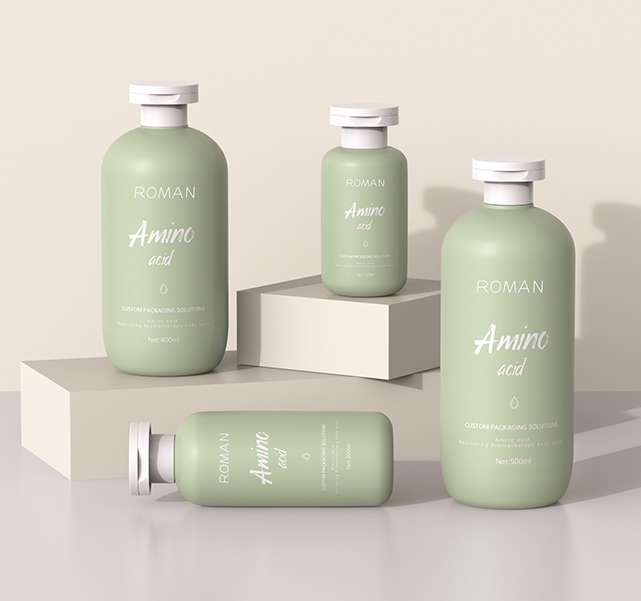
PP and PE are less about shelf glamour and more about function. PP is rigid, has good chemical resistance, and forms living hinges, which is why it dominates flip-top caps, disc caps, and pump components. PE, especially HDPE, is flexible and stress-crack resistant, making it suitable for squeeze bottles, shampoo bottles, body wash, and large-format hotel amenities. A common mistake is to specify a glossy PET bottle with a PP pump and assume the two will feel like one package. In practice, the cap and bottle often come from different tools, so the neck finish, thread pitch, and sealing surface must be validated together. A 28/410 neck is not automatically interchangeable across suppliers; the thread depth and the liner or plug design affect leak performance. For a 300–500 ml shampoo or lotion line, a PE or PP bottle with a matching PP pump is often the most forgiving route for high-speed filling and daily bathroom use.
Airless and Vacuum Systems: Where Material Choice Meets Dispensing
Airless bottles are not a single material category, but they change how material choice is judged. In an airless pack, the product contacts the inner pouch, the piston, and the pump chamber far more than the outer bottle wall. The outer shell can be PP, PETG, AS, or a refillable mono-material structure, while the functional parts must be compatible with the formula and with the evacuation rate. For a 30 ml foundation or sunscreen, the practical target is usually a clean dispense with minimal residual product; the piston should move smoothly without channeling, and the pump should not spurt after the first few strokes. The material decision should therefore include the spring type, gasket elastomer, and pouch film. This is where an experienced supplier can prevent a late-stage failure, because a beautiful outer bottle cannot compensate for a pump that lets air back into the chamber. If you are comparing formats, the industry discussion around the plastic airless bottle becoming a top choice is a useful reality check on barrier and dispensing trade-offs.
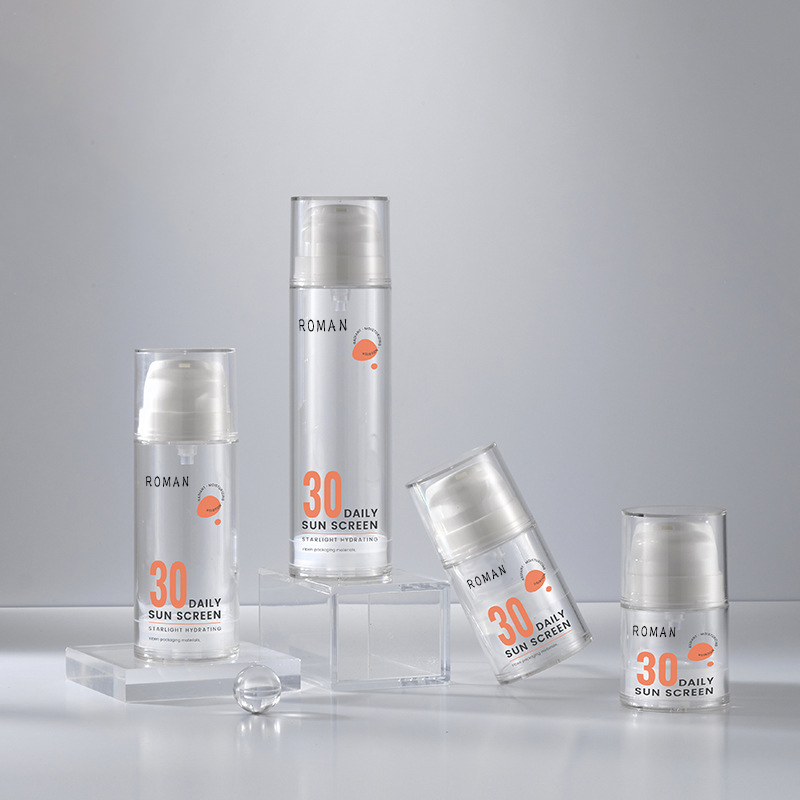 Transparent Airless Pump Bottles for Serum and Body OilSized from 15 ml to 120 ml, this OEM/ODM airless pump range protects sensitive formulas and supports controlled dosing for serums and body oils.View Product →
Glass: Weight, Inertness, and the Luxury Signal
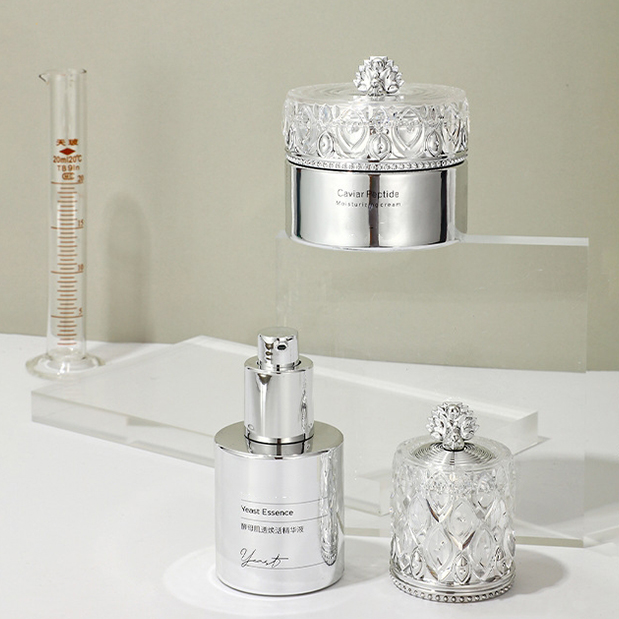
Glass remains the clearest signal of premium skincare, especially for serum, perfume, essential oil, and cream jars. It is chemically inert, does not absorb fragrance, and can be washed and refilled without the odor carryover that sometimes affects plastic. The costs are not only unit price: glass weighs more, needs stronger transit protection, and has a higher breakage allowance in filling and fulfillment. A 30 ml glass dropper bottle may require a molded pulp or EVA insert, plus a carton tested for parcel shipping, while a 50 ml plastic airless bottle may travel safely in a simpler mailer. Glass also has tolerances. Neck finish, bore diameter, and stopper fit must be checked with the dropper or pump supplied, not assumed from a catalog drawing. For a luxury cream or fragrance launch, glass can justify the freight and breakage budget. For a travel kit or a subscription refill, it often cannot. The right question is not whether glass looks better, but whether the full landed cost still supports the retail price and the return rate.
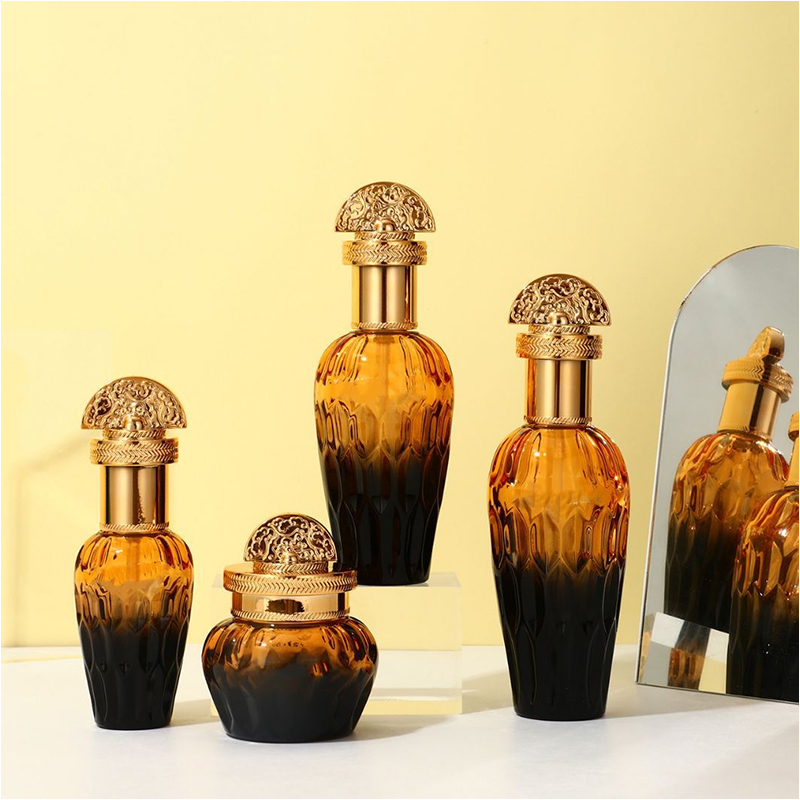 Frosted Glass Lotion Bottles with Dropper PumpRecyclable glass packaging with dropper pump supports a premium skincare image; customizable color and printing are available for OEM/ODM orders.View Product →
PCR, Straw, and Bamboo: Sustainability Without Guesswork
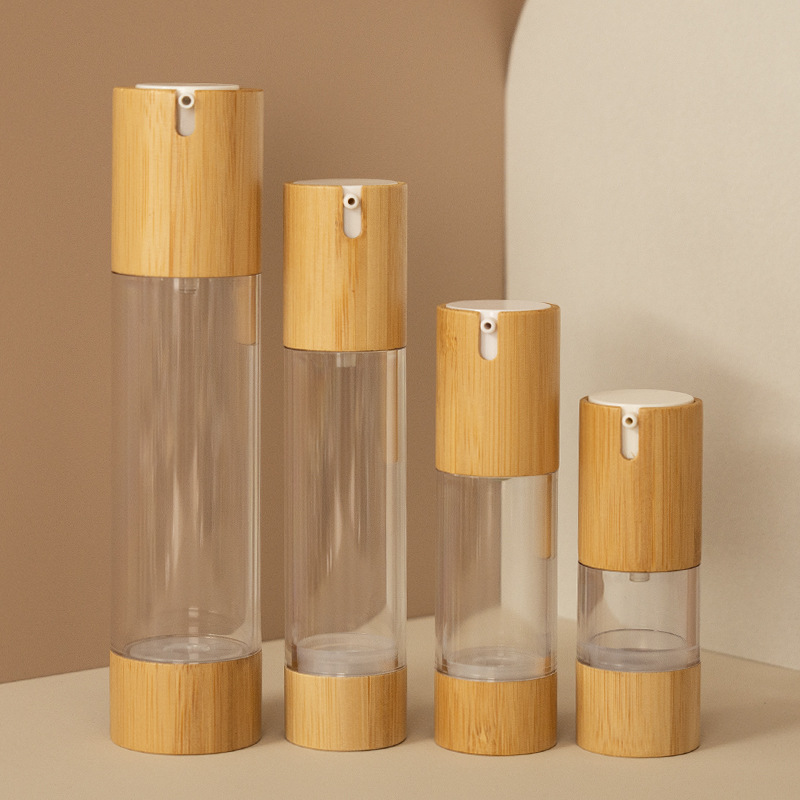
Sustainable materials need the same functional scrutiny as virgin resin. PCR PET and PCR PP can reduce virgin plastic demand, but the percentage, source, color consistency, and cosmetic-contact documentation matter. A 30% PCR claim is not the same as a 100% PCR claim, and a PCR bottle with a virgin pump is not a mono-material package. Straw-filled plastics and bamboo blends can create a natural texture and a useful marketing story, but they may vary in color, odor, and impact strength from batch to batch. Bamboo caps and bamboo outer shells add a warm, tactile cue, yet the inner container still needs to protect the formula. For a face cream jar, a bamboo lid over a PP or glass jar is a practical compromise; for a 15 ml eye cream, a bamboo airless pump can combine a natural exterior with controlled dispensing. If your team is weighing recycled content, the difference between PCR and rPET is worth clarifying before the artwork is finalized.
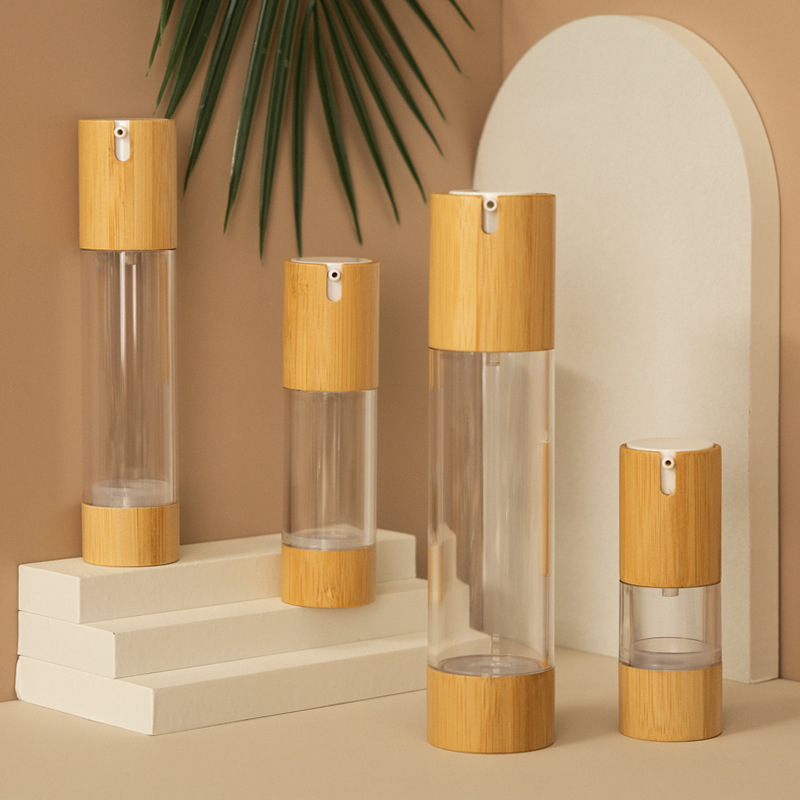 Bamboo Airless Pump Bottles for Eye CreamCombines a bamboo exterior with airless vacuum dispensing for emulsion and eye cream products, offering a natural aesthetic for premium skincare packaging.View Product →
A Quick Comparison Table for Specifying
Use the table below as a screening tool, not a final material approval. The final choice still needs a compatibility test with the actual formula, a filling trial, and a transit test for the target market.
| Material | Typical uses | What it does well | Main watch-outs |
|---|---|---|---|
| PET / PETG | Clear lotion, spray, serum, jar | Clarity, gloss, decoration | Solvent stress cracking, scratch visibility, moderate barrier |
| PP | Caps, pumps, airless shells, jars | Chemical resistance, hinges, cost | Lower gloss, molded-in stress, neck fit |
| PE / HDPE | Shampoo, body wash, squeeze, hotel | Flexibility, stress-crack resistance | Soft feel, limited clarity, paneling |
| Glass | Serum, perfume, cream, oil | Inertness, weight, premium feel | Breakage, freight, dimensional variation |
| PCR | Bottles and jars with recycled content | Lower virgin resin use | Color, odor, supply consistency, documentation |
| Bamboo / straw blends | Caps, shells, promotional packs | Natural texture, differentiation | Batch variation, moisture, strength |
Decoration, Fit, and the Hidden Cost of Mismatched Components
Decoration is where material choices become visible. Spray coating and UV lacquer can make a PP bottle look ceramic, but adhesion depends on surface energy and pre-treatment. Hot stamping on PETG can look sharp, yet it may crack if the bottle flexes during filling. Silk-screen printing on PE needs the right ink and flame treatment, or the logo will rub off in transit. A 0.2 mm shift in print position is invisible on a 500 ml body and obvious on a 15 ml dropper bottle. That is why a pre-production sample should be filled, capped, labeled, and shaken, not merely photographed. Check the pump orientation, the cap gap, the label overlap, and the base wobble. Check the carton with the bottle inside, because a bottle that passes a drop test alone may fail when it is packed with a heavy jar or a glass dropper. These details are not cosmetic. They are the difference between a launch that ships on time and one that spends six weeks arguing about a mold adjustment.
How to Brief a Supplier Without Losing Time
A good packaging brief is short but specific. Include the formula type, fill volume, target market, shelf life, filling method, decoration, and annual quantity. Add the test standard: ISTA 1A or 3A for parcel, a specific drop height, a leak test duration, and a color tolerance such as ΔE ≤ 2.0 for a Pantone match. State whether the bottle will be filled cold or hot, and whether the product contains alcohol, essential oils, or active ingredients that attack certain resins. Ask for the neck finish drawing, the pump or cap specification, and the recommended liner or valve. Shaoxing Roman Plastic Co., Ltd. describes its model as design, injection molding, assembly, and inspection, which reduces handoffs: the bottle, cap, and print can be checked as one system rather than three separate purchase orders. That is especially useful when a project combines a custom pump, a decorated bottle, and a retail carton with a tight launch date.
The Practical Rule
Choose the material that protects the formula with the least total cost, then decorate it to carry the brand. PET and PETG give clarity and shelf appeal; PP and PE give durability and closure performance; glass gives inertness and weight; PCR, straw, and bamboo add sustainability cues when the supply and testing support the claim. If a material cannot pass a fill trial, a leak test, and a transit test, it is not the right material for that product, no matter how good it looks in a render. The most reliable cosmetic bottle is the one whose material, dispenser, decoration, and carton were specified as a single packaging system.