English
 Español
Can I put perfume in a plastic spray bottle? Yes—if the bottle is made from a compatible resin, the sprayer is built for alcohol-based liquids, and the perfume will stay inside for days or a few weeks, not months. For a weekend trip, a gym bag, or a sample you plan to use quickly, a clean PET or PETG spray bottle can work well. For a favorite fragrance you intend to keep for a year, glass remains the safer default.
The practical answer is not “plastic is bad” or “plastic is fine.” It is a compatibility question. Perfume is a demanding liquid: it usually contains a high share of ethanol, water, fragrance oils, and fixatives. Those ingredients can interact with the wrong plastic, the wrong gasket, or a poorly sealed pump. The result can be a softened bottle, a sticky leak in a bag, or a fragrance that smells flatter after a few weeks. The good news is that a short list of material and design checks removes most of the risk.
Match the plastic to the job
Use a plastic spray bottle for perfume only when four conditions are true at the same time. First, the storage period is short: days to a few weeks, not a full season. Second, the bottle body is a known resin with suitable alcohol and fragrance-oil resistance, such as PET, PETG, or a PP container where clarity is not required. Third, the sprayer, dip tube, and gasket are compatible with the formula; a beautiful bottle with an unknown gasket can still fail. Fourth, the bottle is clean, dry, and leak-tested before it goes into a bag.
If any one of those conditions is missing, do not treat the plastic bottle as a long-term perfume container. A bottle that was designed for water-based toner, cleaning fluid, or a temporary hotel amenity may have a pump engine and seal package that were never intended for a fragrance with a high alcohol content. That does not make the bottle defective. It means the application is wrong.
- Short-term travel: a 5–50 ml plastic spray bottle is convenient and light, but transfer the perfume back to glass when the trip ends.
- Everyday bag use: choose a bottle with a locking cap or a tight overcap, and test it upside down for at least 24 hours before carrying it.
- Long-term display: use glass. Plastic is more likely to show permeation, odor retention, or surface changes over months.
- High-value or complex fragrance: keep it in its original glass bottle and use a small glass travel atomizer if needed.
Why perfume stresses plastic
Perfume is not just scented water. Ethanol can permeate some polymers, and fragrance oils can be absorbed into plastic surfaces. Once absorbed, those oils may stay in the bottle and mix with the next fragrance, which is why a plastic travel bottle can keep a ghost of the last scent. Ethanol also evaporates faster than water, so a poor seal changes the fragrance balance over time. The top notes—often the citrus, green, or aromatic materials—can fade first, while the base notes become more prominent. That shift may be acceptable for a three-day trip and unacceptable for a collectible bottle.
Light and heat make the problem worse. A plastic bottle left on a sunny windowsill or in a hot car can accelerate oxidation and pressure changes. Even a compatible bottle should be kept cool and dark. If the bottle becomes soft, cloudy, tacky, or visibly deformed, stop using it. Those are signs that the formula and the container are not getting along. For a broader view of how plastic skincare packaging protects formulas, see this discussion on plastic skincare bottles and formula preservation.
| Material | Typical use | Perfume storage risk | Practical note |
|---|---|---|---|
| Glass | Long-term fragrance storage and travel atomizers | Low interaction with most perfume formulas | Heavier and breakable, but the safest default for valuable scent |
| PET or PETG | Clear cosmetic spray bottles and travel bottles | Moderate; depends on alcohol level, fragrance oils, and seal quality | Good clarity and light weight; use for short-term and test with the actual formula |
| PP | Sprayer parts, caps, and some bottle bodies | Generally good chemical resistance, but often opaque and prone to odor retention | Useful for pump components; check the complete assembly, not just the bottle body |
| HDPE | Utility and opaque travel bottles | Good resistance in many cases, but can absorb fragrance and is not transparent | Practical for rugged use; less suitable when the fragrance must be displayed |
| Unknown or mixed plastic | Low-cost generic spray bottles | Variable and unverified | Avoid for perfume unless the supplier provides resin and compatibility data |
Choose the bottle like a packaging engineer
Start with the body resin. PET and PETG are common for clear cosmetic spray bottles because they offer good clarity and reasonable resistance, but they are not a free pass. A high-alcohol extrait, a citrus-heavy formula, or a fragrance with unusual solvents may still interact with the bottle. PP is often a better choice for the sprayer housing and cap because it handles many chemicals well, while the body may be PET or PETG. Avoid PVC, polystyrene, and unidentified recycled blends for perfume unless you have specific compatibility data. “Recyclable” does not automatically mean “fragrance-compatible.”
The sprayer matters as much as the bottle. A fine-mist nozzle with a controlled orifice gives a softer, more even spray and reduces the chance of a visible stream. Look for a screw or crimp finish that matches the neck, a dip tube that reaches the bottom without curling, and a gasket that is rated for alcohol-based products. A silicone or nitrile gasket may be fine in one design and wrong in another; ask for the material and test the assembled bottle. A leak test is simple: fill the bottle with water, close it, invert it, and leave it on a paper towel for 24 hours. Then repeat with the perfume for a short trial period before packing it in a suitcase.
- Body: known PET, PETG, or PP grade; no unidentified plastic.
- Sprayer: fine mist, smooth actuation, no drips after spraying.
- Seal: compatible gasket, tight cap, no seepage at the neck.
- Capacity: 5–50 ml for travel; 100 ml or less if you need to meet common cabin-bag limits.
- Cleanliness: new bottle, no dust, no odor, and a protective overcap.
For stock options, browse the site’s plastic spray bottle range and compare neck sizes, capacities, and sprayer styles before ordering samples.
 PET Plastic Cosmetic Spray Bottles for Travel and RefillsRefillable 50–200 ml PET spray bottles with fine-mist pumps and leak-proof seals, suited for sunscreen, disinfectant, perfume, and essential-oil travel sizes.View Product →
Fill and carry it without contaminating the scent
Work over a tray or a clean towel, not over a sink. A small funnel is the simplest transfer tool, but it must be clean and dry. A plastic syringe gives more control and is useful for narrow-neck bottles, though it adds another item that must be cleaned. Direct spraying from the original bottle into the travel bottle is the least efficient method: it aerates the perfume, loses a fine mist into the air, and can leave a sticky film around the opening. If you must use that method in an emergency, spray slowly and stop before the bottle is full.
Leave about 5–10% headspace for thermal expansion. Overfilling can force liquid through the pump seal when the bottle warms up in a bag or a car. Wipe the neck and threads with a clean tissue, close the cap firmly, and label the bottle if you are carrying more than one scent. Do not top up a plastic bottle with a different fragrance unless you accept that the plastic may retain the previous odor. For a refillable travel set, keep one bottle per fragrance family and clean them with warm water and mild detergent, followed by a distilled-water rinse and a full air dry. Avoid harsh cleaners that can leave residue inside the pump.
When glass is the better answer
Choose glass when the perfume is expensive, when it has a delicate top-note structure, when you plan to store it for more than a few weeks, or when the bottle will sit in sunlight. Glass is chemically inert for most fragrance formulas, does not retain odor in the same way, and gives a more stable long-term home for ethanol-based liquids. It is heavier and breakable, so it is not always the right travel choice. A practical compromise is to keep the original bottle at home and use a small glass atomizer for trips, reserving plastic only for rugged, short-term situations where breakage is a bigger concern than long-term scent stability.
If you are comparing formats, look at the glass spray bottle’s neck finish, atomizer quality, and cap seal rather than just the shape. A poorly made glass bottle can leak as easily as a plastic one. For fragrance packaging, the pump and seal are part of the product, not an afterthought.
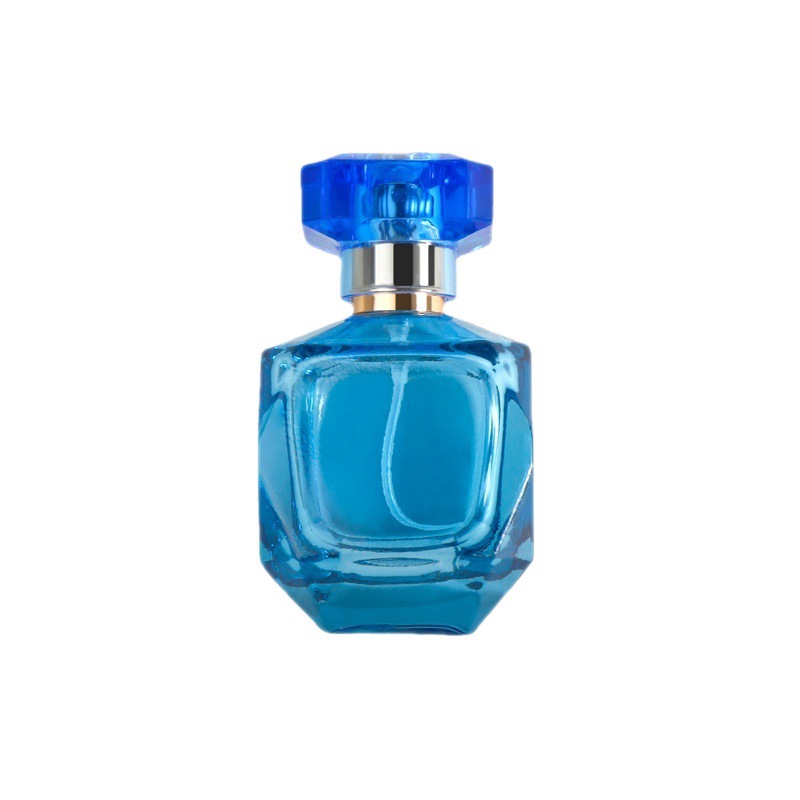 Blue Glass Spray Perfume Bottles for Fragrance PackagingEmpty blue glass perfume bottles with custom color, printing, and OEM/ODM support for recyclable fragrance packaging and refillable cosmetic use.View Product →
Buying checklist for brands and private-label projects
For a brand, hotel amenity, sample program, or private-label travel set, do not approve a plastic perfume spray bottle from a photo alone. Request the body resin, the sprayer material, the gasket material, and the neck dimensions. Ask for a compatibility test with a representative fragrance, not only with water. A sensible test protocol is to fill samples with the actual formula, store them at room temperature and at an elevated temperature such as 40°C for two to four weeks, then check for weight loss, leakage, odor change, color change, and deformation. The exact duration and temperature should match the risk level and the destination market.
Also confirm the practical details that cause returns: actuation force, spray pattern, drip after use, cap retention, and drop-test performance. If the bottle will be decorated, check that the coating or print does not crack when the bottle is squeezed or dropped. For an OEM/ODM project, keep the fragrance formula, the bottle, and the sprayer in one approval loop. A bottle that passes with a water fill may still fail with a citrus cologne or a high-alcohol mist. The most reliable approach is to test the complete pack, not the components in isolation.
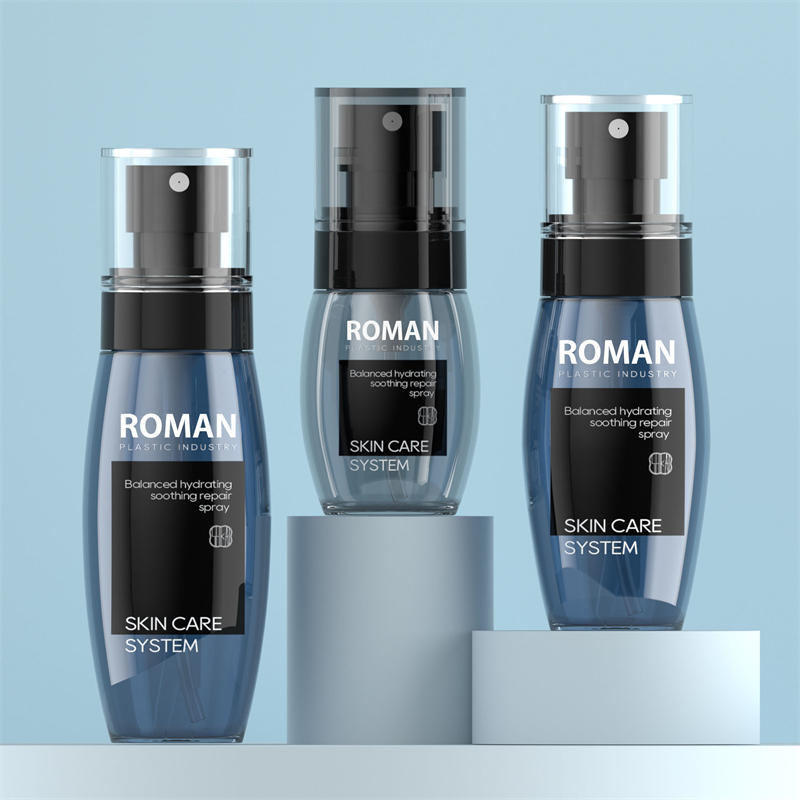 Blue Plastic Fine-Mist Spray Bottles with Black Pump40–80 ml cobalt-blue plastic spray bottles with fine-mist pumps, 360° spraying, and dual-gasket sealing for sunscreen, body perfume, and salon hair styling.View Product →
A plastic spray bottle is a useful short-term tool, not a long-term archive. If you need to carry perfume for a few days, choose a clean, compatible bottle with a good seal, fill it carefully, and keep it out of heat and sunlight. If you want to protect a fragrance for months or years, use glass and treat plastic as the backup plan. That simple split—short-term plastic, long-term glass—prevents most of the leaks, faded top notes, and mystery odors that give travel perfume bottles a bad name.