English
 Español
Picture a finished bottle of facial serum. The pump sputters, the last drops cling to the inner wall, and you are left holding a small plastic container with a metal spring inside. This scene repeats in millions of bathrooms every week, and the answer to "what should I do with this?" is rarely as simple as tossing it into the recycling bin. Empty cosmetic bottles are a packaging paradox: they look recyclable, but their mixed materials, small size, and leftover residue often make them difficult to process in standard recycling facilities.
The most useful way to deal with an empty cosmetic bottle is to run it through a short decision sequence: clean it, assess it, reuse it, refill it, and only then recycle it. That sequence, applied consistently, keeps far more packaging in circulation than the default habit of dropping everything into one bin and hoping for the best. This guide explains each step in practical terms, including how to sort bottles by material, which components to remove, which reuse ideas actually work, and what to look for when you buy the next product.
Why Empty Cosmetic Bottles Are a Genuine Waste Problem
Cosmetic packaging is one of the most complex waste streams in the household. A single luxury serum bottle can combine a glass or plastic body, a pump with a metal spring, a decorative cap, a label with adhesive, and an inner dropper pipette. That is not one recyclable object; it is four or five objects bonded together. Recycling facilities are designed to handle clean, separated, single-material items, and mixed packaging is usually rejected or sent to lower-value recovery routes.
The volume also matters. Households that follow a typical skincare routine generate dozens of empties per year: toner bottles, serum droppers, moisturiser jars, sunscreen tubes, cleanser pumps, and shampoo bottles. Many of these containers are technically recyclable, but small items like lip balm pots and sample jars fall through sorting screens and end up in landfill. Pumps and triggers are even more problematic because they contain springs and ball bearings that contaminate the plastic stream.
The conclusion is simple: the worst thing you can do with an empty cosmetic bottle is to place it in the recycling bin without thinking. The best thing you can do is to take thirty seconds to prepare it correctly and then choose the right destination. The difference between those two actions determines whether the material is actually recycled, downcycled, or discarded.
Here are the most common reasons empty cosmetics containers get rejected at sorting facilities:
- Pump heads left attached to bottles
- Heavy product residue inside jars and tubes
- Mixed materials bonded together that cannot be separated
- Dark plastic containers that sorting machines cannot identify
- Items smaller than a credit card that fall through sorting screens
Clean and Sort Your Empties Correctly
The golden rule of recycling cosmetics packaging is that "empty" means no significant product residue. A bottle caked with foundation or a jar with a thick layer of face cream will be rejected at the sorting facility, and one contaminated batch can send an entire truckload to incineration. Rinse bottles with warm water, use a spatula or squeezer for thick creams, and let everything dry before it goes into a bag or box.
What counts as empty enough
You do not need to make the container sterile. You need to remove the visible product. For liquids, a quick rinse with warm water and a drop of dish soap is enough. For balms and creams, scrape out what you can with a spatula or metal tool, then rinse. For products with SPF or pigment, the residue carries active ingredients that can affect the recycling process, so a more thorough rinse is worthwhile.
Sort by material type
Once clean and dry, separate items by material. Glass jars and bottles are straightforward to recycle, but their caps are usually a different material. PET bottles are widely accepted in curbside programs, while PP caps and pump parts are less consistently accepted. PETG and acrylic are technically recyclable in some industrial streams, but many municipal programs do not accept them. When in doubt, check the resin code printed on the bottom of the container.
| Material | Common uses | Resin mark | Typical household recycling route |
|---|---|---|---|
| PET (polyethylene terephthalate) | Clear lotion bottles, toner bottles, spray bottles | 1 | Widely accepted curbside |
| HDPE | Opaque shampoo, conditioner, body wash bottles | 2 | Widely accepted curbside |
| PP (polypropylene) | Caps, pump bodies, some jars and tubes | 5 | Accepted where mixed plastics are collected |
| PETG | Frosted or tinted serum bottles | — | Rarely accepted curbside; check specialty programs |
| LDPE | Squeeze tubes, some caps | 4 | Limited curbside; often collected as soft plastic |
| Glass | Serum jars, dropper bottles, perfume bottles | — | Accepted at glass bank or curbside |
| Aluminium | Aerosol cans, some caps and tubes | — | Accepted where scrap metal is collected; aerosols must be empty |
This table is a starting point only. Local recycling rules vary widely, and the fastest way to confirm is to check the waste collection guide for your municipality. Many cities now publish simple online tools where you can type in "lotion pump bottle" and receive an exact instruction.
Which parts to remove
Most cosmetic bottles are assemblies, not single objects. Removing the parts that are not the same material as the main body is the single most effective action you can take.
| Component | Material typically used | What to do |
|---|---|---|
| Pump head | PP with metal spring, HDPE dip tube | Remove; dispose in general waste unless local program accepts rigid plastics |
| Dropper bulb | Rubber or silicone | Remove; place in general waste or rubber recycling |
| Glass pipette | Glass | Remove carefully; place in glass recycling |
| Cap or lid | PP or PE | Reattach to bottle if same plastic type; otherwise recycle separately |
| Outer carton | Cardboard | Flatten and recycle with paper |
| Inner tray or separator | PET or PP | Separate and check resin code |
| Label | Paper or plastic film | Leave on if water-soluble; peel off if the program requires clean bottles |
The key principle is that the recycler wants the largest possible single-material fraction. A clean PET bottle with no pump, no metal spring, and no silicone gasket is worth far more as recyclable material than the same bottle with all its accessories attached.
Recycling Options That Actually Work
Once your empties are clean and sorted, you have several disposal routes. The right one depends on your local infrastructure and the type of packaging you are holding. There is no single universal answer, but the alternatives below cover the vast majority of situations.
Curbside programs: accept the limits
Curbside recycling is convenient, but it is not the best destination for every cosmetics container. Standard programs accept rigid plastic bottles, glass jars, and cardboard, but they often reject pumps, triggers, droppers, and anything smaller than a few centimetres. If your program accepts "rigid plastics" broadly, you can include PP pump bodies. If it only accepts bottles and jars, remove the pump and place it in general waste or take it to a drop-off point.
Many people are surprised to learn that removing the cap is not always required. In some facilities, caps are screened out and recycled separately; in others, they must be reattached so the small caps are not lost in the sorting process. Follow the instruction for your specific program, and when in doubt, choose the option that keeps the cap with the bottle of the same material.
Retail and brand take-back programs
Beauty retailers and cosmetic brands run in-store collection points for empty packaging. These programs commonly accept items that curbside schemes reject, including pumps, mascara wands, lipstick tubes, and mixed-material compacts. The collected empties are sorted, cleaned, and processed into secondary raw materials such as plastic pellets, which are then used to make new packaging, furniture, or building materials. Some programs also donate a portion of the value to environmental causes.
The practical advantage of a take-back program is that it accepts the awkward items. The practical disadvantage is that it requires you to store empties, remember to bring them, and restrict yourself to the brands that participate. Still, if you are already purchasing from a brand that offers a return scheme, using it is one of the best ways to keep complex packaging out of landfill.
Mail-in beauty recycling programs
Mail-in programs fill the gap when local options are limited. You collect your clean empties, pack them into a shipping box, print a prepaid label, and send the box to a processing facility. Some programs issue store credit or reward points for each empty, and the shipping label is often free. The main requirement is that you follow the acceptance list: most programs exclude nail polish, aerosols, and products that contain hazardous ingredients.
Mail-in recycling works well for people who generate a steady stream of empties and want to consolidate them into one occasional shipment. It also works well for small items that fall through the cracks of curbside sorting, such as lip balm pots and foil mask sachets. The downside is the logistics: you need a box, a label printer, and the discipline to hold on to empties until you have enough to make the shipment worthwhile.
Reuse Ideas That Make Sense in Daily Life
Before you send a clean empty into the recycling stream, ask whether it can serve a second purpose in your home. Reuse is not about turning your bathroom into a hoarding display; it is about choosing a few containers that genuinely make your routine easier and letting the rest go. The most useful candidates are pump bottles, which can be refilled; wide-mouth jars, which are easy to clean; and spray bottles, which accept water-based liquids.
Travel and portable use
Small glass dropper bottles are excellent for decanting facial oil, makeup remover, or hand sanitiser into a handbag. A cleaned toner bottle with a fine-mist spray can hold rose water, a linen mist, or a quick refreshing spray for hot days. A functioning lotion pump bottle can be refilled with hand soap in a guest bathroom or with dish soap at a secondary sink. The only caution is to label anything that will be used for a different product, especially if the contents are not obvious.
Vanity and desk organisation
Wide-mouth cosmetic jars make natural homes for cotton pads, cotton swabs, hair ties, and bobby pins. A tall glass bottle can hold makeup brushes or a few artificial flowers. A small jar with a screw lid is a practical container for paper clips, hairpins, or jewellery. The visual result is often more attractive than plastic drawers, and the glass is easy to sanitise between uses.
Plants, crafts, and small-item storage
Glass bottles and jars can be repurposed as miniature vases for cuttings, as propagation containers for plant roots, or as holders for dried flowers. Small pump bottles can be filled with liquid fertiliser diluted to the correct concentration. In a sewing or craft room, cosmetic jars are ideal for buttons, beads, needles, and other small parts that otherwise scatter across a table. A flip-top bottle can hold diluted glue or a homemade cleaning solution.
DIY mixing and application
Some of the most practical reuses involve skincare itself. A clean wide-mouth jar can serve as a mixing palette for custom foundation shades or as a holder for a facial mask made at home. An empty eye cream jar can hold a small amount of your regular moisturiser when you are travelling and do not want to carry the full-size jar. A cleaned spray bottle can dispense a DIY facial mist, a setting spray, or a fabric refresher.
| Container type | Best reuse | Things to avoid |
|---|---|---|
| Airless pump bottle | Refill with the same formula; portable daily cream | Do not fill with water-based liquids for long storage |
| Lotion pump bottle | Hand soap pump at a secondary sink | Do not use for oils if the dip tube is incompatible |
| Glass dropper bottle | Facial oil or makeup remover travel size | Do not microwave to clean; thermal shock cracks glass |
| Wide-mouth jar | Cotton pads, beads, buttons, mixing palette | Do not refill with expired product |
| Spray bottle | Linen mist, plant mist, facial mist | Do not reuse for bleach or solvents |
| Flip-top bottle | Shampoo for travel, diluted cleaner | Label clearly if switching product type |
These ideas share one feature: they give the container another useful life without requiring a change in the product itself. Reuse is the fastest win in the empty-bottle workflow because it costs nothing, saves money on accessories, and reduces the number of items entering the recycling system.
Get Every Last Drop Before You Recycle
The most underrated step in the empty-bottle workflow happens before recycling: extracting what is left. Thick creams, serums, sunscreens, and toothpaste-like formulas cling to the walls of bottles and tubes. Depending on the product, a meaningful share of the contents can remain in the package when the consumer stops using it. That leftover product is not just money wasted; it is also organic load that complicates the rinsing step before recycling.
For tubes, the solution is a simple mechanical tool: a tube squeezer. A metal tube squeezer rolls the tube from the bottom, pushing the residue toward the opening, so the last several applications of a face cream, hair dye, or toothpaste can actually be used. This small tool costs very little, lasts for years, and works on any collapsible tube. It is one of the few purchases that pays for itself within the first tube of product it empties.
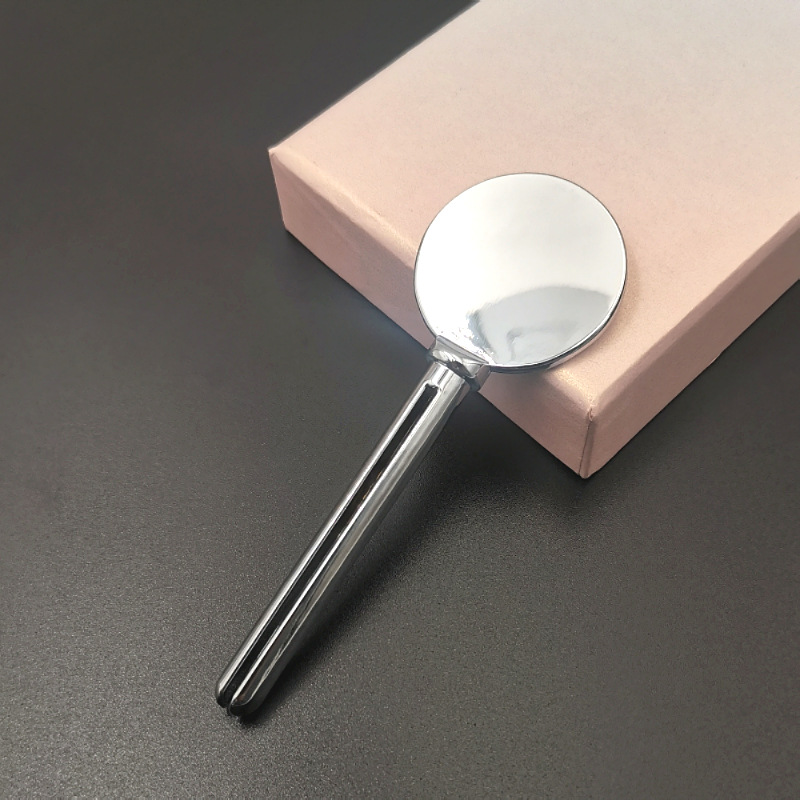 Stainless Steel Tube Squeezer Roller Key for Toothpaste and CreamsThis compact roller squeezes collapsible tubes from the bottom, letting you use the last applications of creams, toothpaste, or hair dye. A durable, low-cost tool that pays for itself quickly.View Product →
For bottles, a cosmetic spatula or scoop is the equivalent tool. Narrow spatulas reach into jars and bottles to scrape out thick creams, while flexible plastic or metal scoops work well on balms and butters. Using a spatula before rinsing reduces the amount of product that washes down the drain and makes the empty container easier to recycle. Brands that sell their products in jars often include a spatula in the box, but you can also purchase one separately and use it across all your skincare jars.
The environmental impact of extraction is larger than it seems. If every household recovered just a few millilitres from each empty tube and jar, the cumulative reduction in product waste and rinse-water contamination would be substantial. For a brand, promoting extraction tools alongside its packaging sends a clear signal that the company cares about the full lifecycle of the product, not just the first use.
Refillable Packaging Is the Real Fix
The hierarchy of empty-bottle solutions is clear: reuse beats recycling, and refill beats both. When a container can be refilled with the same product from a bulk refill pack, a refill pouch, or a compatible cartridge, the original packaging's life extends from weeks to months or even years. Refillable packaging is the closest thing the cosmetics industry has to a circular model because it keeps the high-value bottle in use and only replaces the low-value refill.
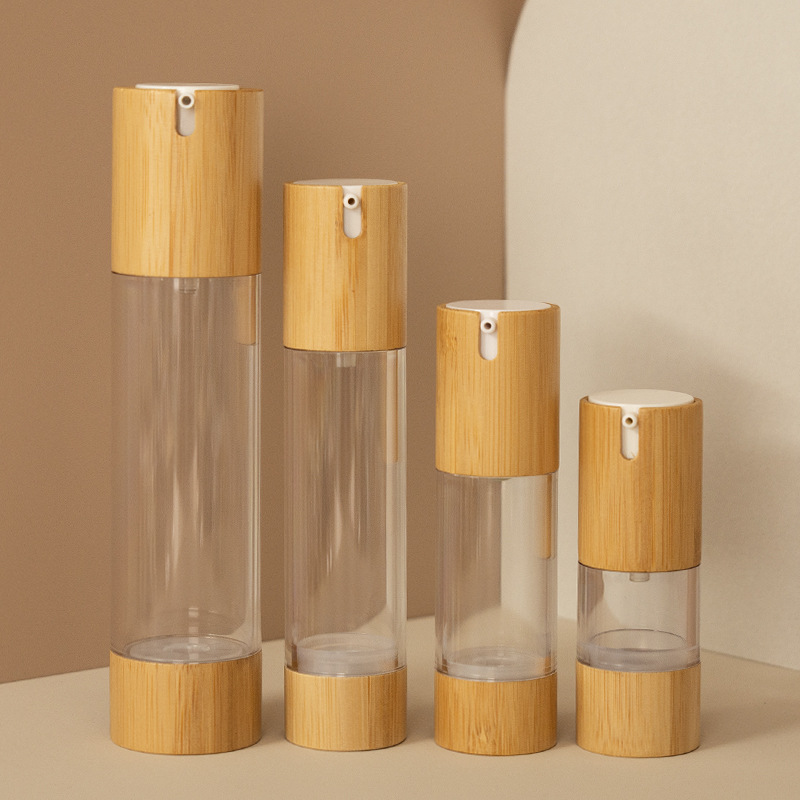
Airless pump bottles are particularly well suited to refillable systems. Their design seals the product away from air, which reduces oxidation and microbial contamination, so the product stays fresher for longer. Many airless bottles are now available with replaceable inner cups or screwable refill mechanisms, meaning the outer shell can be reused while the inner cup is swapped. For thick creams, serums, and sunscreens, this format performs better than a jar because the user never dips fingers into the product.
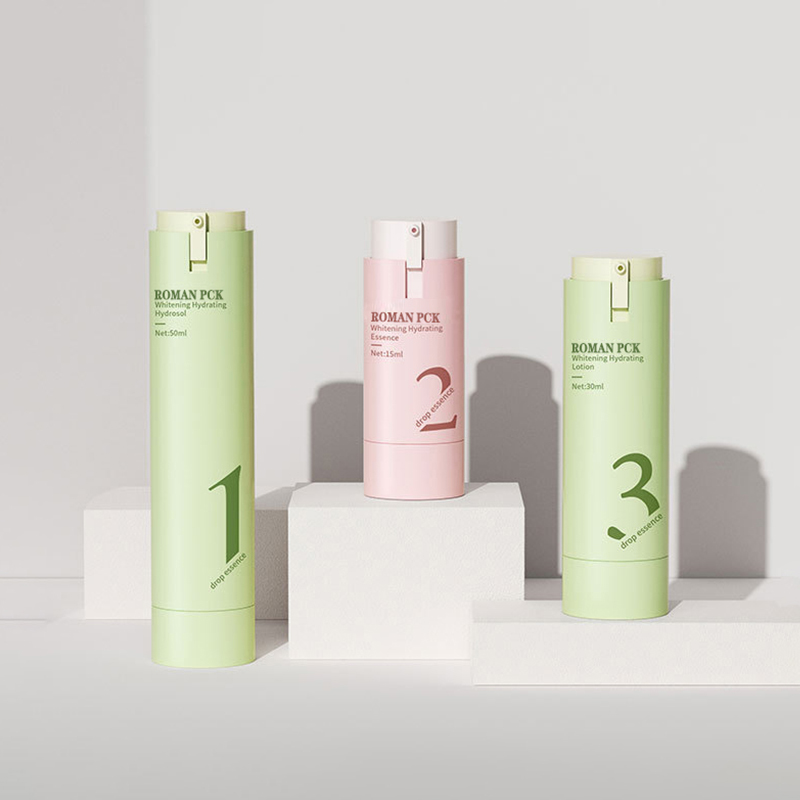 Refillable Airless Pump Bottle for Serums and SkincareSealed airless design prevents oxidation and contamination, while the refillable system cuts plastic waste. Ideal for thick creams, serums, and foundations, delivering precise doses and reducing residue.View Product →
The shift toward airless packaging is not a marketing fad. It is a practical response to three problems at once: product preservation, dosage control, and waste reduction. A well-designed airless bottle can dispense nearly the entire contents, leaving far less residue than a traditional jar. The trend is discussed in depth in the packaging industry coverage of why more skincare brands are choosing airless bottle packaging.
For consumers, choosing products in refillable packaging means fewer empties to manage. For brands, it means a packaging line that supports customer loyalty and a lower per-unit packaging cost over time. The main barrier is habit: consumers are used to buying a new bottle every time, and brands are used to selling one. Refill systems require a small behaviour change, but the convenience of a durable pump bottle that stays on the bathroom shelf and accepts a simple refill pouch is increasingly attractive to both sides.
What Not to Do with Empty Cosmetic Bottles
Knowing the right moves is only half of the battle. Several common habits quietly undermine recycling efforts, and avoiding them is as important as following the positive steps.
- Do not put pump heads in the glass bottle bin. A pump is a mixed-material assembly; it belongs in rigid plastic recycling or general waste, not with glass.
- Do not recycle bottles with heavy product residue. A jar with a thick layer of face cream will contaminate the batch. Rinse or scrape until no visible product remains.
- Do not microwave glass jars to soften leftover product. Thermal shock can crack or shatter the glass, and the product itself may overheat and change composition.
- Do not refill a bottle that once contained sunscreen or a water-based formula without washing and drying it thoroughly. Residual active ingredients and microbial growth can contaminate the new product.
- Do not donate used cosmetics or opened containers. Health regulations and hygiene standards prevent most organisations from accepting opened personal care products.
- Do not burn plastic containers or dispose of aerosols in regular bins unless the local program explicitly allows them.
- Do not combine different plastic types in a single container. If a lid is PP and the bottle is PET, separate them before recycling.
The underlying principle is that recycling systems reward cleanliness and penalise complexity. Every pump, every label, and every gram of residue reduces the value of the material that reaches the recycler. When you take the extra minute to prepare an empty properly, you are not being obsessive; you are making the entire chain more efficient.
Choosing Better Packaging Next Time
The cleanest empty bottle is the one that was designed to be emptied responsibly from day one. When you buy a product, the packaging tells you a lot about how its end of life will go. Three decisions matter most: the choice of material, the use of mono-material design, and the proportion of recycled content.
Material decisions
A PET bottle with a PP cap is still a mixed item, but it is manageable if the cap is easy to remove and both parts carry a clear resin code. A bottle made entirely of PP, including the pump, is mono-material and far easier to recycle because the whole assembly can be processed together. Glass jars are infinitely recyclable in principle, but their heavy weight increases transport emissions, and their caps are usually a different material that must be removed.
Mono-material design
Some newer airless pumps are built with a PP body and a TPE spring, eliminating the metal spring entirely. That single change means the whole pump can be recycled in the PP stream without disassembly. For a brand, specifying a mono-material pump is a concrete way to improve the recyclability of the finished product. For a consumer, choosing a mono-material package is a quiet vote for simpler recycling.
PCR content and recyclable labels
Post-consumer recycled (PCR) plastic uses material that has already completed one lifecycle, which reduces the demand for virgin resin. PCR bottles are now available in a wide range of colours and capacities, and the quality has improved significantly in recent years. The trade-off is that PCR resin is not always identical to virgin resin in clarity or consistency, so brands need to test moulding, surface treatment, and compatibility with the formula. The progress of these materials is covered in more detail in the industry analysis of how PCR cosmetic bottles are revolutionising the beauty industry.
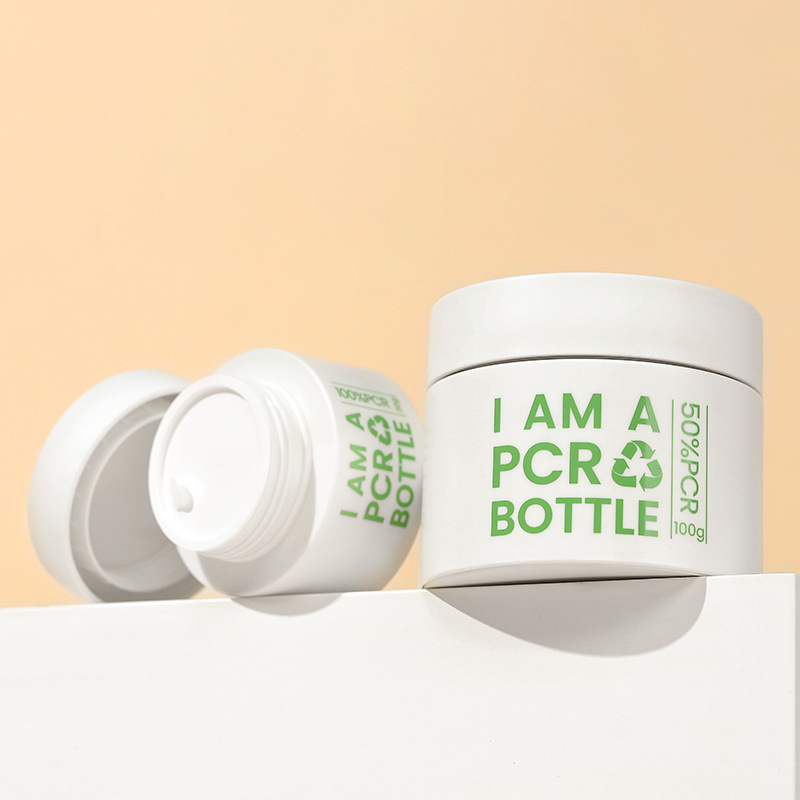 PCR PP Refillable Plastic Jar for Skincare Creams and ButtersMade from post-consumer recycled polypropylene, this jar suits creams, scrubs, and butters. Its refillable design supports sustainability, and the material offers chemical and temperature resistance comparable to virgin plastic.View Product →
Labels also matter. A full-wrap plastic label that is the same polymer as the bottle can be recycled together; a paper label with strong adhesive may need to be peeled off. Water-soluble adhesives and shrink sleeves that float off during washing are the friendliest options for recyclers. If you are a brand, asking your packaging supplier for a recyclability assessment of your current package is a quick way to find weak points.
What Brands and Manufacturers Can Do
For a brand owner, empty cosmetic bottles are not just a consumer inconvenience; they are a design brief. Every decision made at the drawing board — resin choice, pump type, label material, cap colour, surface finish — determines what happens when the consumer empties the bottle. A packaging supplier that offers OEM and ODM services can help specify the right combination of bottle, pump, cap, and decoration, and can advise on how those choices affect recyclability.
The questions a packaging buyer should ask are concrete. Can the pump be removed easily? Is the label water-soluble or easily removable? Does the bottle use a resin code that is accepted in the target market? Is the bottle compatible with a refill cartridge? Can the surface decoration be applied without contaminating the recycling stream? What minimum order quantity applies to a PCR option? Answering these questions before finalising the design is far cheaper than redesigning after customers start complaining.
From the manufacturer's side, the rise of empty-bottle reuse and recycling is pushing packaging suppliers to offer more mono-material airless bottles, bamboo-lid jars with removable glass or plastic inner cups, and PCR alternatives at reasonable minimum order quantities. A manufacturer that can produce a bottle, decorate it, and assemble the pump under one roof reduces the number of suppliers a brand must coordinate, which also simplifies the sustainability audit. This is the model offered by integrated packaging manufacturers such as Shaoxing Roman Plastic Co., Ltd., which combines injection moulding, surface treatment, assembly, and quality checking in one facility.
Manufacturing capability directly affects how far a brand can go with sustainable packaging. A supplier with dozens of injection moulding machines and dedicated assembly lines can handle the higher precision required for airless pumps. A supplier experienced with screen printing and hot stamping can decorate PCR surfaces that behave differently from virgin plastic. And a supplier located close to major export ports can keep logistics emissions lower for international shipping. These are the practical details that determine whether a sustainable packaging strategy survives contact with production reality.
The empty cosmetic bottle is not a problem to solve once and forget. It is a recurring decision point in every household and every supply chain. The practical sequence is simple: clean it, get every last drop out, reuse it where that makes sense, refill it if the format allows, and only then send it into the recycling stream — the right stream, with the right parts removed.
Consumers who follow the sequence will produce less waste, save money on products they would otherwise buy again sooner, and send a clear signal to brands and packaging manufacturers that circular design matters. Brands that respond with refillable formats, mono-material pumps, and PCR packaging will find that responsible disposal is no longer a niche concern but a mainstream expectation. The bottle in your hand right now is small, but the system around it is not. Every empty that is prepared properly and routed correctly is a small step toward a packaging industry that treats its materials as assets rather than rubbish.