English
 Español
Imagine you have just finalized a new vitamin C serum. The active concentration is locked, the stability tests have come back clean, and the formula is ready for production. The only decision left is the bottle. Choose a screw-cap dropper bottle and oxygen will enter every time the cap comes off, slowly oxidizing the ascorbic acid. Choose a pump with a weak seal and the product may thicken or darken before the customer finishes the bottle. Choose a container made from the wrong resin and the formula can react with the plastic wall, shifting pH or extracting additives.
To answer the question directly: the main types of skincare bottles are lotion pump bottles, airless pump bottles, fine mist spray bottles, dropper bottles, foam pump bottles, flip-top and disc-cap bottles, syringe-shaped bottles, and twist-up stick containers. Within each type, you then choose between plastic, glass, and sustainable material options, as well as different pump outputs, closure designs, and surface decorations. This guide explains what each bottle format does, where it works best, and how to make the packaging decision with confidence.
Why the Bottle Type Matters More Than It Appears
Skincare packaging is often treated as a branding exercise, but the bottle type has direct consequences for product performance. Four factors matter most: oxygen exposure, light exposure, dispensing accuracy, and formulation compatibility.
Oxygen is the most common enemy of skincare actives. Vitamin C, retinol, and many botanical extracts oxidize quickly when exposed to air, which changes both color and efficacy. A bottle that allows air to flow back into the container after every pump will shorten the effective shelf life of an oxygen-sensitive formula. This is why airless bottles and well-sealed pumps exist: they minimize the amount of air that comes into contact with the product.
Light exposure is a second issue. Essential oils, retinol, and certain antioxidants degrade under UV light. Amber glass and opaque plastic, or even a simple cardboard outer carton, reduce this risk. If your formula is light-sensitive, the bottle choice is not just an aesthetic decision; it is a functional one.
Dispensing accuracy matters for both safety and user experience. A serum formulated for 0.5 ml per application will be hard to manage from a wide-mouth bottle. An eye cream that needs a micro-dose is better served by a syringe or airless mini pump than by a large lotion pump that delivers 2 ml per stroke. Getting this right affects how the customer uses the product and how quickly they finish it.
Finally, formulation compatibility determines whether the packaging will hold up in the real world. Thick creams cannot be reliably dispensed through a dip-tube lotion pump. Water-thin toners will leak from a flip-top cap. Products with high oil content can swell or craze certain plastics. Matching viscosity, chemical composition, and bottle type is the core of packaging development in skincare.
Main Skincare Bottle Types
Below is a practical overview of the most widely used skincare bottle categories. Each one exists to solve a specific set of problems, and each one has its own best-use scenarios.
Lotion Pump Bottles
Lotion pump bottles are the workhorses of the skincare industry. A lotion pump consists of a dip tube that extends into the liquid and a pump head that draws product up and forces it out through the nozzle. When the pump is pressed, the piston pushes liquid out; when it is released, the chamber refills. The output per stroke typically ranges from about 1 ml to 4 ml, depending on the pump design.
These bottles are best suited to low-viscosity and medium-viscosity formulas: body lotion, hand cream, sunscreen lotion, cleansing milk, makeup remover, shampoo, shower gel, and liquid hand soap. They are available in capacities from 30 ml up to 750 ml or even 1000 ml, which makes them practical for both small-format serums and large body-care products.
PET is the most common body material for lotion pump bottles because it is clear, lightweight, and shatter-resistant. For products that need a matte or frosted appearance, PET bodies can be spray-finished or frosted, or the bottle can be molded in PP with a frosted finish. Pumps themselves are usually made from PP, with options for metal or plastic actuators in white, black, gold, or silver.
One sourcing risk is viscosity mismatch. A pump engineered for a thin toner will struggle with a heavier lotion, producing slow spring recovery, sputtering, and inconsistent doses. Before finalizing a pump, test it with the actual formulation, not with water. Pump outputs also matter for dosing: a 1 ml output suits a facial essence, while a 2 ml to 3 ml output suits a body lotion.
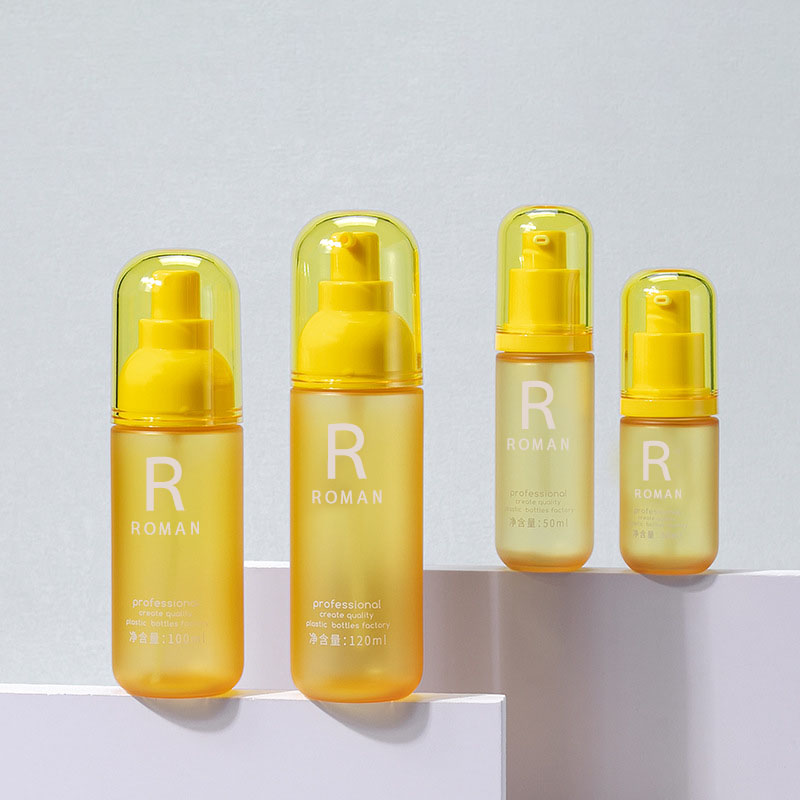 PET Round Lotion Pump Bottle with Yellow Cap in 30–120 mlCompact PET bottle suited for makeup removers and light lotions. Ideal for testing pump viscosity with your actual formula, offering controlled dispensing and light protection in small sizes.View Product →
For brands that need a compact pump bottle for makeup removers, facial cleansers, or light lotions, a PET lotion pump bottle in 30 ml to 120 ml is a practical starting point. The same bottle family can be extended to 200 ml, 300 ml, and 500 ml for larger body-care formats.
Airless Pump Bottles
Airless pump bottles work on a different principle from lotion pump bottles. Instead of a dip tube, the product sits in a chamber above a piston at the bottom of the bottle. As the pump head is pressed, the piston rises, pushing product upward and out of the valve. No outside air enters the container because the piston seals off the lower chamber. This design prevents oxidation, reduces the risk of bacterial contamination, and allows nearly complete evacuation of the product, which means less waste for the consumer.
The airless format is the default choice for oxygen-sensitive formulations: vitamin C serums, retinol treatments, peptide creams, whitening products, sunscreens with unstable filters, and high-value face creams or eye creams. It is also widely used for foundations and BB creams because the precise, contamination-free dispensing keeps the makeup fresh for longer.
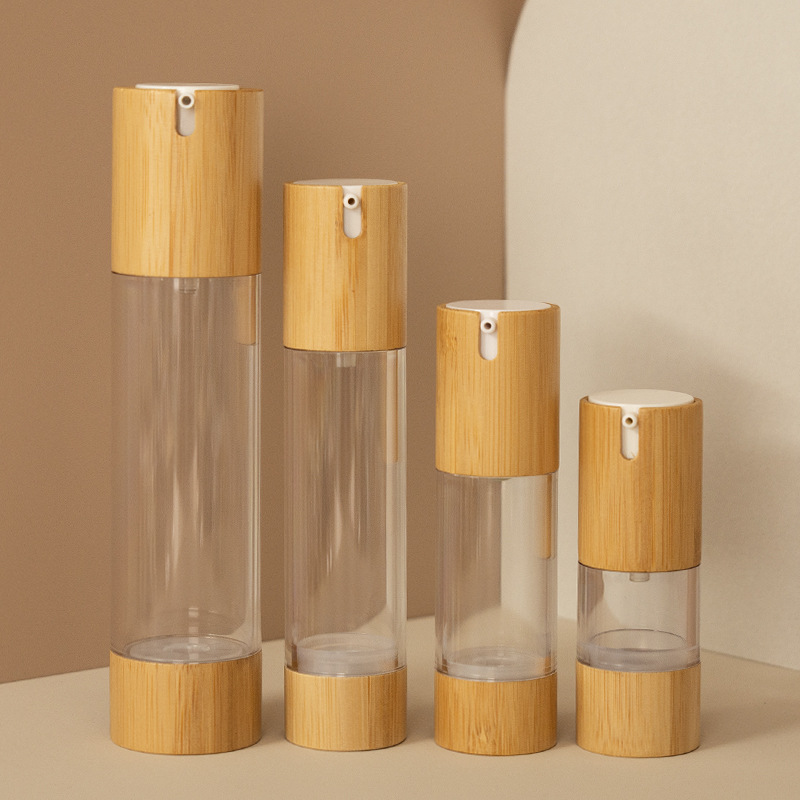
Airless bottles are available in capacities from 5 ml up to 120 ml, with 15 ml, 30 ml, and 50 ml being the most common for facial skincare. Many airless bottles use PP for the body because it can be molded with a smooth matte finish and is compatible with a broad range of cosmetic formulations. Newer designs include mono-material airless bottles with TPE springs, which improve recyclability by eliminating the metal spring inside the pump.
This is one reason why more and more skincare brands are choosing cosmetic airless bottle packaging: the format directly supports claims of stability, preservation, and reduced waste. If the product contains active ingredients that degrade in air, or if the brand wants a premium clinical look, airless is the safest investment.
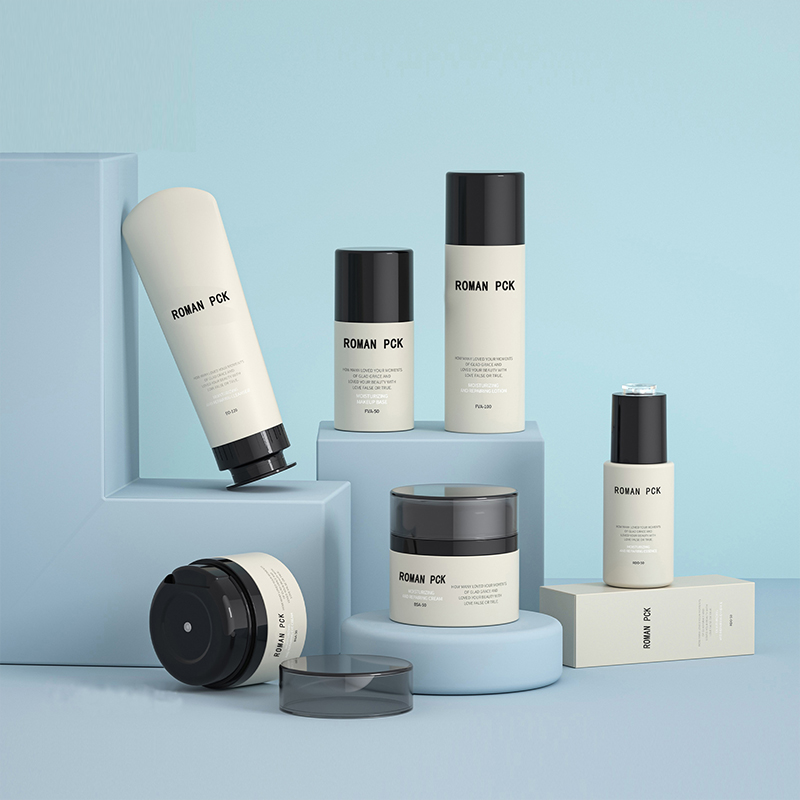 Plastic Vacuum Airless Pump Jar for Face Creams (15–50 ml)Airless piston system maintains an oxygen-free chamber, preserving active ingredients like vitamin C and retinoids. Hygienic dosing and premium look for high-value cream and serum lines.View Product →
Brands launching a face cream or serum line often start with a vacuum jar or airless pump bottle in 15 ml to 50 ml, combined with custom color matching and screen printing for the outer surface. The piston system also works well for thicker creams that would clog a standard dip-tube pump.
Fine Mist Spray Bottles
Fine mist spray bottles turn a liquid into a fine, even spray through a specialized sprayer head. The sprayer draws liquid up through a dip tube and forces it through a small orifice, breaking it into droplets. The quality of the mist depends on the design of the sprayer, the size of the orifice, and the viscosity and surface tension of the liquid.
This format is ideal for toners, facial mists, setting sprays, hair water sprays, and lightweight sunscreen or tanning mists. Common capacities range from 30 ml to 200 ml. PET is the dominant body material because it is clear, lightweight, and compatible with most water-based formulas. For premium products, frosted PET or colored PET with a gold or silver sprayer creates a high-end look.
Two practical details need attention. First, the sprayer must match the liquid: a thick formulation will clog a fine mist head, so a lotion sprayer or a larger-orifice sprayer is needed for more viscous liquids. Second, continuous spray mechanisms have become popular in sunscreens and setting sprays because they can spray at any angle, but they add cost and complexity. Test the spray pattern early; droplet size and coverage directly affect how consumers perceive the product.
Dropper Bottles
Dropper bottles consist of a bottle body and a dropper closure with a glass or plastic pipette and a rubber bulb. The user squeezes the bulb, inserts the pipette into the liquid, releases to draw product up, and then squeezes again to dispense drops. This format is strongly associated with facial oils, serums, essences, and hair oils.
Glass dropper bottles dominate the premium serum segment because glass is inert and does not interact with oils or botanical extracts. Clear glass shows the product color, while amber glass provides UV protection for light-sensitive actives. Frosted glass adds a tactile, luxury feel. Plastic dropper bottles, usually in PET or PETG, are lighter and more travel-friendly, and they are commonly used for lower-cost or high-volume products.
Dropper bottles range from 5 ml to 100 ml, with 10 ml, 15 ml, and 30 ml being the most common for facial serums. The main limitation is oxygen: every time the dropper is removed and reinserted, air enters the bottle. For formulas that are highly sensitive to oxidation, an airless pump is a better choice. For standard oils and serums, however, the dropper remains the most consumer-recognized and elegant format.
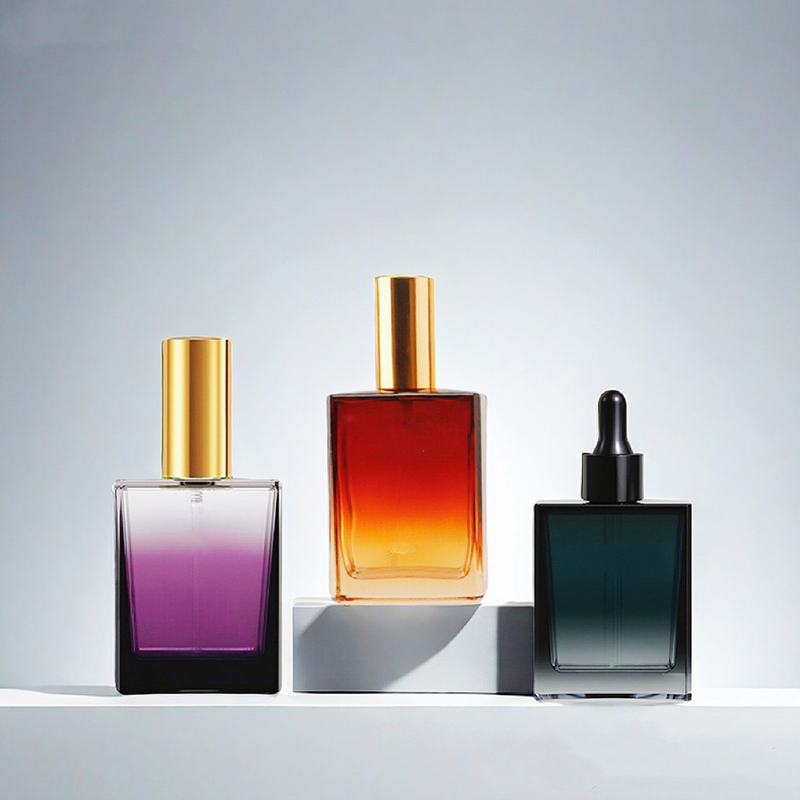 Glass Dropper Bottle for Serums with Screen Printing OptionClassic dropper format in 5–100 ml, ideal for standard oils and serums. Glass ensures chemical neutrality, while screen printing enables strong brand identity. Note oxygen exposure with repeated use.View Product →
Glass dropper bottles with screen-printed logos are a common private-label configuration for serum brands. The combination of a dropper pipette, a colored or metallic cap, and a frosted or amber glass body creates a strong shelf presence without requiring complex structural tooling.
Foam Pump Bottles
Foam pump bottles, also called foamer bottles, mix the liquid with air as it passes through a mesh or screen inside the pump head, producing a rich foam at the point of dispensing. The foam changes how the consumer applies the product. A foaming facial cleanser feels lighter and spreads more easily than the same liquid applied directly from a lotion pump, and a foam hand wash reduces the amount of liquid soap needed per use.
This format is best for foaming facial cleansers, hand soap, shaving foam, hair mousse, body wash foam, and lash cleansers. Typical capacities range from 50 ml to 500 ml, with 100 ml to 300 ml covering most personal-care applications. PET is commonly used for the body, sometimes with a soft-touch coating or gradient color. The pump itself contains a fine mesh; the mesh density and the liquid-to-air ratio determine the texture of the foam.
Not every formula is suitable for a foamer. The liquid must be thin enough to pass through the mesh, and the surfactant system must produce a stable foam. Alcohol-heavy formulas and oil-heavy formulas do not foam well. Testing the actual formula in the foamer is essential, because small changes in viscosity can make the difference between a creamy foam and a watery spray.
Flip-Top and Disc-Cap Bottles
Flip-top bottles have a hinged cap that opens with one hand, making them convenient for shower use and high-frequency daily application. The bottle body is usually squeezable, and the product is dispensed by pressing the bottle or tilting it. This format is widely used for shampoo, body wash, hand cleanser, toner, and light lotions.
Disc-cap bottles are a variant with a flat disc-shaped cap and a small opening. The user squeezes the body to push the product out through the disc opening. This design provides controlled dispensing and works well for products that are applied to a palm or a cotton pad, such as makeup remover, toner, and essence water.
Typical capacities run from 100 ml to 500 ml. Common materials include PET for clear bottles, PP for colored or frosted bottles, and HDPE or PE for softer squeeze bottles. Flip-top and disc-cap formats are cost-effective, easy to fill, and simple for consumers to understand. The main risk is leakage during transport if the cap seal is poor, so verify seal integrity and consider adding an inner seal for shipment.
Syringe-Shaped Bottles
Syringe-shaped bottles are an airless format that mimics the look of a medical syringe. The product is contained in a barrel, and a plunger mechanism pushes it upward to the dispensing tip. Each press delivers a very small, controlled dose, which makes this format ideal for eye creams, spot treatments, whitening serums, and other products that require precise micro-dosing.
Capacities typically range from 5 ml to 20 ml. The unusual shape creates a clinical, precise brand image and signals that the product is a high-efficacy treatment rather than a daily-use moisturizer. Syringe bottles also reduce waste because the plunger evacuates the product almost completely. The main considerations are the cost of the specialized closure and the need to educate consumers on how to dispense the product correctly.
Stick and Deodorant Containers
Stick containers use a twist-up mechanism to raise a solid or semi-solid product through an opening at the top. They are the standard format for deodorant sticks, sunscreen sticks, lip balms, and solid fragrance balms. The product platform is attached to a threaded screw; rotating the base raises or lowers the platform.
These containers are produced in capacities from about 6 ml to 75 ml and are commonly made from PP, with options for aluminum or plastic bases and colored caps. The most important specification is the fit between the product stick and the platform: a product that shrinks during cooling can loosen from the platform, and a product that swells can jam the thread. Stick formats appeal to consumers who want mess-free, no-drip application, and they are increasingly used for sunscreen and solid cleansers.
Materials: Plastic, Glass, and Sustainable Options
Once the bottle type is selected, the next major decision is the material. The material determines clarity, weight, compatibility, recyclability, and perceived value.
PET and PETG
PET is the most common plastic for skincare bottles because it combines high clarity, low weight, shatter resistance, and recyclability. It is used for lotion pump bodies, spray bottles, foam pump bodies, and many essence bottles. PETG, a glycol-modified version of PET, offers better chemical resistance and can be molded with thicker walls, which makes it a good choice for premium essence and serum bottles that need a heavier feel.
PP and HDPE
PP is valued for its chemical compatibility and its ability to be molded with a matte or frosted surface. Airless bottles, cosmetic jars, deodorant containers, and caps are frequently made of PP. HDPE and PE are softer and more squeezable, which makes them suitable for flip-top bottles, disc-cap bottles, and products where controlled squeezing is part of the dispensing experience.
Glass
Glass is the premium material for serums, essential oils, and luxury skincare. It is impermeable to oxygen and practically inert, so it does not interact with the formula. Clear glass shows the product, frosted glass softens the appearance, and amber glass filters UV light. The trade-offs are weight, breakage risk, and higher shipping cost. Glass is the right choice when the formula contains sensitive botanical oils or when the brand wants a heavy, expensive feel on the shelf.
PCR and Bio-Based Plastics
Post-consumer recycled plastic, or PCR, is made from recycled consumer waste and is increasingly used in skincare packaging. PCR PET and PCR PP reduce the demand for virgin plastic and support sustainability claims, but the recycled resin may have slight color variation, so it is often paired with opaque, frosted, or dark finishes. Wheat straw and bamboo composites offer another route to a natural aesthetic, with visible fibers in the material that signal an eco-friendly product philosophy.
Matching the Bottle to the Product
The following table summarizes the most common bottle types and the product categories they suit. Use it as a starting point, then refine the choice by testing with your specific formulation.
| Bottle Type | Typical Product Applications | Common Capacities | Main Selection Criterion |
|---|---|---|---|
| Lotion pump bottle | Body lotion, sunscreen lotion, cleansing milk, shampoo, shower gel | 30 ml to 750 ml | Pump output and viscosity match |
| Airless pump bottle | Face cream, eye cream, serum, foundation, sunscreen | 5 ml to 120 ml | Oxygen protection and full evacuation |
| Fine mist spray bottle | Toner, facial mist, setting spray, hair mist | 30 ml to 200 ml | Mist particle size and spray pattern |
| Dropper bottle | Facial oil, serum, essence, hair oil | 5 ml to 100 ml | Drop size control and light protection |
| Foam pump bottle | Foaming cleanser, hand soap, shaving foam, lash cleanser | 50 ml to 500 ml | Foam density and liquid-to-air ratio |
| Flip-top or disc-cap bottle | Shampoo, body wash, toner, makeup remover | 100 ml to 500 ml | One-handed operation and leak-proof seal |
| Syringe-shaped bottle | Eye serum, spot treatment, ampoule treatment | 5 ml to 20 ml | Precision micro-dosing and hygiene |
| Stick container | Deodorant, sunscreen stick, balm | 6 ml to 75 ml | Twist-up mechanism and solid formula fit |
For a body lotion, the practical choice is a lotion pump bottle in PET with a 2 ml output pump. For a vitamin C serum, the safer choice is an airless pump bottle in 15 ml or 30 ml. For a facial oil, a glass dropper bottle preserves the premium character of the product. For a foaming cleanser, a foam pump bottle is the only format that delivers the expected sensory experience. Each product family has a natural packaging home, and deviating from it requires a clear reason.
Customization and Branding on the Bottle
Bottle structure is only part of the package. The surface finish, decoration, and closure design carry the brand identity. In a market where many products use similar bottle structures, customization is what makes one brand recognizable.
Surface treatments for plastic bottles include spray painting for full-color coverage, UV coating for a glossy or matte finish, and frosting for a translucent, soft-touch appearance. Screen printing is the most common method for applying logos, product names, and dosage instructions; it is cost-effective for simple two- or three-color designs. Hot stamping adds a metallic foil logo in gold, silver, or other metallic colors, which is a popular choice for premium serums and creams. Labeling remains an option for designs with gradients, photographic elements, or multiple colors that cannot be achieved economically with printing.
Closures also carry branding. A black pump on a white bottle communicates minimalist clinical skincare; a gold pump on a frosted glass bottle communicates luxury; a wooden cap on a bamboo-inspired bottle communicates natural and sustainable. Many suppliers, including those that provide OEM and ODM services, can match the closure color to the brand identity and add custom engravings or colored actuators.
When planning customization, keep production in mind. Custom colors and printed logos usually require a minimum order quantity, and the lead time for decoration is added to the lead time for the bottle itself. Ordering decorated samples before mass production is the most reliable way to confirm color accuracy, print registration, and adhesion of the ink or coating.
Practical Sourcing Considerations
Choosing the right bottle type on paper is not the same as getting a reliable bottle supply. Several practical factors determine whether the packaging works in production and in the market.
First, compatibility testing is non-negotiable. Fill a sample batch of the bottle with your actual formulation and observe it over several weeks. Check for changes in color, viscosity, pH, and odor, as well as leakage, pump performance, and cap fit. This step catches issues that cannot be predicted from technical data sheets, such as a fragrance oil that weakens the plastic or a preservative that discolors the cap gasket.
Second, confirm the pump and closure details before ordering. For a lotion pump bottle, specify the output volume, the actuator type, the collar finish, and whether the pump is crimped or screw-on. For an airless bottle, confirm that the piston diameter matches the product viscosity and that the bottle can be filled on the production line. For a spray bottle, request the mist pattern you want and verify it with a test fill.
Third, evaluate the supplier's manufacturing and quality control capabilities. A packaging supplier with in-house injection molding, assembly lines, and surface decoration can respond faster to changes and maintain better consistency than a supplier that outsources every step. The company's scale also matters: the number of molding machines, assembly lines, and staff gives a rough indication of capacity and reliability.
Fourth, plan for logistics. Export-oriented suppliers close to major ports can shorten shipping times and reduce freight complexity. If the supplier is near Ningbo or Shanghai, for example, the shipment can typically reach international destinations more quickly, and the supplier can manage the export documentation as part of the service.
Finally, review the supplier's product range for overlap with your needs. A supplier that already produces the same bottle type for other customers is more likely to have molds in stock, which reduces tooling cost and lead time. If you need a custom shape, confirm whether the supplier offers OEM tooling and what the mold investment and minimum order quantity are. A transparent conversation about cost, lead time, and quality standards at the beginning prevents most sourcing problems later.
Conclusion
The different types of skincare bottles exist for a reason, and the correct choice depends on the formulation, the use case, and the brand position. Lotion pump bottles handle everyday liquids and lotions. Airless pump bottles protect sensitive actives and deliver cream-based formulas without contamination. Fine mist spray bottles suit toners and mists. Dropper bottles carry oils and serums with a premium touch. Foam pump bottles transform cleansers into a lighter sensory experience. Flip-top and disc-cap bottles offer convenience for daily body care. Syringe and stick formats provide precision and portability for targeted treatments.
The practical process is simple: define the formula, define the dose, define the shelf-life requirement, then choose the bottle that satisfies all three. Test the combination in the real fill and use environment, and partner with a supplier that can support customization, decoration, and quality control. When the bottle matches the formula and the brand, the packaging stops being a container and becomes part of the product itself.