English
 Español
A 30 ml vitamin C serum that turns amber within six weeks, and a 50 g cream that starts smelling faintly of crayons by month three, usually share the same culprit — and it is not the formula. Both are sitting in a container that lets in exactly what the formula was engineered to keep out: oxygen, light, and fingertips.
The short answer, before the reasoning: there is no single best storage container for skincare products. The best container is the one that matches four variables — how sensitive the formula is to oxygen and light, how the product is dosed, how long it has to stay stable, and where it will physically live.
A quick decision list, for readers who want the conclusion first:
- Water-thin serums with retinol, vitamin C, or probiotics: airless pump bottle, 15–50 ml.
- Thick creams, butters, balms, scrubs: wide-mouth jar, sized to be used up in 8–12 weeks.
- Oils and low-viscosity anhydrous serums: glass dropper bottle with a well-fitting bulb.
- Cleansers, body washes, toners: pump, flip-top, or disc-cap bottle depending on viscosity.
- Anything that leaves the house: a dedicated 30–100 ml travel container, filled from a clean bottle, never topped up.
Note that "storage container" carries two meanings here, and both matter. The first is primary packaging — the bottle or jar the product is sold in, which determines stability through its entire shelf life. The second is secondary storage — the cabinet, drawer, or travel case where you keep it, which determines what happens after the seal is first broken. A premium airless bottle stored on a sunny bathroom windowsill will still fail. A modest PET bottle kept in a dark, dry drawer often outperforms it.
This article treats both. The chemistry is the same either way.
The Four Questions That Decide the Container
Before comparing shapes, work through the four questions that actually constrain the answer. Buyers who skip this step usually end up choosing packaging by appearance, and discovering the mismatch during stability testing four months later.
1. How oxygen-sensitive is the formula?
Retinol, ascorbic acid, resveratrol, ferulic acid, probiotics, and unsaturated plant oils all oxidize. Oxidation shows up as colour shift, rancid odour, and measurable loss of active content. If the formula contains any of these at a meaningful percentage, the container should limit headspace air and prevent air flowing back into the bottle after each use. That points toward airless, tubes, or small-orifice pumps rather than jars or wide-mouth bottles.
2. How sensitive is it to light?
Photodegradation is a separate mechanism from oxidation and requires a separate fix. Opaque or heavily pigmented containers solve it outright. Amber and green glass reduce ultraviolet transmission considerably but still pass visible light, which matters for photosensitive actives such as retinol. Clear PET and clear glass are the worst choices for a photosensitive formula, no matter how good the marketing photographs look.
3. How is it dosed?
Dose determines the closure and the orifice, not just the bottle. A 0.2 ml pump stroke suits a serum; it is useless for a 250 ml body lotion. A 15 mm dropper orifice cannot handle a gel above roughly 3,000 cP. A jar is the only practical option for a 200 g shea butter, because no pump will move it. Decide the dose first, then let it eliminate half the catalogue.
4. What is the intended use-up period?
A 15 g eye cream used twice daily is finished in about ten weeks. A 250 g body butter used twice a week may still be open after a year. The larger and slower the consumption, the more total exposure the product accumulates, and the more the container has to compensate. This is why a small jar is acceptable for a rich night cream but a large jar is risky for a light antioxidant lotion.
How a Container Actually Fails a Formula
Container failure is rarely dramatic. It usually arrives as a slow drift that nobody notices until a complaint lands. There are five mechanisms worth understanding, because each one has a different remedy.
Oxidation from headspace and ingress
A standard lotion pump draws product up a dip tube and lets air back into the bottle to replace the volume dispensed. Over a hundred pumps, that is a hundred small breaths of oxygen. Airless systems use a piston that rises as product is drawn down, so the internal volume shrinks with the fill and essentially no air enters. The difference is not cosmetic: airless packaging typically evacuates well over 90% of the fill, while a conventional dip-tube pump often leaves 10–20% stranded at the bottom, and that residue is the most oxidized portion of the batch.
Photodegradation
Ultraviolet light breaks carbon–carbon and carbon–nitrogen bonds in many actives, and the resulting fragments are often coloured, which is why a clear bottle of retinol serum turns yellow before it turns useless. Window glass filters most UV-B, so a serum on a shelf is not the same as a serum on a windowsill. Still, secondary storage in an opaque box or a closed cabinet is the cheapest photoprotection available.
Water loss and hydrolysis
Water vapour passes slowly through plastic walls. A thin-walled PET bottle in a dry climate can lose enough water over 24 months to shift viscosity and cause an emulsion to separate. Thicker walls, PP instead of thin PET, and a properly torqued closure all reduce the rate. For anhydrous products the concern reverses: fragrance and volatile oils escape through the same walls, and a poorly sealed bottle will simply smell weaker than the reference sample.
Microbial ingress
Every time a jar is opened, the entire product surface is exposed to bathroom air, fingers, and whatever was on the towel. Pumps and tubes deliver product without opening the bulk, which is why preservative challenge testing results are so different between the two formats. This is the single strongest argument against large jars for water-containing formulas used in humid rooms.
Migration and absorption
Rubber dropper bulbs absorb fragrance and some lipophilic actives, which can shift the scent profile over months. Uncoated aluminium in contact with acidic formulas can release metal ions that catalyse oxidation. Certain adhesives and cap liners leach into the product at the shoulder. All of these are invisible in a two-week trial and obvious in a six-month one.
Container Types Compared
The table below is the practical summary. Barrier ratings are relative, not absolute — a formula that spends summer in a car will defeat any of them.
| Container | Best for | Oxygen barrier | Main weakness | Typical sizes |
|---|---|---|---|---|
| Airless pump bottle | Retinol, vitamin C, probiotics, foundation, sunscreen | Very good | Higher unit cost; limited viscosity range | 15–120 ml |
| Lotion pump bottle | Body lotion, cleanser, shampoo | Moderate | Air return on every stroke; dip-tube residue | 150–1000 ml |
| Dropper bottle | Oils, serums, essential oil blends | Good when closed | Repeated opening; inconsistent drop size | 5–100 ml |
| Wide-mouth jar | Butters, balms, scrubs, thick creams | Poor once opened | Full-surface exposure, finger contact | 5–400 g |
| Squeeze tube | Masks, hand cream, gel cleanser | Good | Cannot refill; product left in the shoulder | 30–200 ml |
| Fine mist spray | Toners, setting sprays, sunscreen mist | Moderate | Propellant-free pumps lose pressure at low fill | 30–250 ml |
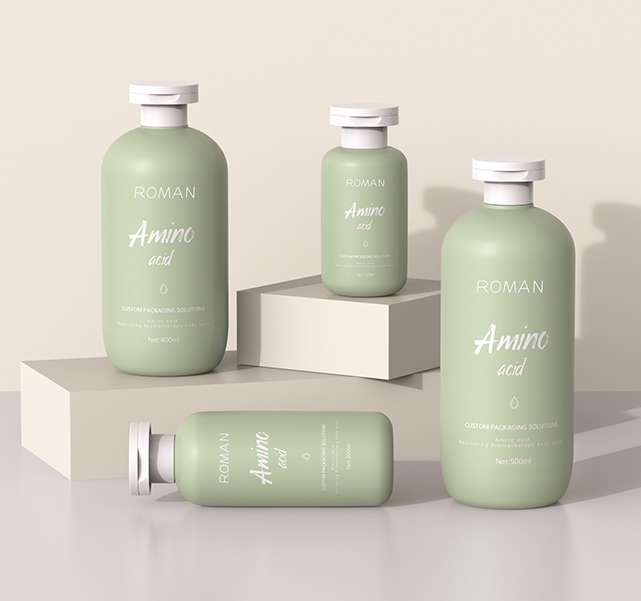
| Flip-top or disc-cap bottle | Shower gel, shampoo, micellar water | Moderate | Large opening; not for oxidizable actives | 100–500 ml |
| Twist-up stick | Deodorant, balm, sunscreen stick | Good | Surface exposure during use | 15–75 g |
Two patterns stand out. First, the containers that protect best are also the ones that dose most precisely — the two properties come from the same design decision. Second, jars are not inherently bad; they are simply the wrong answer for a specific group of formulas, and the right answer for a different group.
Airless Pump Bottles: The Default for Actives
If a formula contains an active that degrades on contact with oxygen, airless is where the evaluation should start. A spring-loaded piston or a vacuum chamber follows the product down, so the bottle collapses internally instead of drawing air back in. In practice this means the last 5 ml behaves like the first 5 ml, which is not true of a dip-tube pump.
There are trade-offs worth knowing before specifying one. Airless bottles have a narrower viscosity window than jars — thin gels and standard emulsions work well, thick butters do not. Particles above roughly 0.3 mm can clog the valve. The actuator stroke has a tolerance, usually stated as something like 0.2 ml ± 10%, so a label claim of "one pump equals one dose" needs verification rather than assumption.
Cost is the other consideration. An airless bottle typically runs 20–40% higher than an equivalent lotion pump at the same volume, and the gap widens once you add decoration. For a premium serum this is irrelevant; for a high-volume commodity lotion it can decide the project.
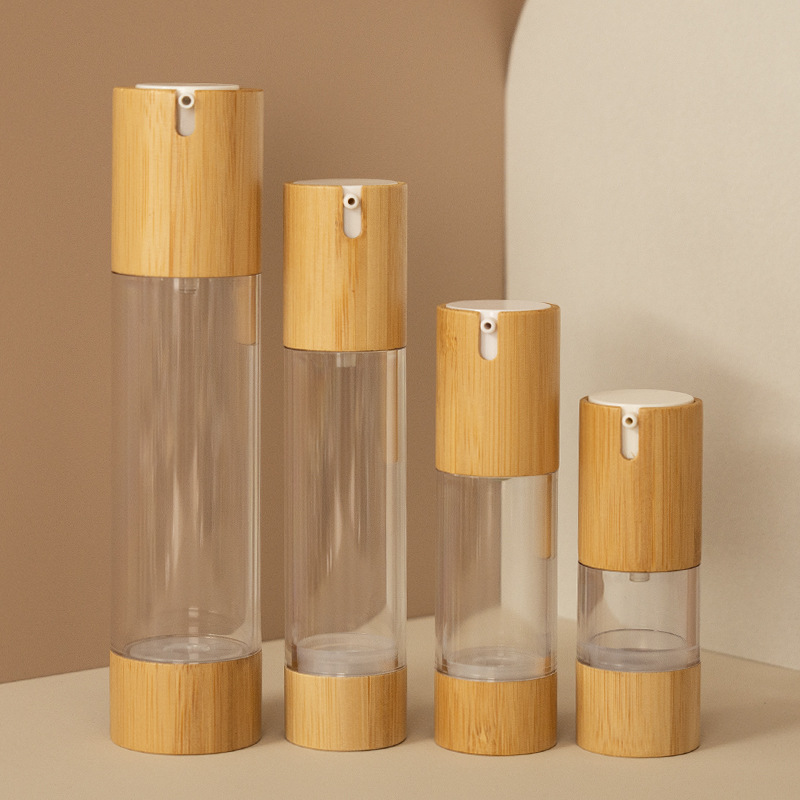
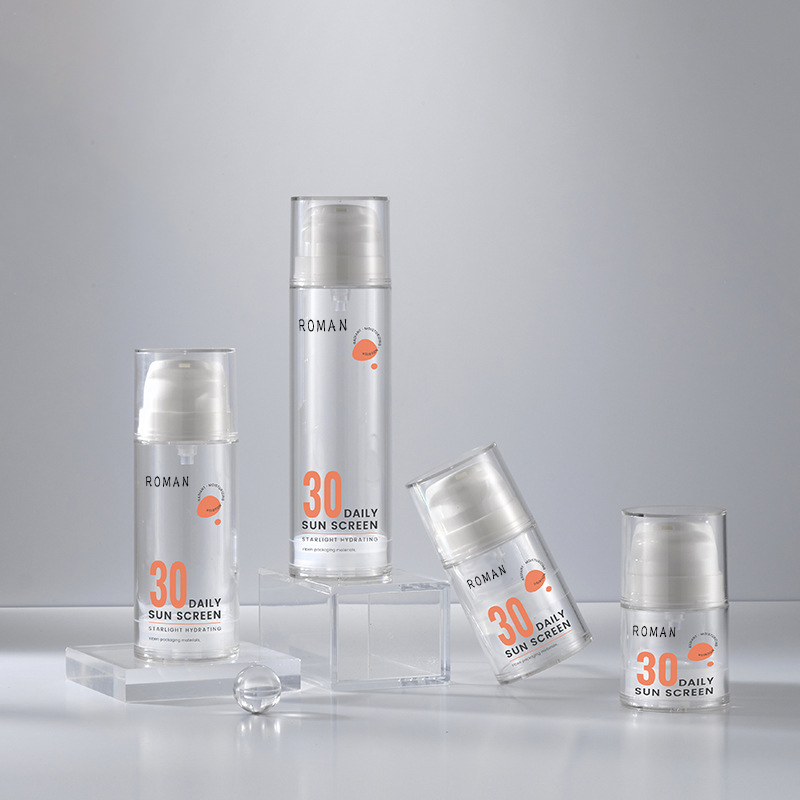 Airless Pump Bottles for Serum and Body OilAvailable in 15–120 ml transparent or white formats, this airless pump series protects sensitive formulas and supports controlled dosing; assess fill-line and cost implications.View Product →
One more detail that catches first-time buyers: the fill line. Airless bottles are usually bottom-filled and then sealed, which requires different filling equipment from a top-filled jar. If your contract manufacturer does not run bottom-filling, the packaging choice may cost more in line conversion than it saves in stability. The broader shift toward this format is covered in a separate piece on why more skincare brands are choosing airless bottle packaging, and it is worth reading alongside the technical specification.
Jars: Where They Work and Where They Don't
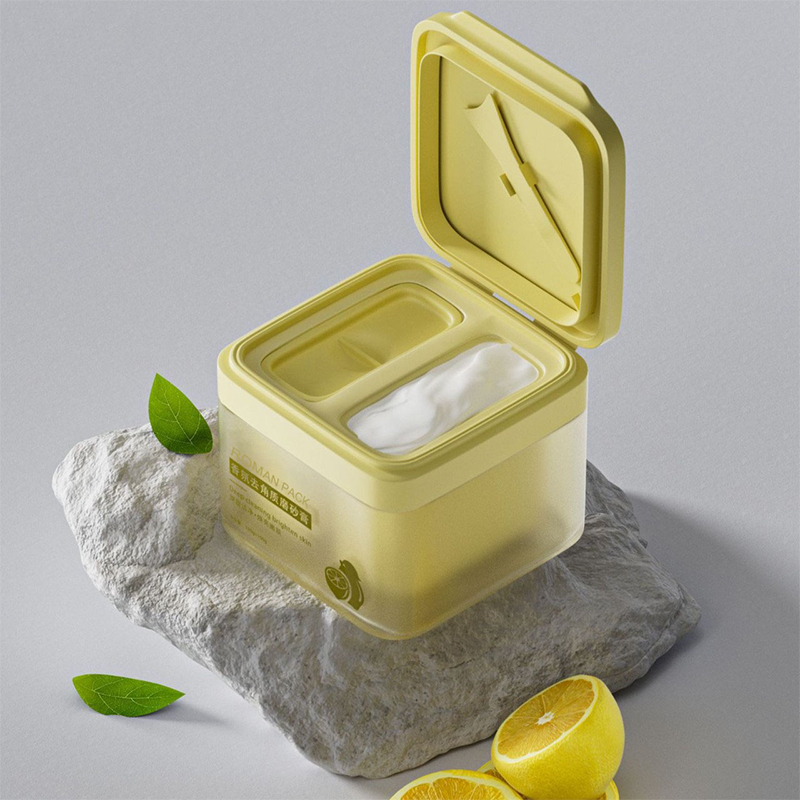
The jar takes more criticism than it deserves. The relevant metric is not "jar versus pump" but the ratio of exposed surface area to total fill volume. A 15 g jar has a huge exposed surface relative to its contents, and every opening replaces the headspace air. A 250 g jar of body butter has a far lower ratio, and the product is used within a few months by most households.
Jars are the correct choice when the formula is thick enough that no pump will move it, when the product is anhydrous or has very low water activity, when the ritual of scooping is part of the experience, or when the product needs to be visible. Balms, scrubs, body butters, cleansing balms, and rich night creams all fit comfortably. A light antioxidant lotion in a 200 g jar does not.
Three design details are worth more attention than they usually get. The first is the neck and thread finish: a jar that is difficult to close fully will leak in transit and admit air in use. The second is the liner — a plain PE liner is fine for most emulsions, but a formula containing volatile oils may need a foil or coated liner to prevent scalping. The third is whether the jar can accept an inner tray or a spatula, because the presence of a spatula measurably reduces finger contact. The structural design of a plastic cosmetic jar affects all three, and it is one of the few areas where a small change in wall thickness or thread geometry produces a large difference in field complaints.
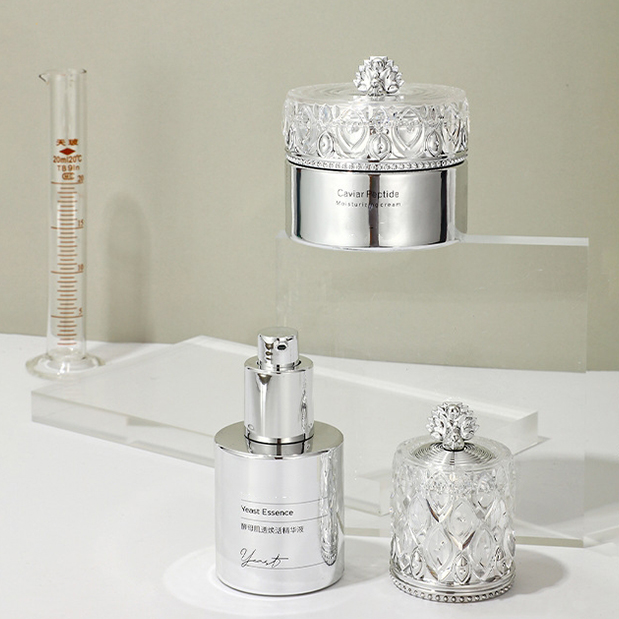
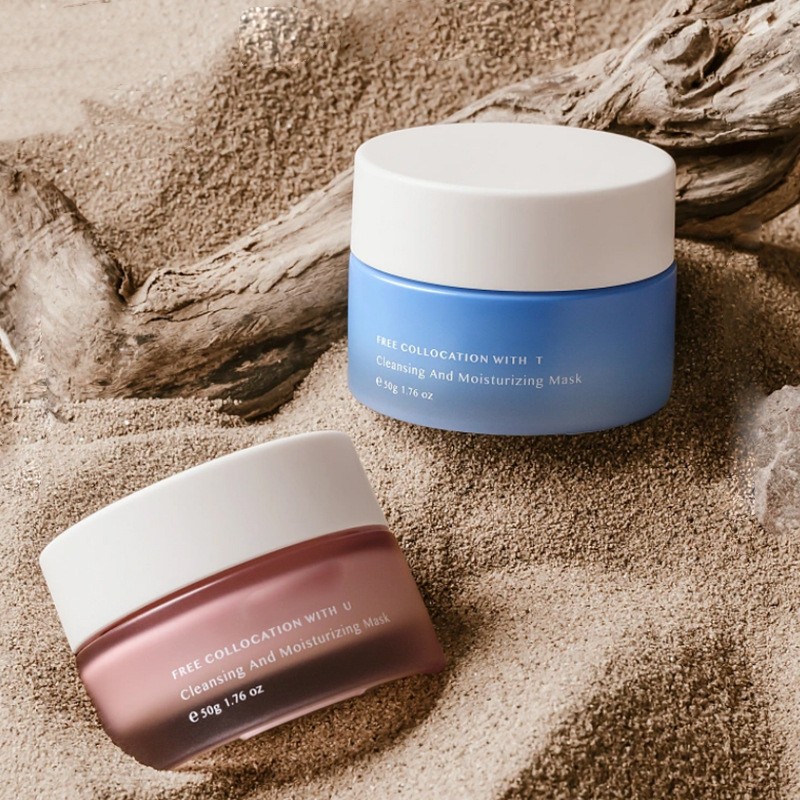 Classic Round Glass Cream JarsAvailable in 15–50 ml transparent round glass, this cream jar suits premium face and eye creams; weigh barrier benefits against weight and closure design.View Product →
Glass jars deserve a note of their own. Soda-lime glass is an absolute barrier to oxygen and water vapour, which is why a glass jar of cream can outlast a plastic one on a stability shelf. The cost is weight, breakage risk, and shipping expense — a pallet of 50 g glass jars weighs roughly three times what the equivalent PET jars do. For premium lines the trade is usually worth it; for travel formats it almost never is.
Droppers, Glass, and the Ritual Tax
The dropper bottle is the most over-specified container in skincare. It is excellent for oils, oil serums, and low-viscosity anhydrous blends, where the dose is small, the formula is not water-based, and the aesthetics justify the cost. It is a poor choice for anything that oxidizes quickly, because every use opens the entire bottle to air for several seconds.
Two practical issues recur. The first is dose consistency: drop size varies with viscosity, temperature, and the angle of the bottle, so "three drops" is not a reliable instruction across a product's life. The second is the bulb. Natural rubber absorbs fragrance and certain actives, and it can harden over time. Nitrile and silicone bulbs behave differently but are not universally better — silicone is more inert, nitrile resists oils well, and both add cost.
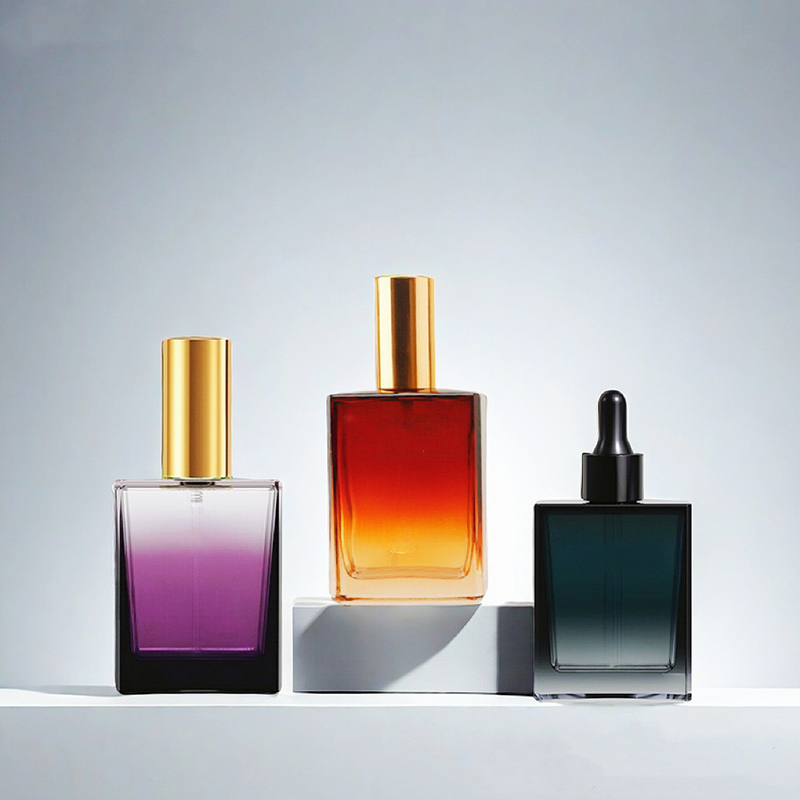 Glass Dropper Bottles for Serum PackagingThis customizable glass dropper bottle supports precise dispensing for serums and oils; check glass type, bulb material, and dose consistency for sensitive formulas.View Product →
Glass itself is worth separating from the dropper. Borosilicate handles pH extremes and rapid temperature changes; standard soda-lime does not, and a high-pH gel in a soda-lime bottle can cause the inner surface to flake over time. If the formula sits above pH 8 or contains high levels of certain salts, ask specifically for the glass type rather than accepting "glass" as a specification. The same caution applies to frosting and coating: an acid-etched frosted finish is decorative, not protective, and it does nothing for light sensitivity.
Material Compatibility: What Actually Touches the Formula
The container's shape gets the attention; the material gets the blame when things go wrong. Compatibility is a function of the resin, the additives, the decoration, and the closure — not just the resin.
| Material | Oxygen barrier | Moisture barrier | Chemical resistance | Notes for skincare use |
|---|---|---|---|---|
| PP | Moderate | Good | Good | Workhorse resin; tolerates most emulsions and alcohols |
| PET | Good | Moderate | Moderate | Excellent clarity; avoid high pH and some solvents |
| PETG | Good | Moderate | Moderate | Thick-walled premium look; stresses and crazes with some oils |
| HDPE | Poor | Very good | Very good | Best for cleansers and body wash; opaque by nature |
| Soda-lime glass | Excellent | Excellent | Good | Inert and heavy; check pH tolerance |
| PCR PP or PET | Similar to virgin | Similar to virgin | Variable | Colour and odour variation between lots; validate compatibility |
| Aluminium | Excellent | Excellent | Requires coating | Internal lacquer essential for acidic formulas |
Two practical warnings. Recycled content is not a drop-in substitution: post-consumer resin varies in odour and colour, and a formula that was stable in virgin PP may show a faint smell after three months in PCR PP. Second, decoration is part of the material system. A UV coating or a metallic hot stamp adds a layer that can craze, peel, or interact with the product at the shoulder. Adhesion should be checked with a cross-hatch tape test rather than by eye.
Sizing, Dosing, and the Numbers Buyers Get Wrong
Capacity is the easiest specification to get wrong, because it is usually chosen by marketing rather than by dose. A useful sanity check is to multiply the intended dose by the intended number of uses and see whether the number matches what the label claims.
| Product type | Typical fill | Container | Typical dose | Approximate uses |
|---|---|---|---|---|
| Face serum | 30 ml | Airless pump or dropper | 0.3–0.5 ml | 60–100 |
| Eye cream | 15 g | Small jar or airless jar | 0.1–0.2 g | 75–150 |
| Face cream | 50 g | Jar or airless | 0.5–0.8 g | 60–100 |
| Body lotion | 250–400 ml | Lotion pump | 4–6 ml | 50–80 |
| Cleansing oil | 150–200 ml | Pump | 2–3 ml | 60–80 |
| Body scrub | 200–300 g | Wide-mouth jar | 10–15 g | 15–25 |
| Setting spray | 100 ml | Fine mist spray | 0.1–0.15 ml | 600+ |
Headspace is the second number people forget. Foaming formulas, products filled hot, and anything shipped by air need ullage — typically 8–15% of nominal capacity. A bottle filled to the shoulder will leak at altitude and will bulge in a warm warehouse. The third number is closure torque: too little and the liner does not seal, too much and the thread strips or the cap cracks in cold weather. Specify a torque range and test it on the filling line, not on a desk.
Travel, Decanting, and Home Storage
Travel containers are a distinct product category with their own rules. The first is regulatory: many airlines cap individual liquid containers at 100 ml, so a 30 ml or 50 ml bottle is the practical size for a carry-on. The second is mechanical: a travel bottle must survive pressure changes, which means a screw cap with a real gasket rather than a push-fit lid. The third is hygiene — a travel bottle that is topped up repeatedly without washing becomes a microbial incubator within a few trips.
The better habit is to decant once, from a clean bottle, into a container that has been washed and fully dried. Water left in a travel bottle dilutes the preservative system at the point of contact and is a common cause of the "my skin reacted on holiday" complaint that has nothing to do with the beach.
For home storage, the container is only half the system. Consider what the container is sitting in:
- Bathroom shelf: humidity often exceeds 70% during showers, and temperature swings by 8–10°C twice a day. This is the worst common location for a water-based formula in a jar.
- Closed cabinet: the single highest-value change most people can make. Darkness plus stable temperature roughly doubles the practical life of a photosensitive serum.
- Refrigerator: useful for vitamin C, retinoids, and some probiotics, at around 4°C. Not useful for oils, which cloud and thicken, and never appropriate for anything that might freeze.
- Windowsill: effectively a light box. Even an opaque bottle heats up considerably in direct sun.
A metal spatula kept beside the jar is a low-cost intervention that reduces finger contact significantly, and it also prevents the surface of a cream from picking up whatever was on the hands. For water-containing products, that alone can extend usable life by weeks.
Specifying a Container: A Practical Checklist
If you are buying packaging rather than choosing a product off a shelf, the specification document matters more than the sample. A sample tells you what the container looks like; it does not tell you what it will do in month five. The following items belong on the sheet.
- Nominal capacity, fill volume, and required headspace, stated separately.
- Resin grade, including recycled content percentage and the acceptable colour tolerance between lots.
- Viscosity range the pump or valve is rated for, and the tested dose per stroke with tolerance.
- Closure type, liner material, and target application torque range.
- Decoration method and adhesion standard, plus a note on which solvents the decoration must resist.
- Compatibility protocol: four weeks at 40°C, twelve weeks at 25°C, three freeze–thaw cycles, upright and inverted, plus a weight-loss check.
- Transit test standard, because most leaks are discovered by the customer rather than the lab.
- Drop test height and orientation for glass and heavy jars.
- Minimum order quantity, tooling ownership, and lead time including decoration.
- Documentation: material data sheets, food-contact or cosmetic-contact declarations, and a certificate of analysis per batch.
The stability protocol is where cost discipline usually breaks down. A four-week accelerated run will catch gross incompatibility; it will not catch slow fragrance scalping, gradual colour drift in PCR resin, or a liner that softens after three months of contact with a citrus oil. If a launch timeline allows only accelerated data, plan a post-launch retention sample pull at three and six months, and keep a commercial batch in reserve so a reformulation does not require a full recall.
Mistakes That Surface Six Months After Launch
Most packaging problems are predictable, and most of them are predicted by somebody who is then overruled. The recurring ones are worth naming.
Choosing clarity over protection
A clear bottle photographs beautifully and destroys retinol. If the formula needs to be seen, use a window label on an opaque bottle, or accept a shorter shelf life and state it honestly.
Upsizing the jar
Doubling the fill volume to look generous also doubles the exposure time before the product is finished. Large jars of antioxidant creams are one of the most reliable predictors of oxidation complaints.
Ignoring the fill line
Pumps, valves, and airless systems are calibrated for a specific fill and a specific headspace. A bottle filled 10% short will not prime; one filled 10% long will leak during transit.
Skipping the decoration test
Print adhesion failures appear after a few weeks of handling, not on the sample table. A cross-hatch tape test takes minutes and prevents a reprint.
Assuming recycled equals identical
Post-consumer resin is a different material with a different odour profile. It performs well when validated and badly when assumed.
Forgetting the tooling timeline
Stock moulds ship in weeks; a custom mould is a different project. Decoration adds days on top, and the decoration is usually what the brand cares most about.
The most useful rule is also the simplest: match the container to the failure mode you are trying to prevent. If the risk is oxidation, remove the headspace. If the risk is light, remove the transparency. If the risk is contamination, remove the open-mouth access. If the risk is slow consumption, reduce the fill size so the product is finished before it degrades.
Everything else — the finish, the weight, the cap, the colour of the anodized collar — is a design decision layered on top of that. Those layers matter commercially, and they should be chosen deliberately. But they cannot compensate for a structural mismatch, and no amount of premium decoration will keep a photosensitive serum stable in a clear bottle on a sunny shelf.
Get the four questions right, test the combination against a real formula rather than a placeholder, and the container stops being a risk and starts being the part of the product that quietly does its job.