English
 Español
Two weeks before a launch, a brand sends a 50 ml airless pump bottle and a 50 ml glass cream jar to the same filling hall and expects both to run on the same line with the same formula. One of those packs is holding a water-thin vitamin C serum; the other is meant for a heavy retinol butter. Neither will behave the way the brand assumed, and the problem is not the label artwork.
Here is the short answer before the detail: cosmetic containers are classified along three axes at the same time. First, by form, meaning bottle, jar, tube, stick, dropper or syringe. Second, by material, meaning PET, PP, PE, HDPE, PETG, acrylic, glass, bamboo, PCR or wheat straw. Third, by dispensing system, meaning lotion pump, airless pump, foam pump, fine mist sprayer, dropper, flip cap, disc cap or twist-up mechanism.
A container specification is only complete when all three are named. Naming only one of them is how projects end up with leaking cartons, oxidised serums, pumps that spit instead of dose, or a filling line that cannot physically run the pack. The sections below walk through each container type that actually shows up in skincare, personal care, salon and hotel packaging, what each one is good at, and where the hidden costs sit.
The Three Layers Behind Every Container Type
Most confusion in packaging conversations comes from mixing the three layers. A buyer says "airless" and means a container type. A designer says "frosted" and means a surface treatment. A formulator says "low viscosity" and means a filling constraint. All three descriptions belong to the same object, but they answer different questions.
Reading the layers together is what makes a purchase order safe. An airless bottle is a form plus a dispensing principle. A glass dropper bottle is a material plus a closure. A bamboo-lidded jar is a decorative choice layered onto a plastic or aluminium inner body. Once the three layers are separated, the option list stops being overwhelming and starts being a decision tree.
| Classification level | What it describes | Common options | Why it affects buying decisions |
|---|---|---|---|
| Form | The physical shape and where the product is taken from | Bottle, jar, tube, stick, dropper bottle, syringe bottle, roll-on | Sets the filling method, decoration area, shelf presence and shipping volume |
| Material | The substrate of the body, cap or inner liner | PET, PP, PE, HDPE, PETG, acrylic, glass, bamboo, PCR resin, wheat straw compound | Drives unit cost, weight, drop resistance, recyclability messaging and freight cost |
| Dispensing system | How the formula leaves the pack and in what dose | Lotion pump, airless pump, foam pump, mist sprayer, dropper, flip cap, disc cap, twist-up | Determines dose control, air exposure, leak risk and the perceived quality of the product |
The practical consequence is simple: when a supplier asks for a specification, they are asking for all three layers plus capacity. "A 50 ml frosted PET airless pump bottle with a 24/410 neck and a matte silver collar" is a specification. "A nice 50 ml bottle" is a conversation.
Bottles: The Largest Group of Cosmetic Containers
Bottles dominate skincare and body care catalogues because most formulas are pourable, pumpable or sprayable. Within the bottle family, the differences that matter most are not the silhouette but the neck finish, the closure and the way product is drawn out of the pack.
Lotion pump bottles
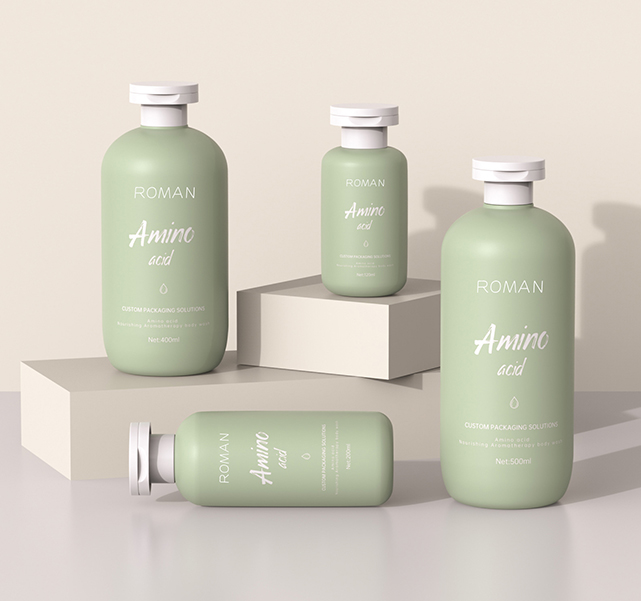
A lotion pump bottle is a rigid body with a screw-on pump and a dip tube reaching the base. Capacities run from roughly 30 ml to 1000 ml, with 150 ml, 200 ml, 300 ml and 500 ml being the workhorses for body care. PET gives a clear, glass-like look; PE and HDPE give an opaque, slightly squeezable body; PP is usually chosen for a matte or soft-touch finish.
The details that create problems are boring ones. Dip tube length must match the internal height of the bottle, usually trimmed so it sits a few millimetres above the base. Pump output is commonly in the region of 0.5 ml to 2 ml per stroke, and the dose a consumer feels in the hand has a direct effect on how "expensive" the product seems. A 28/410 neck will not accept a 24/410 pump, and a wide dip tube intended for a thicker gel will not draw a thin toner efficiently. Best-fit contents are body lotion, shampoo, conditioner, shower gel, cleanser, hand soap and massage oil.
Airless pump bottles
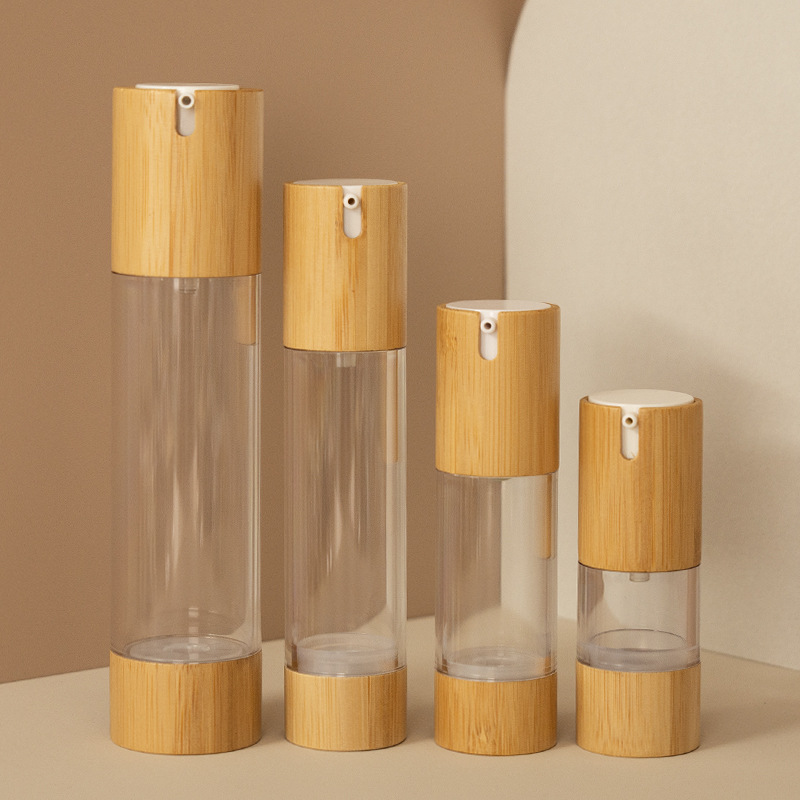
An airless bottle, also described as a vacuum or piston bottle, keeps the formula separated from air. A piston plate rises as the pump is pressed, so product only meets air at the nozzle. Capacities typically run from 5 ml for sample and eye products up to around 150 ml for face and body applications.
Airless packaging is chosen for a specific set of reasons: oxidative actives such as vitamin C or retinol, fragrance retention, high-value formulas where near-total evacuation matters, and dose control where a pump delivers a consistent amount each time. It is not a universal upgrade. Airless bottles work within a viscosity band — very thin liquids can travel unpredictably through the pump chamber, while very stiff pastes can stall the piston. Airless packs are also usually filled to roughly 85 to 95 percent of the stated capacity to leave headspace for the piston, so a "50 ml" airless bottle does not hold the same usable volume as a "50 ml" simple pump bottle.
Unit cost is higher than a standard lotion pump bottle, and the filling process needs more attention because trapped air is the enemy of the mechanism. Where the formula is oxygen-sensitive or the price point is premium, the trade is usually worth making. Where the formula is a basic body lotion, it usually is not.
Brands weighing this decision often look at the broader shift toward airless bottle packaging before committing a full range to it, since switching later means new tooling, new fill settings and new leak testing.
Foam pump bottles
A foam pump bottle uses a mesh or chamber mechanism to mix liquid with air and dispense it as foam. Capacities commonly range from 30 ml for travel and sample sizes up to 650 ml for bathroom dispensers. The container itself is often PET for clarity, with a PP foam pump head.
The critical constraint is formulation, not packaging. Foam pumps need a low-viscosity, surfactant-rich liquid. A thick cream will not foam, no matter how good the pump is. Typical applications include facial cleanser, hand soap, shaving foam, mousse, eyelash shampoo, baby wash and hair colour developer. Watch-outs include actuator locks for transit, because a foam pump that is not locked can discharge under pressure changes, and pump chamber sizing, because the same bottle with a different pump head will produce visibly different foam density.
Spray and fine mist bottles
Spray containers divide into fine mist sprayers, standard sprayers and continuous spray formats. Capacities usually sit between 20 ml and 300 ml. PET is the common body material because it handles alcohol-based formulas reasonably well while staying clear and light.
Applications include toner, setting spray, facial mist, sunscreen spray, hair spray, body mist and sanitiser. Three specification points cause most after-sales complaints: droplet size, which decides whether the mist feels refreshing or wet; material compatibility with alcohol concentrations; and leak performance in air freight, where pressure changes expose weak crimps and poor gaskets. If a product ships by air, ask for a leak test rather than assuming the sprayer is fine because it passed a bench test.
Dropper and essence bottles
Dropper bottles hold small volumes, typically 5 ml to 100 ml, with a glass or plastic pipette and a rubber or silicone bulb. Amber and frosted finishes are common because oils and botanical extracts are light-sensitive. Applications include facial serum, face oil, essential oil, hair oil and tincture.
The specification details that matter are pipette length relative to the bottle neck, gasket material compatibility with oils, and the tamper-evident ring. A dropper that does not reach the base leaves product stranded, and a gasket that swells in an oil-based formula turns into a leaking closure three months into retail.
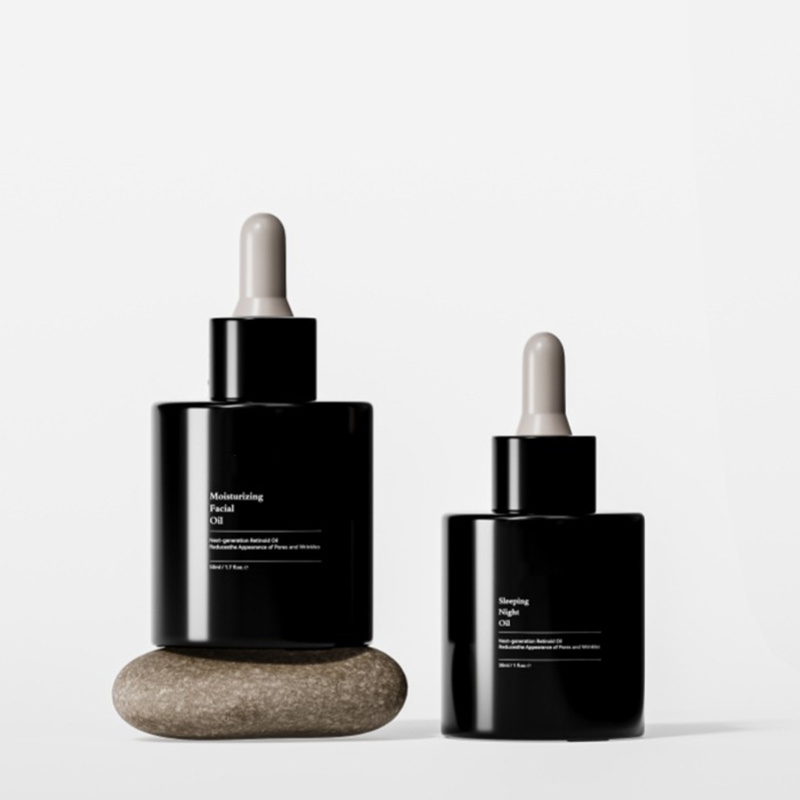 Frosted Glass Serum and Oil Bottles with Dropper OptionsAvailable in 15–50 ml with custom color and printing, this glass packaging suits premium serum or oil lines needing controlled dispensing.View Product →
Glass versions carry a higher freight weight and breakage allowance but read as premium, which is why serum and oil ranges still lean on them despite the cost.
Flip-lid, disc-cap and squeeze bottles
These are the one-hand containers. Capacities usually run from 100 ml to 500 ml in HDPE, LDPE or PET. A flip-top cap suits shampoo, conditioner, shower gel and body wash, where the user is standing in a shower with wet hands. A disc-cap bottle is often inverted or used for travel and hotel amenities, where a flat top and a smaller opening reduce spillage.
Squeeze bottles made from HDPE handle thicker gels that a standard lotion pump would struggle with. The trade-off is decoration: squeeze bodies flex, so hard-baked prints can crack. Screen printing with a flexible ink or an applied label is usually safer than a rigid coating.
Deodorant, twist-up and roll-on containers
Stick containers typically range from 6 ml to 75 ml and are made in PP. Two filling methods exist, bottom-fill and top-fill, and the choice affects both the mechanism and the production line. The same family covers deodorant, antiperspirant, sunscreen stick, body balm and lip balm. The quality signal consumers notice first is the elevator: a stick that wobbles or fails to retract feels cheap regardless of the formula inside.
Syringe and speciality bottles
Syringe-shaped and ampoule-style bottles sit in the 5 ml to 30 ml band and are used for eye cream, gel, teeth whitening and treatment serums. They exist mainly to signal clinical precision. The functional benefit is a controlled, small dose with a narrow nozzle that can be applied directly to a target area.
Jars and Pots: Containers for Thick and Semi-Solid Formulas
Jars exist because some formulas cannot be pumped. Creams, butters, balms, scrubs, masks and waxes are usually too stiff, too aerated or too particulate-heavy for a pump chamber. Capacities in the category run from 5 g for an eye cream sample to 400 g or more for a body butter.
Plastic cream jars
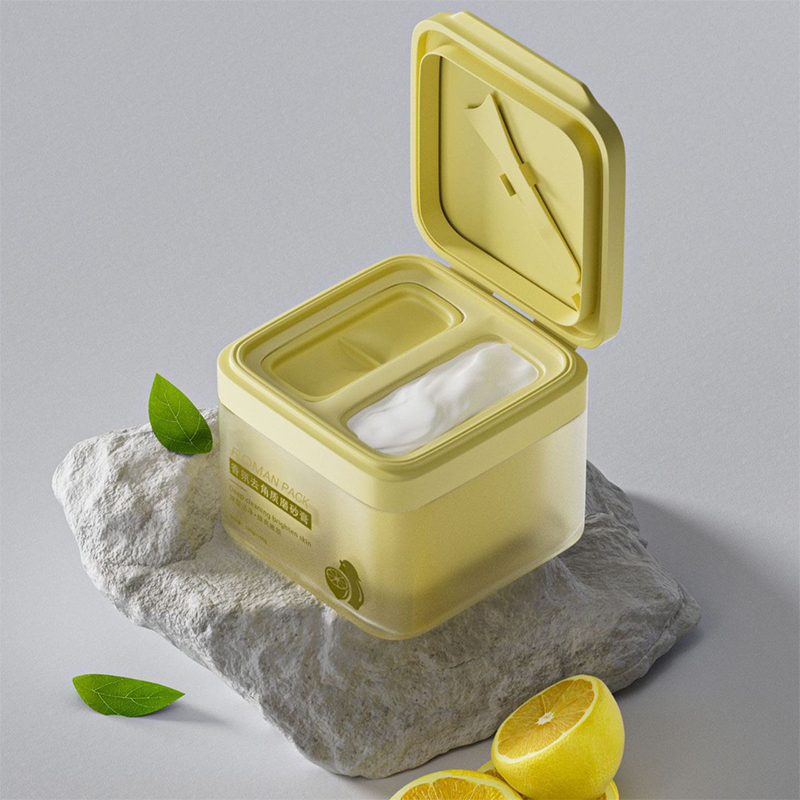
Plastic jars are the most common and the most economical option. Single-wall jars use less material and suit cost-sensitive projects; double-wall jars create the thick, weighty look of an acrylic jar without the fragility. PP is the standard substrate because it tolerates most cosmetic formulas, while acrylic and SAN give a transparent, premium appearance for face cream and eye cream presentations.
Specification points that matter include the neck diameter, because a wide mouth makes filling easier and allows a spatula or scoop; the liner, because a jar without a suitable liner will wick moisture and dry out a cream at the surface; and the fit of any included applicator, since a loose spatula rattles in transit and makes the whole pack feel unfinished.
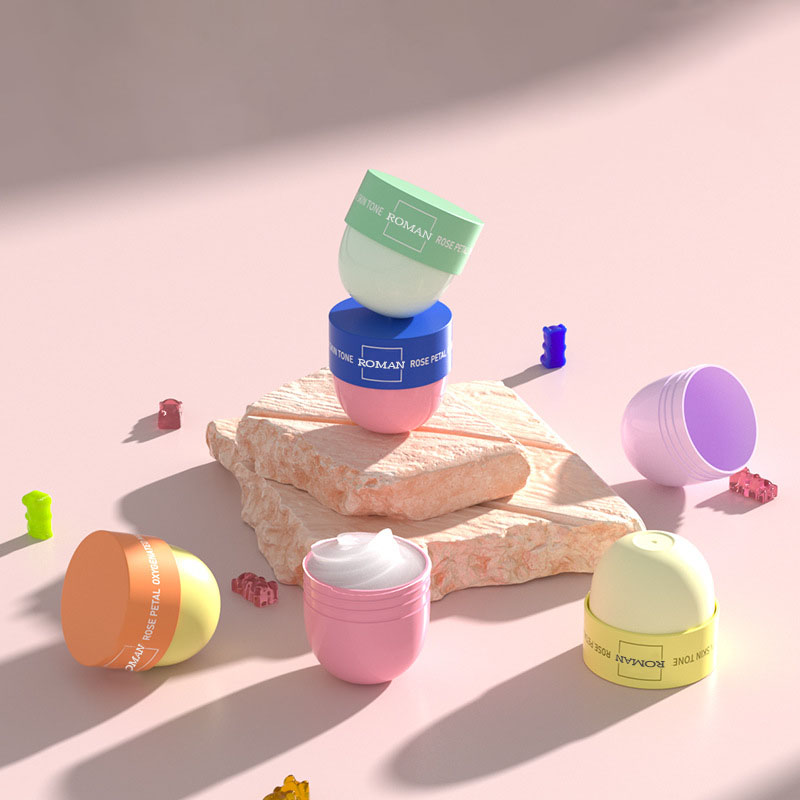 50ml Round Plastic Cream Jars for SkincareLightweight 50 ml PP jar with wide mouth and sealing cover, suited to creams and scrubs where cost and drop resistance matter.View Product →
For brands comparing substrate options for the same jar shape, the honest summary is that a plastic jar wins on cost, weight and drop resistance, while a glass jar wins on perceived weight and clarity.
Glass jars
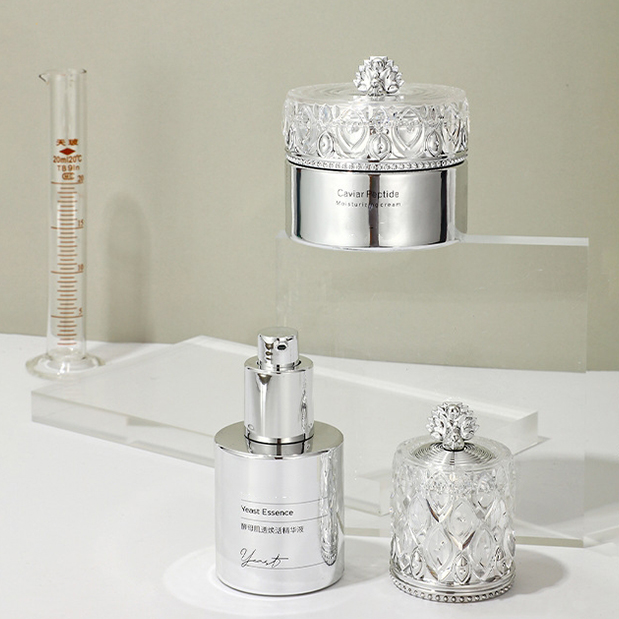
Glass jars hold 5 g to 250 g and are chosen for the premium end of skincare: face cream, night cream, body butter, eye cream. Frosted, coloured, gradient-coated and electroplated finishes are all available, and each adds cost and lead time. The trade-offs are real: heavier freight, breakage risk in transit, and a lid that must be matched carefully because an electroplated cap on a heavy glass base can loosen between filling and retail.
Airless jars
An airless jar combines the wide mouth of a jar with a pump plate that pushes product upward. Capacities typically sit between 15 ml and 50 ml, and the format is used for eye cream, foundation, lip scrub and other high-value semi-solids. It offers most of the oxidation protection of an airless bottle while keeping a jar-like consumer experience, at a cost premium and with a more demanding filling process.
Bamboo and wooden jars
Bamboo-lidded jars are usually a plastic or aluminium jar body paired with a bamboo lid, sometimes with an inner aluminium cup. The visual message is sustainability and warmth. The practical benefits are a lighter pack than glass and a naturally tactile surface; the practical risks are moisture sensitivity in humid storage and colour variation between batches, which is a natural property of the material rather than a defect. Buyers should expect and accept tone variation, or specify a uniform lacquer finish.
One Reference Table for the Main Container Types
The table below pulls the form, capacity, material and formula fit of the most frequently ordered container types into one place. It is a starting point for a specification discussion, not a substitute for a compatibility test with the actual formula.
| Container type | Typical capacity | Common materials | Best-fit formulas | Main watch-out |
|---|---|---|---|---|
| Lotion pump bottle | 30–1000 ml | PET, PE, HDPE, PP | Body lotion, shampoo, shower gel, cleanser | Dip tube length and pump neck mismatch |
| Airless pump bottle | 5–150 ml | PP, PET, acrylic, PCR resin | Serum, retinol, foundation, sunscreen | Viscosity band and reduced usable volume |
| Foam pump bottle | 30–650 ml | PET, PP | Facial cleanser, hand soap, mousse | Formula must be low viscosity and surfactant-based |
| Fine mist spray bottle | 20–300 ml | PET, PP | Toner, setting spray, mist, sanitiser | Alcohol compatibility and air-freight leakage |
| Dropper bottle | 5–100 ml | Glass, PET, PETG | Serum, face oil, essential oil, hair oil | Gasket swelling in oil formulas |
| Flip-lid bottle | 100–500 ml | HDPE, LDPE, PET | Shampoo, conditioner, body wash | Print cracking on flexible bodies |
| Disc-cap bottle | 100–500 ml | PET, HDPE | Lotion, shampoo, hotel amenities | Cap seating and inverted storage leaks |
| Deodorant or twist-up stick | 6–75 ml | PP | Deodorant, balm, sunscreen stick | Elevator quality and filling method |
| Syringe or ampoule bottle | 5–30 ml | PP, PETG | Eye cream, gel, treatment serum | Narrow nozzle clogging with thicker gels |
| Plastic cream jar | 5–400 g | PP, acrylic, SAN, PET, PCR | Cream, butter, scrub, mask | Liner selection and evaporation at the surface |
| Airless jar | 15–50 g | PP, acrylic | Eye cream, foundation, lip scrub | Higher unit cost and stricter filling control |
| Glass jar | 5–250 g | Glass with PP or aluminium lid | Premium face and night cream | Weight, breakage and cap loosening |
| Bamboo-lidded jar or bottle | 15–250 g | Plastic or glass body, bamboo lid | Natural-positioned skincare and body care | Moisture sensitivity and natural tone variation |
Material Choices: What Changes When the Substrate Changes
The same bottle shape in a different resin is a different product. Material decides clarity, chemical resistance, weight, cost, decoration options and what a brand can responsibly claim about recycling. It also decides whether the pack survives a courier network or a long ocean container in summer.
| Material | Appearance | Chemical resistance | Typical use | Practical note |
|---|---|---|---|---|
| PET | Clear, glass-like, good gloss | Good with alcohol, moderate with some oils | Spray bottles, lotion bottles, clear bodies | Widely accepted in recycling streams in many markets |
| PETG | Very clear, thick-wall look | Good general resistance | Premium serum and essence bottles | Higher cost; check local recycling acceptance |
| PP | Translucent to opaque, matte-friendly | Broad resistance, good with most creams | Jars, airless components, caps, sticks | Preferred for thick formulas and closures |
| PE and HDPE | Opaque, soft-touch, squeezable | Good with surfactants and water-based gels | Shampoo, body wash, squeeze bottles | Flexible body limits some decoration methods |
| Acrylic and SAN | High clarity, heavy, premium feel | Moderate; avoid aggressive solvents | Double-wall jars, luxury airless packs | Can craze if incompatible formula contacts the wall |
| Glass | Heavy, inert, premium | Excellent, minimal interaction | Jars, dropper bottles, perfume packs | Freight weight and breakage allowance |
| PCR plastic | Similar to virgin resin, sometimes slightly hazier | Comparable when specified correctly | Bottles and jars with recycled content claims | Confirm the recycled percentage and documentation |
| Wheat straw compound | Warm, slightly speckled, matte | Reasonable for water-based products | Shampoo, body wash, lotion bottles | Speckle and shade vary between production lots |
| Bamboo and wood | Natural grain, warm tone | Not suitable as the primary fluid contact layer | Lids, outer shells, decorative collars | Needs a protective inner liner or cup |
Two points get missed in material discussions. First, decorative appearance and fluid contact are separate functions: a bamboo lid never touches the formula, so it carries none of the chemical compatibility risk that the inner cup carries. Second, recycled content claims need paperwork. If a market requires a declared percentage, "made with recycled materials" without a documented figure is a compliance problem rather than a marketing advantage.
Dispensers and Closures: The Half of the Container People Forget
The body of a container is visible; the dispensing system is what the customer touches first. It is also where most functional failures originate. A pump is specified by neck finish, output per stroke, dip tube length, gasket material and actuator style. Getting four of those five right still produces a complaint.
Neck finishes are written as a diameter and thread code, such as 24/410 or 28/410. The number before the slash is the diameter in millimetres; the number after describes the thread profile. Pumps, sprayers, caps and droppers are all made to specific neck finishes, and a mismatch is not something that can be forced during filling. Beyond neck size, the practical question is whether the closure protects the formula, delivers the right dose and survives transit.
| Formula consistency | Recommended dispensing | Typical container |
|---|---|---|
| Water-thin, under roughly 1000 cPs | Fine mist sprayer, foam pump, dropper | Spray bottle, foam pump bottle, dropper bottle |
| Thin to medium, roughly 1000–10000 cPs | Lotion pump, disc cap | Lotion pump bottle, disc-cap bottle |
| Medium to thick, roughly 10000–50000 cPs | Lotion pump with wide dip tube, flip cap, squeeze body | Flip-lid bottle, HDPE squeeze bottle |
| Semi-solid paste | Wide-mouth jar, airless pump, airless jar | Cream jar, airless bottle, airless jar |
| Solid or stick format | Twist-up mechanism, roll-on | Deodorant stick, balm stick, roll-on bottle |
Airless and foam systems deserve separate attention because they behave differently from simple pumps. Airless packs need a properly primed pump and a formula within the working viscosity band; foam pumps need a formulation that will actually foam. Both are commonly tested at the sample stage with water instead of the real formula, which hides incompatibilities that appear three months later on a shelf.
Matching the Container to the Formula: A Practical Sequence
Choosing a container type works best in a fixed order, because each decision constrains the next. Working in this sequence prevents the expensive situation where artwork, tooling and label copy are approved before anyone checks whether the pump can handle the formula.
- Define the formula's viscosity, pH, alcohol content and any particulates. These four values eliminate roughly half the container options immediately.
- Decide the dose and application method the consumer should experience: pump, spray, squeeze, scoop or stick.
- Choose the dispensing system and note its neck finish, output and material compatibility.
- Choose the body material and capacity, then confirm the decoration method works on that substrate.
- Confirm the closure, liner and any included applicator, and check that all of them survive transit.
- Test a filled sample: leak test, drop test, dose test and a short stability check at elevated temperature.
- Only then finalise the artwork and the label copy, including any recycling or recycled-content claim.
Steps five to seven are where most projects lose time. The container itself is rarely the difficult part; the interactions between formula, dispenser, liner and shipping conditions are.
Procurement Risks Worth Designing Out Early
Most complaints that reach a packaging supplier are predictable. They cluster around a small number of issues that can be addressed at the specification stage at almost no additional cost.
- Pump and bottle neck mismatch, discovered only when the filling line is already running.
- Dip tube cut too short, leaving product unusable at the bottom of the bottle and generating a "the pump stopped working" review.
- Gasket material swelling or hardening in oil-based or alcohol-based formulas.
- Decorative coatings failing an adhesion test after rubbing, filling or a humid container journey.
- Printing applied to a flexible squeeze body without a flexible ink, producing hairline cracks.
- Air-freight leakage where the pack passed a bench test but not a pressure-change test.
- Recycled-content or recyclability claims made without supporting documentation for the target market.
- Minimum order quantities quoted for the container but not for the decoration step, which changes the true economic batch size.
Each of these has a cheap preventive action: a sample with the real formula, a written neck finish on the purchase order, an adhesion test before mass decoration, and a documented claim rather than an assumed one.
Decoration: Turning a Standard Container Into a Brand Container
Two brands can order the same 200 ml lotion pump bottle from the same mould and end up with packs that look unrelated. That difference is created by surface treatment, and it is one of the few areas where a standard container can be upgraded without new tooling.
Common processes include spraying and UV coating for colour and gloss level, screen printing for one to four colour graphics, hot stamping for metallic logos, and labelling for complex artwork or short runs. Matte and soft-touch finishes read as premium but show fingerprints; high gloss reads as mass market but hides handling marks better. Frosting creates a translucent diffused look that flatters coloured formulas and hides the dip tube.
The technical constraint to remember is that decoration is applied to a substrate, and substrates behave differently. A rigid PET bottle accepts a hard-baked print reliably. A soft HDPE squeeze bottle flexes under the same print and can craze. A glass jar accepts frosting and coating well but cannot be printed in the same way as a curved plastic wall. Matching the process to the substrate at the quotation stage avoids a rejected batch later.
Where a Container Manufacturer Fits Into This Decision
Most brands do not need to become packaging engineers. What they need is a supplier who can move between the three classification layers in a single conversation and flag conflicts before tooling is cut. That means someone who can say that the chosen airless mechanism will not work with the planned viscosity, or that the requested matte coating will not adhere to the selected resin.
Shaoxing Roman Plastic Co., Ltd. is a plastic packaging and beauty tool manufacturer based in Shangyu, Zhejiang, established in 2016. The company describes itself as covering design, manufacturing and testing in one operation, with a factory of around 13,000 square metres, more than 100 employees, over 50 injection moulding machines and more than 15 assembly and packing lines, serving OEM and ODM customers with an annual export value in the region of 4 to 5 million US dollars. Its location near Ningbo and Shanghai ports supports export delivery.
The product range follows the container types described above: plastic skincare bottles including airless, foam pump, lotion pump, spray, disc-cap, flip-lid, essence and deodorant formats; glass bottles and jars including lotion pump, foam pump, essential oil dropper and perfume bottles; bamboo and wooden packaging; recycled-content PCR and wheat straw lines; cosmetic jars in plastic, glass, bamboo and eco variants; and a separate beauty tool category covering cosmetic spoons, eye cream sticks, face rollers, gua sha boards, tube squeezers and ice wave balls. Surface treatments offered include spraying, UV coating, screen printing, hot stamping and labelling.
For a brand at the specification stage, the practical value of working with a manufacturer that covers both containers and application tools is coordination: the jar, the lid, the spatula and the outer packaging can be developed as one set rather than sourced from four suppliers who never speak to each other. For brands that need to understand the trade-offs behind a specific format before committing, the company's technical articles on topics such as airless packaging choices are a useful starting point, though the real answers always come from a filled sample.
Putting the Container Decision in Order
Cosmetic containers are not a single category with variations. They are a matrix of form, material and dispensing system, and the type of container a brand should choose is determined by the formula first and the shelf impression second. A water-thin toner belongs in a mist sprayer or a foam pump. A 12,000 cPs cream belongs in a jar or an airless pack with the right viscosity band. A serum that oxidises belongs in airless or an amber dropper bottle. A body wash for a value range belongs in an HDPE flip-lid bottle, and that is not a compromise.
The most useful habit is to write the specification in full before requesting a quotation: capacity, material, colour and finish, neck finish, closure type, dose per stroke, liner material and decoration method. Suppliers can quote against that document quickly and accurately. When one of those items changes later, everyone involved knows exactly what else has to be re-tested. That single habit prevents more packaging failures than any material upgrade.