English
 Español
Understanding the expected lifespan of bamboo water bottles requires evaluating the physical properties of organic bamboo alongside the structural components used in modern container engineering. Organic bamboo containers present an appealing blend of natural aesthetic appeal and physical resilience. However, because raw bamboo is a natural cellulose material, its operational longevity depends heavily on manufacturing quality, protective surface coatings, internal liner selection, and routine user care. Under typical consumer usage, a well-constructed bamboo vessel can remain fully functional for anywhere between two to five years. In optimized conditions where proper maintenance is consistently applied, the physical structure can endure even longer without structural failure.
When analyzing how long these vessels retain their integrity, it is vital to distinguish between the external organic shell and the internal fluid reservoir. Most modern designs, whether created for daily beverage consumption or crafted as a sustainable bamboo cosmetic bottle container, utilize a dual layer architecture. The exterior shell consists of carved or spun bamboo stalk material, while the interior surface features a non-reactive liner such as stainless steel, glass, or recyclable polymers. This multi-material construction protects the raw wood fibers from continuous contact with liquids while providing structural reinforcement against external impacts. Evaluating the true lifespan of these hybrid vessels involves examining how these distinct layers age together over time under various environmental conditions.
[Image: Diagram illustrating the cross section of a bamboo cosmetic bottle showing the outer bamboo wall and inner protective liner assembly]
Core Structural Components Determining Bamboo Bottle Lifespan
The total service life of any bamboo vessel relies on the interaction between its organic components and engineered structural elements. Evaluating each structural component independently provides clarity on how different parts of the bottle age over prolonged periods of daily use.
Natural Outer Bamboo Shell Resilience and Material Wear
The external bamboo shell acts as the primary shield against physical impacts and environmental exposure. Natural bamboo possesses high tensile strength that rivals certain metallic alloys, allowing it to absorb physical shocks without shattering easily. However, the outer surface is inherently porous and susceptible to ambient environmental factors. Manufacturers apply specialized food grade varnishes, natural wax coatings, or water-resistant lacquers to seal the external wood grain. As long as this protective seal remains intact, the outer shell resists moisture absorption and physical degradation.
Over time, daily handling and contact with rough surfaces gradually erode this protective surface layer. Once the raw fibers beneath are exposed to moisture, ambient air, and natural oils from hands, the natural degradation process begins. Unprotected bamboo fibers can expand when absorbing ambient moisture and contract as they dry out. This repeated expansion and contraction cycle causes micro-fractures within the grain wall, which eventually expand into visible cracks. Consequently, the operational lifespan of the outer shell depends directly on maintaining the integrity of its surface finish through gentle handling and proper drying techniques.
Inner Liner Materials and Interfacial Integrity
The internal liner serves as the main barrier containing liquids and preventing direct contact between fluid formulations and raw organic wood fibers. Stainless steel and high borosilicate glass are the most widely used inner materials for beverage containers, whereas specialized polymers like polypropylene or polyethylene terephthalate glycol are common in bamboo cosmetic bottle packaging. The durability of the inner reservoir often exceeds that of the outer wooden casing, as glass and stainless steel do not degrade when exposed to liquid contents.
The primary point of structural failure within this dual layer assembly exists at the interface where the inner liner joins the outer bamboo shell. Manufacturers utilize food-grade adhesives and precision pressure fits to bind the two materials together. Over months of regular use, thermal expansion differentials between the inner metal or glass core and the outer bamboo casing can exert stress on this adhesive bond. If the bond weakens, moisture can slip into the tiny void between the outer casing and the inner vessel, creating a damp environment where unseen bacterial growth or structural softening of the inner wood wall can occur.
Seal Performance and Gasket Longevity over Time
The operational life of a bamboo bottle is equally dependent on the closing mechanism and sealing components. Most caps feature internal silicone gaskets or elastomeric seals designed to prevent leakage and protect internal contents from oxidation. Silicone gaskets maintain their elasticity for many years, but continuous exposure to hot liquids, acidic juices, or cosmetic formulations can gradually cause the material to harden or lose its sealing compression.
When an internal gasket degrades, the risk of leakage increases significantly. Fluid escaping through the thread assembly can trickle down the exterior neck of the bottle, saturating the top edge of the bamboo casing where raw wood fibers are often most vulnerable. Ensuring that replacement seals are installed when elasticity decreases prevents water seepage into the bamboo grain, thereby extending the total operational life of the entire bottle structure.
Lifespan Metrics Across Different Usage Conditions
|
Usage Profile and Environment |
Primary Stress Factors |
Expected Operational Lifespan |
Primary Failure Mode |
|---|---|---|---|
|
Low Moisture Indoor Environment |
Minor handling, stable temperatures |
Three to five years or longer |
Gradual cosmetic fading of surface finish |
|
Daily Outdoor Portable Usage |
Mechanical impact, variable humidity |
Two to three years |
Surface scratching, micro-cracks from drops |
|
High Humidity Bathroom Setting |
Constant ambient moisture, splash exposure |
One to two years |
Swelling of wood fibers, mold growth at base |
|
Frequent Hot Liquid Exposure |
Thermal expansion stress, steam exposure |
One to two years |
Adhesive degradation between inner liner and shell |
Factors Accelerating the Degradation of Bamboo Vessels
Several environmental and mechanical factors can shorten the structural life of organic bamboo containers. Identifying these stress factors helps users avoid conditions that lead to premature wear and structural breakdown.
Moisture Accumulation and Microorganism Growth Risks
Excessive moisture is the single most destructive element for any bamboo container. When bamboo remains in contact with standing water or high ambient humidity for extended periods, the wood cellulose absorbs water molecules. This absorption causes the wood fibers to swell, altering the dimensions of the bottle and creating stress points along structural joins. Prolonged moisture retention also creates an ideal environment for mold spores and mildew to colonize the wood grain.
Bathrooms and damp kitchen environments pose specific challenges for containers like a natural bamboo cosmetic bottle or daily water flask. If a container rests on a wet countertop continuously, the unsealed bottom rim absorbs water through capillary action. This bottom-up moisture saturation leads to dark discoloration, structural softening, and microbial growth. Once mold deeply penetrates the fibrous matrix of the wood, complete remediation becomes difficult, rendering the bottle unusable for hygienic reasons.
Temperature Fluctuations and Thermal Shock Effects
Thermal variation presents another significant challenge to the structural stability of bamboo packaging. Bamboo wood expands and contracts in response to temperature changes, but it does so at a different rate than glass, metal, or rigid plastic inner liners. Rapid shifts between hot and cold environments induce thermal stress along the bonded surfaces connecting the interior and exterior components.
Filling a cold bamboo vessel with boiling liquids causes the inner liner to expand rapidly while the outer bamboo casing responds more slowly. This rate difference creates internal shear stress that can crack brittle lacquers or disrupt adhesive bonds. Similarly, placing a bamboo container inside a freezer causes trapped moisture within the wood cells to expand as it freezes, leading to internal fiber separation and visible splitting along the outer grain.
Ultraviolet Exposure and Surface Finish Deterioration
Direct sunlight and strong ultraviolet radiation break down the chemical bonds of protective surface coatings applied to bamboo vessels. Extended exposure to ultraviolet light degrades clear varnishes, causing them to yellow, flake, or peel away from the natural wood substrate. Without this protective barrier, the natural lignin within bamboo fibers degrades, leading to color fading and surface dryness.
When the protective finish degrades due to sun exposure, the underlying bamboo loses its natural moisture resistance. The surface becomes rough and porous, making it far more susceptible to staining from liquids, oils, and environmental dust. Protecting bamboo vessels from prolonged direct sunlight preserves both the visual appearance and the physical protection provided by the outer finish.
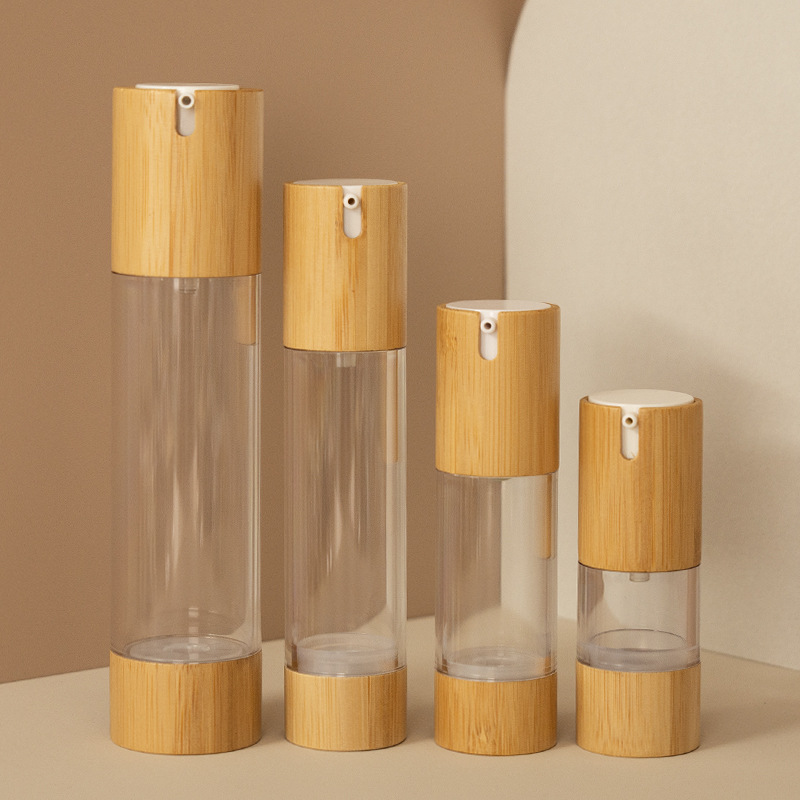
[Image: A clean display of natural bamboo cosmetic bottle containers alongside bamboo water bottles on a smooth wooden table]
Comparing Lifespan Profiles Between Bamboo Packaging Formats
While bamboo water bottles and bamboo cosmetic packaging share organic material traits, their operational environments and design parameters create distinct longevity profiles. Understanding these distinctions clarifies expectations for different product applications.
Bamboo Water Bottles versus Bamboo Cosmetic Bottle Systems
Beverage bottles undergo frequent washing, continuous transportation, and repeated physical handling throughout their lifecycle. Because they are regularly submerged in water during hand washing or exposed to outdoor environments, their outer bamboo shell experiences significant physical wear. Consequently, maintaining a water bottle requires active upkeep to match the longevity of pure metal or glass alternatives.
In contrast, an eco friendly bamboo cosmetic bottle generally operates within a controlled indoor environment. Products like body lotions, facial serums, and liquid foundations packaged in a bamboo glass cosmetic bottle or a refillable bamboo cosmetic bottle setup spend most of their lifecycle on vanity tables or storage shelves. While bathroom humidity can present a challenge, these containers experience far fewer physical drops and zero immersion in wash water. As a result, the external bamboo casing of a bamboo cosmetic bottle container often maintains its aesthetic appeal and structural form for many years, frequently outlasting the usage period of the fluid product stored inside.
Single Wall Exterior Shells versus Heavy Wall Protective Sleeves
The construction methodology of the outer bamboo layer significantly impacts structural durability. Single wall bamboo shells consist of thin, hollowed wooden cylinders fitted directly over the inner reservoir. While lightweight and visually minimal, thin bamboo walls offer less impact resistance and are more vulnerable to deep cracking if dropped on hard surfaces.
Heavy wall bamboo structures and thick outer sleeves provide far superior durability. The additional material thickness distributes physical impact forces across a larger surface area, preventing structural cracks from reaching the interior liner. Furthermore, thicker bamboo walls are less prone to complete warp distortion caused by ambient humidity shifts, making heavy wall designs the preferred option for high end sustainable bamboo cosmetic bottle packaging where long term reusability is desired.
Screw Top Closures versus Pump and Dropper Assemblies
The mechanical interaction between caps and bottle bodies also influences total container lifespan. Screw top beverage caps feature coarse threads carved into metal, plastic, or directly into the bamboo lid interior. Continuous friction from opening and closing the cap can wear down wooden threads over time if they are not reinforced with plastic or metal inserts.
Cosmetic packaging frequently incorporates specialized dispensing units, such as fine mist sprayers, lotion pumps, or glass pipettes. A bamboo cosmetic bottle fitted with a pump mechanism protects the neck region from continuous friction since the cap does not need to be unthreaded during every use. However, the internal mechanical springs and valves inside plastic pump engines have their own operational limits. Fortunately, modular designs allow consumers to replace a worn pump assembly while retaining the durable outer bamboo cosmetic bottle body for continued use with fresh refills.
Functional Longevity Comparison Across Bamboo Container Categories
|
Bamboo Container Type |
Typical Inner Material |
Primary Application |
Average Useful Lifespan |
Key Maintenance Requirement |
|---|---|---|---|---|
|
Insulated Bamboo Water Flask |
Food Grade Stainless Steel |
Daily beverages, sports |
Two to four years |
Air drying after hand washing |
|
Bamboo Glass Cosmetic Bottle |
High Borosilicate Glass |
Serums, essential oils |
Three to five years |
Wiping surface moisture immediately |
|
Refillable Bamboo Lotion Pump |
Polypropylene Cartridge |
Creams, body lotions |
Four to six years |
Periodic cleaning of dispenser nozzle |
|
Bamboo Squeeze Tube Container |
Flexible Polyethylene Liner |
Creams, sunscreens |
One to two years |
Avoiding sharp bending of outer wall |
Best Practices for Extending Bamboo Bottle Usability
Implementing appropriate care and maintenance routines significantly extends the physical lifespan of organic bamboo containers. Simple daily habits prevent moisture accumulation and protect surface finishes from premature degradation.
Proper Cleaning Procedures Without Sacrificing Bamboo Integrity
Cleaning methods must balance internal hygiene with outer surface protection. Submerging a bamboo vessel entirely in water or placing it inside an automatic dishwasher is one of the most common causes of rapid failure. Dishwashers subject containers to high water temperatures, aggressive detergents, and prolonged moisture saturation, which strip away protective lacquers and cause raw wood fibers to warp and crack within a few cycles.
The correct approach involves washing the interior reservoir with warm water, mild dish soap, and a soft bottle brush. The exterior bamboo surface should be wiped clean using a damp microfiber cloth and dried immediately with a soft towel. Allowing the bottle to air dry upside down on an open drying rack ensures that moisture does not collect around the top rim or inside the cap threads.
Moisture Control and Storage Guidelines for Extended Durability
Where and how a bamboo container is stored between uses plays a critical role in its overall longevity. Storing a damp bottle inside an enclosed bag, dark cabinet, or humid bathroom corner promotes fungal growth and wood rot. Bamboo vessels require adequate air circulation to ensure that any absorbed surface moisture evaporates completely.
When storing a bamboo water bottle or a refillable bamboo cosmetic bottle for extended periods, the cap or pump assembly should be left off or slightly unscrewed. This allows air to circulate through the interior chamber, preventing stale odors and moisture retention inside the inner liner seal. Additionally, setting containers on dry elevated coasters rather than directly on wet sink surfaces prevents bottom rim water absorption.
Surface Conditioning and Natural Oil Applications
Over time, natural wear gradually strips away the initial factory varnish from the bamboo exterior. Applying natural conditioning oils periodically restores surface water repellency and prevents the wood from drying out and cracking. Food safe mineral oil, beeswax polishes, or organic coconut oil are suitable choices for maintaining raw or matte finished bamboo surfaces.
To apply oil conditioning, clean and dry the exterior bamboo wall thoroughly. Rub a small quantity of oil into the wood grain using a soft cloth, allowing it to soak into the fibers for several hours. Wipe away any excess oil with a clean cloth until the surface feels smooth and non-greasy. Repeating this simple process every few months restores the protective barrier, enhancing natural wood grain beauty while extending the physical operational life of the container.
Identifying Signs of Bamboo Degradation and Replacement Timelines
Even with meticulous care, organic materials eventually succumb to physical aging. Knowing when a bamboo vessel has reached the end of its functional life ensures safety, hygiene, and optimal performance.
Surface Cracking and Structural Splitting Indicators
Fine hairline cracks along the outer bamboo grain represent the early stages of physical structural wear. Minor superficial surface cracks that do not penetrate the entire wall thickness do not immediately impair bottle functionality, provided the inner liner remains intact. However, these small fissures create pathways for moisture to enter deeper into the wood wall.
When a crack expands across the full length of the outer shell or causes the bamboo wall to separate from the inner liner, the structural integrity of the container is compromised. A split outer casing no longer provides impact protection and can catch on fabrics or pinch hands during handling. At this stage, replacing the outer shell or the complete bottle structure is recommended to avoid sudden mechanical failure.
Inner Liner Separation and Adhesive Delamination
Adhesive failure between the inner reservoir and the outer bamboo shell manifests as physical looseness or rotation between the two components. If the inner metal or glass core twists independently inside the outer bamboo sleeve when opening the cap, the internal structural bond has separated.
Delamination allows liquids to settle into the inaccessible gap between the two layers. Because this interior gap cannot be reached for thorough cleaning or drying, stagnant water accumulates, creating an environment for bacterial growth and wood rot from the inside out. Once structural separation occurs and internal moisture ingress is detected, the container should no longer be used for storing consumable beverages or delicate personal care formulas.
Mold Spore Colonization and Odor Retention Signals
Biological contamination is a definitive signal that a bamboo container requires retirement. While surface mildew on the exterior shell can sometimes be cleaned with vinegar solutions and gentle scrubbing, deep mold penetration into the internal porous wood fibers cannot be safely reversed.
Dark black or green spot discolorations that persist beneath the surface finish indicate deep fungal colonization within the cellulose structure. Similarly, if a container retains a persistent musty or sour odor even after multiple thorough cleanings and drying cycles, microbial activity has taken hold within the wood matrix. Replacing the container ensures that personal care products stored in a natural bamboo cosmetic bottle or liquids inside a daily water flask remain clean, hygienic, and free from contamination.