English
 Español
Airless Pump Bottles and Why They Define Modern Cosmetic Packaging
Airless pump bottles have fundamentally changed how the cosmetic industry thinks about preserving, dispensing, and presenting sensitive formulations. The defining advantage of an airless pump bottle over any conventional tube or jar is the near-total elimination of oxidative and microbial exposure throughout the product's use life, a benefit that directly translates into longer shelf stability, reduced preservative loads, and higher consumer satisfaction for every formulation category from vitamin C serums to retinol creams to probiotic moisturizers. Understanding why this matters requires examining the mechanism that makes airless dispensing possible and comparing it directly with the traditional dip tube architecture that still dominates most mid-range cosmetic product lines.
The cosmetic packaging industry processes over 120 billion units annually, and the segment of that total occupied by airless pump systems has grown at a compound annual rate of approximately 6.8 percent since 2018, driven by the simultaneous expansion of active ingredient skincare, clean beauty formulation, and premium gifting categories. Each of these market forces places pressure on packaging to perform beyond the basic function of containment, demanding instead that the packaging actively protect formulation integrity from first use to last drop. Airless pump bottles, in their most refined implementations, meet this demand more completely than any other dispensing format currently available at commercial scale.
The Core Mechanism: How Airless Pump Dispensing Works
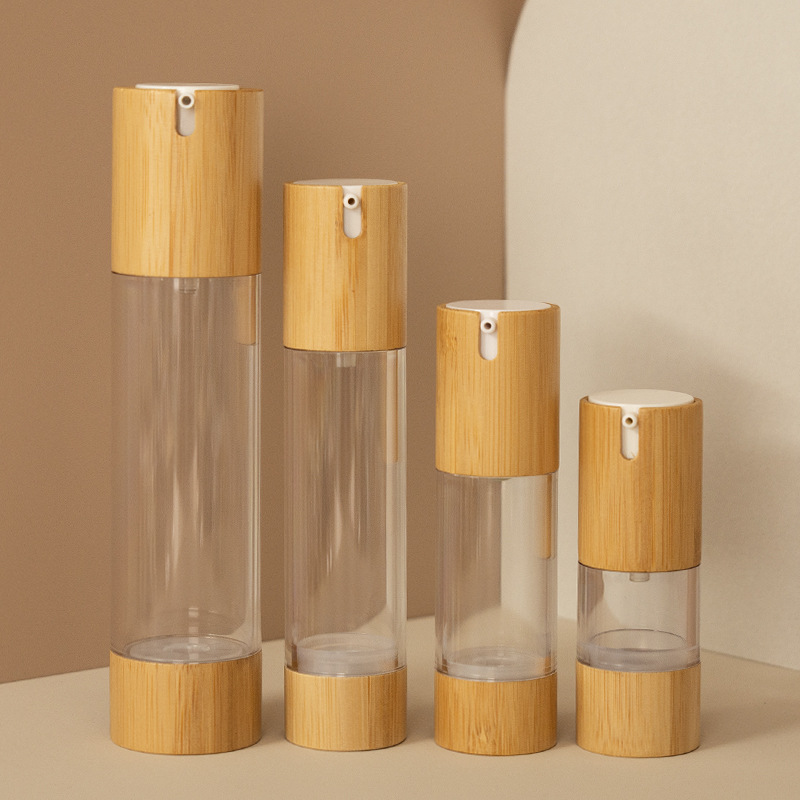
An airless pump bottle operates on a positive displacement principle. Inside the bottle body, a follower piston made of polyethylene or polypropylene sits directly beneath the product fill. When the pump head is depressed, a vacuum is created in the pump chamber above the piston. This vacuum draws product upward through the pump dip tube (a short internal tube connecting the pump mechanism to the product chamber) and out through the actuator nozzle. Crucially, as product is dispensed, the follower piston travels upward to occupy the space vacated by the dispensed product, maintaining near-zero headspace above the product mass at all times.
This piston travel mechanism means that no air enters the product reservoir at any point during normal dispensing. The product is never exposed to the oxygen, humidity, or airborne microorganisms that enter a conventional pump bottle through its dip tube with every actuation. The practical consequence for sensitive formulations is that active ingredients such as ascorbic acid (vitamin C), retinoids, niacinamide, and peptide complexes retain their potency significantly longer in airless pump packaging compared to conventional dispensing formats. Published stability testing data from packaging validation studies consistently shows a 25 to 40 percent extension in active ingredient half-life for oxidation-sensitive compounds when airless pump packaging replaces standard dip tube pump bottles under identical storage conditions.
Airless Vacuum System vs. Traditional Dip Tube: A Definitive Comparison
The choice between an airless vacuum system and a traditional dip tube pump is one of the most consequential packaging decisions a cosmetic brand makes, with implications that extend from formulation chemistry and preservative strategy to consumer experience, sustainability profile, and unit economics. The airless vacuum system wins decisively on product integrity and formulation compatibility for sensitive actives, while the traditional dip tube retains cost and flexibility advantages for stable, high-volume formulations where oxidative protection is not a primary concern.
How the Traditional Dip Tube System Functions and Where It Falls Short
A traditional dip tube pump bottle uses a long tube that extends from the pump mechanism to the base of the bottle, through which product is drawn upward by pump suction with each actuation. As product is withdrawn, an equivalent volume of air enters the bottle either through the pump mechanism's vent hole or through gaps around the closure. Over the course of a product's use life, the headspace above the product grows progressively larger, the air exposure of the remaining product increases with each use, and the microbial and oxidative burden on the formulation accumulates steadily.
For stable emulsion formulations such as standard moisturizers, body lotions, and oil-free gel cleansers, this progressive air exposure does not materially compromise product performance within a reasonable use period. These formulations are typically designed with preservative systems robust enough to manage the microbial challenge of air exposure, and their active ingredient content is either low enough or stable enough to withstand oxidative stress across a standard 6 to 12 month use period. The traditional dip tube pump is a cost-effective, highly reliable, and process-friendly packaging choice for this category of product.
The dip tube system's shortcomings become significant when the formulation contains high concentrations of oxidation-sensitive actives, minimal or no synthetic preservatives (as in natural and clean beauty formulations), live probiotic cultures, or vitamin-based antioxidants that require zero-oxygen headspace to maintain their biological activity. In these cases, every actuation that introduces air into the bottle is a degradation event. The formulation that was tested and certified in stability studies under controlled conditions does not match the formulation the consumer uses on day 60 or day 90 of a three-month product lifecycle.
Direct Performance Comparison Across Key Parameters
| Parameter | Airless Vacuum System | Traditional Dip Tube Pump |
|---|---|---|
| Air exposure during dispensing | Near zero (piston eliminates headspace) | Progressive increase with each actuation |
| Active ingredient stability (oxidation-sensitive) | 25 to 40% longer active half-life | Standard; dependent on preservative system |
| Product evacuation rate | 85 to 95% of fill volume dispensed | 70 to 85% of fill volume dispensed |
| Suitability for preservative-free formulations | High (minimal microbial ingress) | Low (air ingress creates microbial risk) |
| Component cost (packaging unit) | 20 to 60% higher than dip tube equivalent | Baseline reference cost |
| Fill line compatibility | Requires piston pre-placement; slower fill rates | Standard fill line compatible; high speed |
| Consumer experience | Requires priming; premium tactile feel | Ready to use immediately; familiar operation |
| Recyclability | Complex (multi-material piston assembly) | Moderate (pump mechanism is mixed material) |
Formulation-Driven Selection: When Airless Packaging Is Non-Negotiable
Certain formulation categories effectively require airless pump packaging to deliver on their marketed claims. These include stabilized vitamin C formulations at concentrations of 10 percent or above, where oxidative degradation to the yellow-brown dehydroascorbic acid form is visually detectable and consumer-perceived as product failure. They also include retinaldehyde and encapsulated retinol products, where light and oxygen exposure accelerate isomerization and potency loss. Probiotic facial serums and microbiome-focused moisturizers represent another compelling case: the viable microorganism counts that justify their positioning cannot be maintained through repeated air exposure cycles in a conventional pump bottle.
For brands operating in the clean beauty space where synthetic preservative systems are avoided by consumer preference or regulatory position (particularly in markets with negative consumer sentiment toward parabens, phenoxyethanol, and similar conventional antimicrobials), the airless pump system is not a premium feature but a functional necessity. A preservative-free water-containing formulation in a traditional dip tube pump bottle will typically fail contamination testing within 8 to 16 weeks of first opening under normal consumer use conditions, whereas the same formulation in a properly functioning airless pump system routinely passes 26-week in-use contamination challenge testing at equivalent microbial burden levels.
Step-by-Step Guide to Refillable Airless Pump Bottles
Refillable airless pump bottles represent the most sustainable implementation of airless packaging technology, combining the product integrity advantages of the airless system with the waste reduction benefits of a reusable primary container. Successfully refilling an airless pump bottle requires understanding the piston reset procedure, which is the step that most consumers and filling professionals overlook and that causes the majority of refilling failures. The following guide covers the complete procedure from disassembly through priming of the refilled unit.
Tools and Materials Required Before Starting
Before beginning the refill procedure, assemble the following:
- The empty airless pump bottle to be refilled
- The refill product in a suitable transfer container (a small plastic syringe without a needle tip is ideal for controlled fill volumes of 15 to 50 ml)
- A thin, flat non-metallic tool such as a cosmetic spatula or cuticle pusher for piston manipulation
- 70 percent isopropyl alcohol and clean cotton pads for sanitizing internal surfaces
- A clean, flat workspace with good lighting to observe piston position during refill
The Complete Refill Procedure: Stage by Stage
- Remove the pump head assembly. Most refillable airless pump bottles use a twist-lock or press-and-twist mechanism to release the pump collar from the bottle body. Turn counterclockwise while holding the bottle body firmly. Some premium refillable systems use a bayonet locking mechanism that requires a quarter turn followed by upward pull. Do not apply excessive force, as the pump stem can be bent if the head is pulled at an angle rather than straight up.
- Remove the pump mechanism from the bottle body. Once the collar is released, withdraw the pump mechanism (the pump dip tube, spring, and chamber assembly) upward out of the bottle opening. Set the pump assembly aside on a clean surface.
- Locate and reset the follower piston. With the pump mechanism removed, look into the bottle opening. You will see the follower piston near the top of the bottle interior, having traveled upward as product was dispensed during the previous use. Using the flat cosmetic spatula, gently press the piston downward toward the base of the bottle. Apply even, central pressure to avoid tilting the piston, which can cause it to jam against the bottle wall. The piston should travel smoothly to the bottom position under light manual pressure.
- Sanitize the bottle interior above the piston. With the piston at the base position, use a cotton pad dampened with 70 percent isopropyl alcohol to wipe the internal walls of the bottle above the piston. Allow the alcohol to fully evaporate (approximately 3 to 5 minutes) before introducing the new fill to avoid alcohol contamination of the product.
- Fill the bottle with the refill product. Using the transfer syringe or a small funnel, introduce the refill product into the bottle through the open top until the fill level is approximately 5 to 8 millimeters below the shoulder of the bottle neck. Avoid overfilling, as the pump mechanism requires space in the neck area to seat correctly. Fill slowly to minimize air bubble incorporation into the product.
- Reinstall the pump mechanism. Insert the pump dip tube back into the bottle, seating the pump mechanism squarely in the bottle neck. Engage the collar by pressing and turning clockwise until the locking mechanism clicks or seats firmly. Ensure the actuator head is properly aligned with the bottle's oval cross section if it is a directional dispenser.
- Prime the pump before first use. The refilled bottle will require priming to establish product flow through the pump mechanism. The priming procedure is covered in detail in the troubleshooting section of this guide.
For high-end refillable airless pump systems with removable inner cartridges (where the piston assembly is contained within a separate polypropylene pod that slides into a decorative outer shell), the procedure is simplified: remove the inner cartridge, purchase a pre-filled replacement cartridge, and insert it into the outer shell. These pod-based refill systems are the most consumer-friendly implementation of refillable airless pump packaging and are increasingly the format of choice for luxury cosmetic brands seeking to offer sustainability credentials without requiring consumers to perform complex manual refill operations.
How to Prime an Airless Pump and Master Troubleshooting to Remove Trapped Air
Priming an airless pump is the process of establishing continuous product flow through the pump mechanism after a new bottle is first opened, after a refilled bottle is reassembled, or after a period of non-use that has allowed the pump spring to relax and the product to settle away from the pump dip tube inlet. Most consumer complaints about airless pump bottles relate to priming failure or air lock, both of which are solvable with a correct technique that takes less than two minutes when applied properly. Understanding how to prime an airless pump and troubleshoot the most common dispensing failures dramatically improves both the consumer experience and the brand's return and complaint rate for these products.
How to Prime an Airless Pump: The Standard Activation Procedure
- Hold the bottle upright. Unlike conventional pump bottles that can be primed in any orientation, an airless pump bottle must be held vertically with the pump head at the top during priming. The follower piston relies on gravity and positive product pressure from below, and tilting the bottle during priming can introduce an air gap between the product surface and the pump dip tube inlet.
- Press the pump head fully down with a firm, slow stroke. Avoid rapid, short pump strokes during initial priming. A slow, full-depth depression of the actuator compresses the pump spring fully and creates maximum vacuum in the pump chamber, giving the product the strongest possible draw to fill the pump mechanism. Hold the actuator at the fully depressed position for one to two seconds before releasing.
- Allow the pump to return fully before the next stroke. Release the actuator completely and allow the pump spring to return it to the full upward position before applying the next stroke. This allows the pump chamber to refill from the product reservoir between strokes and is essential for building continuous product flow. Repeatedly clicking the actuator with partial strokes does not prime the pump effectively and may push trapped air deeper into the mechanism.
- Repeat 5 to 15 times. Most new airless pump bottles prime within 5 to 10 full actuations. Refilled bottles may require up to 15 actuations if the pump mechanism was exposed to air during the refill process. A faint air release sound from the actuator nozzle during the first several strokes is normal and indicates that trapped air is being expelled from the pump chamber ahead of the product fill.
- Confirm successful priming by the appearance of product at the nozzle. Once product begins to appear at the actuator nozzle, the pump is successfully primed. The dispensed amount may be smaller for the first one to three post-priming actuations as the product fill stabilizes in the pump mechanism to its normal output volume per stroke.
Troubleshooting Guide: Removing Trapped Air and Resolving Common Dispensing Failures
When the standard priming procedure does not establish product flow after 15 full actuations, a more specific troubleshooting approach is needed. The following procedures address the most common root causes of airless pump dispensing failure:
- Trapped air in the pump chamber (air lock). If the pump actuator depresses and returns without dispensing product and without any audible air release, a static air lock may have formed in the pump chamber. Resolution: while holding the bottle upright, place a finger firmly over the actuator nozzle opening to seal it. Depress the pump actuator fully with the nozzle sealed and hold for three seconds before releasing the nozzle and then the actuator. This back-pressure technique forces the trapped air column back through the pump mechanism toward the product reservoir and allows product to fill the pump chamber on the return stroke. Repeat up to three times if needed.
- Piston displacement or tilt (for refilled bottles). If the piston was not seated completely flat and centered at the base of the bottle during refilling, it may have tilted and wedged against the bottle wall, preventing upward travel. This manifests as a pump that dispenses a few times normally and then stops dispensing as the piston fails to advance. Resolution: remove the pump mechanism, invert the bottle to allow the piston to slide back toward the bottle neck under gravity, and use the flat spatula tool to gently straighten and re-center the piston before refilling.
- Overfilled bottle preventing piston travel. If the bottle was overfilled during the refill process, the product fill may extend into the neck area where the pump mechanism seats, preventing the pump dip tube from fully seating and creating a hydraulic block on the piston's upward travel path. Resolution: remove the pump mechanism and carefully withdraw a small amount of product (approximately 2 ml) using the transfer syringe to create adequate headspace before reinstalling the pump.
- Nozzle clogging from dried product. Highly viscous formulations such as thick creams and balms can dry in the narrow actuator nozzle channel between uses, blocking product flow. This is particularly common in low-humidity environments. Resolution: carefully clear the nozzle by soaking the pump head (removed from the bottle) in warm water for 5 to 10 minutes, then actuating the pump several times with the head submerged to flush the blockage. Allow the pump to dry completely before reinstalling.
- Temperature-related viscosity increase. Formulations with high wax or butter content become significantly more viscous at cool temperatures (below 15 degrees Celsius), and the pump spring may not have sufficient force to draw the thickened product through the dip tube. Resolution: warm the bottle in a warm water bath (maximum 40 degrees Celsius) for 10 to 15 minutes to reduce product viscosity before attempting to prime. This is a formulation compatibility issue that should be flagged during packaging validation if the product is likely to be used in cool-climate markets.
The most important general principle in activating the pump and removing trapped air is patience and systematic technique. Aggressive rapid pumping of an unprimed airless system forces air deeper into the pump mechanism and compresses the product against the follower piston in ways that can temporarily disable the pressure differential that the pump needs to draw product upward. Slow, full-depth actuations with complete returns between strokes, combined with the back-pressure technique when needed, resolve the vast majority of airless pump dispensing problems without any hardware intervention.
Choosing Luxury Cosmetic Packaging Materials: The Role of Glass, Aluminum, and PCR Plastics in Industrial Production
The selection of primary packaging material for a luxury cosmetic product is a brand-defining decision that sits at the intersection of aesthetics, formulation chemistry, sustainability messaging, manufacturing logistics, and cost modeling. Glass, aluminum, and post-consumer recycled (PCR) plastics each offer a distinct value proposition in luxury cosmetic packaging, and the optimal material choice depends on the specific combination of sensory experience, active ingredient compatibility, sustainability target, and production scale the brand is trying to achieve.
Glass: The Benchmark for Luxury Perception and Chemical Inertness
Glass commands a premium position in luxury cosmetic packaging for reasons that go beyond aesthetics, though the weight, clarity, and tactile coldness of quality glass are powerful luxury cues in their own right. At the functional level, glass is the only commercially available primary packaging material that is completely chemically inert across the full pH range and temperature range encountered in cosmetic formulations. Type I borosilicate glass, used for pharmaceutical and premium cosmetic packaging, exhibits zero extractable leachables under any standard cosmetic storage condition, a property that no plastic, regardless of grade or processing, can fully replicate.
For luxury serums, facial oils, and high-concentration active formulations where the investment in active ingredient quality is substantial, the insurance value of glass inertness is commercially significant. A brand that has invested USD 8 to 15 per unit in an active ingredient complex cannot afford packaging-sourced contamination that degrades those actives or introduces trace leachables that appear in consumer safety assessments.
In industrial production, glass filling lines require specialized equipment adapted to glass's fragility: lower conveyor speeds, custom bottle handling guides, gentle fill nozzle designs that prevent thermal shock, and specialized capping systems that apply controlled torque without cracking the neck thread. Glass filling line speeds in luxury cosmetic production typically run at 30 to 80 units per minute compared to 100 to 300 units per minute for equivalent plastic bottle lines, a throughput difference that must be factored into production scheduling and equipment investment planning.
The sustainability narrative around glass is more complex than its "natural material" positioning suggests. While glass is infinitely recyclable in theory and has a high post-consumer recycling rate (approximately 76 percent in the European Union, though significantly lower in many other markets), its production is energy intensive, its transportation carbon footprint is substantially higher than plastic due to weight, and its breakage rate in distribution creates real supply chain costs. Brands using glass for luxury cosmetic packaging achieve maximum sustainability credibility when they can demonstrate that the glass is produced from a significant percentage of cullet (recycled glass content) and that their distribution packaging is optimized to minimize the carbon impact of glass weight.
Aluminum: Performance Engineering Meets Sustainability at Scale
Aluminum occupies a specific and growing niche in luxury cosmetic packaging, particularly for airless pump bottles, lip balm twist-up mechanisms, solid perfume compacts, and deodorant formats. Its combination of properties is genuinely distinctive: aluminum is lighter than glass, stronger than most rigid plastics, infinitely recyclable without quality degradation, and capable of being processed into extremely fine surface finishes including mirror polish, brushed satin, anodized color, and sublimation-printed patterns that give aluminum-packaged products a visual and tactile premium that is difficult for plastic to replicate.
Aluminum is the most recycled packaging material in the world by percentage, with global recycling rates exceeding 70 percent and European rates approaching 80 percent for aluminum beverage cans. While cosmetic aluminum packaging achieves lower recycling rates than beverage cans (due to consumer sorting behavior and the mixed-material nature of most cosmetic closures), the fundamental recyclability of the material is a genuine and defensible sustainability credential that glass and plastic cannot fully match.
In industrial production of luxury cosmetic packaging, aluminum components are produced primarily through impact extrusion, a process in which an aluminum disc (slug) is placed in a die and struck by a punch under extreme pressure, causing the aluminum to flow upward around the punch in a single stroke to form a seamless tube or bottle body. Impact-extruded aluminum bottles are free of seam lines, which contributes to their premium appearance. The wall thickness can be controlled to produce bottles with the satisfying weight and rigidity associated with luxury metallic packaging while remaining significantly lighter than glass equivalents of the same volume.
The primary formulation compatibility consideration for aluminum packaging is pH sensitivity. Aluminum begins to corrode in contact with formulations below pH 4.5 or above pH 8.5. For luxury skincare formulations in the pH range of 4.5 to 7.5 (the range covering most serums, moisturizers, and cleansers), aluminum packaging with a standard internal lacquer lining provides complete barrier protection. Formulations with more extreme pH values, such as high-concentration vitamin C serums at pH 2.5 to 3.5, require either specialized epoxy-phenolic internal coatings or an alternative primary packaging material.
PCR Plastics: Closing the Loop in Industrial Cosmetic Packaging Production
Post-consumer recycled (PCR) plastics have moved from a sustainability marketing claim to a genuine industrial packaging material category over the past five years, driven by major brand sustainability commitments, extended producer responsibility (EPR) legislation in Europe and increasingly in North America, and advances in chemical recycling technology that have improved the clarity, consistency, and food-contact suitability of PCR resin stocks. The EU Packaging and Packaging Waste Regulation, which entered into force in 2024, mandates minimum PCR content of 30 percent in plastic cosmetic packaging by 2030 and 65 percent by 2040, making PCR integration in luxury cosmetic packaging no longer optional for brands with European market exposure.
In industrial production, PCR plastics present specific processing challenges that distinguish them from virgin polymer production. PCR polyethylene terephthalate (PET), the primary material for luxury cosmetic bottles and jars, has inherently higher color variation batch to batch compared to virgin PET, which creates visible aesthetic inconsistency in transparent or translucent bottle applications. Brand owners working with PCR PET at 50 percent or higher content must accept a slightly warm or green tint in the base material (manageable with UV stabilizers and optical brighteners) or must use PCR content in opaque or heavily colored bottle designs where the base resin color is masked.
PCR polypropylene (PP), used extensively in airless pump bottle bodies, pump mechanisms, and cap components, has made significant advances in purity and processing consistency through chemical (molecular) recycling processes that break mixed plastic waste streams down to their monomer components and repolymerize them to virgin-equivalent quality. Chemically recycled PCR PP now meets the performance specifications required for airless pump mechanisms (chemical resistance, hinge fatigue life, and dimensional stability) at PCR content levels of 50 to 100 percent, a capability that was not commercially available before approximately 2021.
| Material | Luxury Perception Score (1 to 10) | Chemical Inertness | Recyclability | Relative Unit Cost vs. PET | Fill Line Speed |
|---|---|---|---|---|---|
| Type I Borosilicate Glass | 9 to 10 | Complete (full pH range) | Infinitely recyclable; 76% EU rate | 2.5x to 5x | 30 to 80 units per minute |
| Impact Extruded Aluminum | 8 to 9 | Good (pH 4.5 to 8.5 with lining) | Infinitely recyclable; over 70% global rate | 2x to 4x | 40 to 100 units per minute |
| Virgin PET Plastic | 5 to 7 | Good for most cosmetic pH ranges | Recyclable; 48% collection rate (EU) | 1x (baseline) | 100 to 300 units per minute |
| 30% PCR PET | 5 to 7 | Good; slight color variance possible | Recyclable; supports circular economy | 1.1x to 1.3x | 100 to 280 units per minute |
| 100% Chemically Recycled PCR PP | 5 to 6 | Good for pump mechanisms and closures | Recyclable; closes material loop | 1.3x to 1.8x | Compatible with standard PP lines |
Balancing Cost-Effectiveness and Product Integrity in Skincare Packaging
The tension between packaging cost and product integrity is one of the most persistent strategic challenges in skincare brand management. The correct resolution of this tension is not to minimize packaging cost but to optimize it — to invest packaging budget where it delivers measurable protection benefit relative to the formulation's specific vulnerabilities, and to reduce cost in areas where premium packaging provides perception benefit without genuine functional value. This requires a structured framework for evaluating packaging decisions rather than defaulting to either lowest-cost or highest-prestige choices.
Formulation Vulnerability Assessment: The Starting Point for Packaging Investment Decisions
Every skincare formulation has a specific vulnerability profile that determines how much protective packaging investment is warranted. A simple oil-free gel moisturizer with a conventional preservative system and no oxidation-sensitive actives has low packaging vulnerability and is appropriately packaged in a standard dip tube pump bottle at conventional cost. A vitamin C and niacinamide serum at 15 percent combined active concentration with a free-from preservative system has high packaging vulnerability and warrants the investment in airless pump delivery, UV-protective glass or opaque PET, and nitrogen purging during fill.
The vulnerability assessment should address four parameters:
- Oxidative stability: Does the formulation contain active ingredients that degrade measurably in the presence of oxygen within the expected use period? Measure the active ingredient concentration at 0, 4, 8, and 12 weeks under open-container conditions versus sealed airless conditions to quantify the protection value of different packaging formats.
- Photostability: Does the formulation contain actives that degrade under UV or visible light exposure (retinoids, CoQ10, vitamin C, certain peptides)? Quantify degradation rates under accelerated light exposure to determine whether opaque, tinted, or UV-absorbing packaging is justified versus clear packaging.
- Microbial challenge resistance: Does the formulation rely on packaging-assisted barrier protection to meet in-use contamination challenge testing, or is the preservation system self-sufficient regardless of packaging format? This determination directly answers whether airless packaging is functionally necessary or simply a premium feature for this formulation.
- Material compatibility: Does the formulation contain ingredients that interact with specific packaging materials? High-fragrance loading, essential oil concentrations above 3 percent, and certain solvent systems can permeate standard PET over time, causing stress cracking, dimensional distortion, or flavor and fragrance loss. These formulations require polyolefin (HDPE or PP) or glass primary packaging regardless of cost considerations.
Total Cost of Ownership: Calculating the True Economics of Packaging Choices
The unit cost of a packaging component is only one input into the true economic evaluation of a packaging choice. The total cost of ownership model for skincare packaging must also account for:
- Fill efficiency: Airless pump bottles dispense 85 to 95 percent of their fill volume compared to 70 to 85 percent for dip tube bottles. For a 30 ml bottle of a serum at USD 0.80 per ml formulation cost, the difference in recoverable product between a 92 percent efficient airless bottle and a 76 percent efficient dip tube bottle is approximately 4.8 ml, worth USD 3.84 per unit in formulation cost savings that partially offsets the higher airless packaging cost.
- Preservation system cost: Airless packaging for appropriate formulations can enable preservation system simplification, reducing or eliminating preservative boosters and secondary antimicrobials that add formulation cost and require challenge testing iterations. The preservation cost saving per unit may be modest (USD 0.05 to 0.25 per unit) but aggregates significantly at production volumes above 50,000 units.
- Returns and complaint rate: Packaging-related product returns (consumer complaints about empty-appearing bottles with product remaining, pump failures, and product degradation attributable to packaging) carry direct cost in returns processing, replacement product, and customer service labor. Premium packaging that reduces returns by even 0.5 percentage points on a 100,000-unit production run avoids costs that typically exceed the packaging unit cost premium.
- Shelf life and stability extension: A product with an 18-month shelf life in standard packaging that achieves 24 months in airless or optimized packaging allows the brand to extend production run intervals, reduce safety stock inventory, and decrease the financial risk associated with unsold stock approaching expiry. For luxury skincare products at retail prices of USD 60 to 200, even a small reduction in write-off and markdown risk justifies a meaningfully higher packaging investment.
Strategic Packaging Architecture: Tiering Investment Across a Product Range
A practical approach to balancing cost-effectiveness and product integrity across a skincare brand's full product portfolio is to establish a tiered packaging architecture that matches packaging investment level to formulation vulnerability level and retail price positioning. This architecture might be structured as follows:
- Tier 1 (Foundation products, stable formulations, mid-range retail price): Standard dip tube pump or disc-top bottle in PCR PET. Primary packaging cost target: USD 0.80 to 1.50 per unit. Appropriate for cleansers, toners, standard emulsion moisturizers, and body care products where formulation vulnerability is low and high-volume fill efficiency is the primary production concern.
- Tier 2 (Active formulations, moderate sensitivity, mid to premium retail price): Airless pump bottle in PCR PET or HDPE with UV absorbing additive. Primary packaging cost target: USD 1.50 to 3.50 per unit. Appropriate for niacinamide serums, peptide formulations, AHA and BHA treatments, and free-from moisturizers where oxidative and microbial protection are meaningful but the formulation does not require the full inertness of glass.
- Tier 3 (High-active formulations, maximum sensitivity, luxury retail price): Airless pump in glass or aluminum with nitrogen-purged fill and premium decorative finish. Primary packaging cost target: USD 4.00 to 12.00 per unit. Appropriate for high-dose vitamin C serums, retinaldehyde and retinol treatments, probiotic formulations, and prestige facial oils where both functional performance and luxury brand positioning justify the highest packaging investment level.
This tiered approach prevents the common error of either over-packaging low-margin products (driving unit economics to unsustainable levels) or under-packaging high-investment active formulations (compromising the product's ability to deliver on its marketed claims). Packaging investment should be proportional to both the formulation's protection needs and the brand's positioning at the specific price point where the product competes. A USD 150 retail vitamin C serum in a conventional dip tube pump bottle sends a contradictory quality signal that undermines consumer trust, while a USD 25 cleanser in a premium glass airless bottle is a margin-destroying mismatch between packaging cost and product economics.
Sensitive Formulations and the Future of Cosmetic Packaging Innovation
The demands placed on cosmetic packaging by the current generation of sensitive formulations are driving innovation at a pace that was not seen in the previous decade of the industry. The convergence of clean beauty (demanding reduced or eliminated synthetic preservatives), high-performance active ingredient skincare (demanding maximum protection for expensive and reactive molecules), and sustainability legislation (demanding circular material systems) has created a design brief that no single existing packaging solution fully satisfies. The most promising near-term advances in cosmetic packaging for sensitive formulations are addressing these requirements from multiple directions simultaneously.
Mono-material airless pump bottles, in which both the bottle body and the follower piston assembly are produced from the same polymer grade (typically mono-PP or mono-HDPE), are the packaging development most directly targeting the intersection of airless performance and recyclability. Current multi-material airless pump systems, which combine PP pistons with PET or PETG bottle bodies, are sorted as contaminated mixed plastic by most municipal recycling systems and therefore end up in landfill or incineration streams regardless of the recyclable nature of their component materials. A mono-material system that achieves the same dispensing performance in a single-polymer format is genuinely recyclable through standard plastic sorting infrastructure. Several major packaging companies including ABA Packaging, Aptar, and RPC have commercially launched mono-PP airless pump systems, though the current performance ceiling in terms of maximum formulation viscosity and actuator life cycle count is still below the specification achieved by optimized multi-material designs.
Waterless and anhydrous formulation formats, which eliminate water from the formulation entirely and thereby remove the primary substrate for microbial growth, represent a complementary innovation pathway that reduces the packaging performance requirements for sensitive formulations rather than upgrading the packaging to manage higher protection demands. A waterless serum concentrate or anhydrous facial oil in a simple dropper bottle or click-pen dispenser achieves preserved cosmetic status with minimal packaging complexity because there is no aqueous phase to support microbial proliferation. The waterless formulation movement, while still a niche segment representing less than 5 percent of total skincare SKUs, is growing at approximately 18 percent annually and will expand the design space for cosmetic packaging decisions by decoupling active ingredient protection requirements from microbial contamination protection requirements in a growing number of product categories.
The overall trajectory of cosmetic packaging for sensitive formulations points toward systems that are simultaneously more protective, more sustainable, and more personalized than the current generation. Airless pump bottles will remain the cornerstone delivery system for the premium and luxury active skincare segment, but their evolution toward mono-material recyclability, refillable pod systems, and integration with digital traceability (using QR codes and NFC tags to authenticate refill product and track piston position for accurate product level indication) will define the packaging landscape of the next decade. Brands that build deep technical understanding of airless pump mechanics, material selection science, and formulation-packaging compatibility today are positioning themselves at the front of that evolution.