English
 Español
The most practical Cosmetic Jar for an eco minded brand depends on the formula, the target price, and the recycling system in each market. A Glass Cosmetic Jar is the most recyclable option and suits rich creams and balms. A Plastic Cosmetic Jar made from mono material or with recycled content is light and cost effective. A Bamboo Cosmetic Jar gives a natural look, but its body is usually a composite, so it needs a clear plan for disposal and for moisture protection.
Short Answer: The Eco Friendly Jar Options
Several jar materials can be called eco friendly, but each one has a different environmental profile. The best choice is the one that can be recycled or reused in your customers' local system, uses less material by weight, and protects the formula over its shelf life.
- Glass jars can be recycled again and again without losing quality, but they are heavy and add to freight emissions.
- Mono material plastic jars, especially those made from PP or HDPE, are widely recycled and can include recycled content.
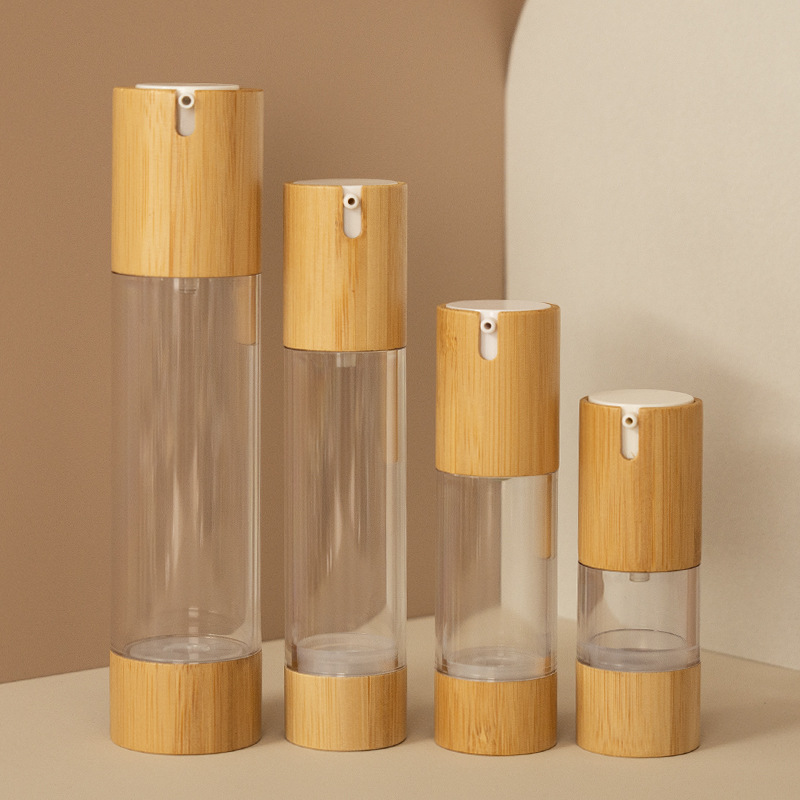
- Bamboo jars offer a renewable look, but most are composites with plastic liners, so they are harder to recycle than solid glass or mono plastic.
- Refillable and reusable jar systems can reduce waste the most, if customers return or refill the packaging.
What a Cosmetic Jar Is Made From
A cosmetic jar is usually a body, a lid, and sometimes an inner liner or seal. Each part can use a different material, and that choice decides how the jar can be recycled. A jar that looks natural may still contain several materials bonded together, which makes separation difficult at the end of its life.
| Material | Main eco point | Typical capacity range | Typical use |
|---|---|---|---|
| Soda lime glass | Infinitely recyclable | 5 to 250 millilitres | Creams, balms, masks |
| PP plastic | Widely recycled when mono material | 5 to 250 millilitres | Creams, scrubs, body products |
| PET plastic | Recyclable with high recovery in many markets | 50 to 250 millilitres | Light lotions and gels |
| Bamboo composite | Renewable look, usually mixed with plastic | 15 to 100 millilitres | Premium creams and balms |
| Bioplastic PLA | Compostable only in industrial systems | 15 to 100 millilitres | Limited range products |
Ask every supplier for the material of the body, the lid, and the liner separately, since a single figure on a brochure can hide a mixed structure. This information is needed for accurate recycling claims.
Glass Cosmetic Jar: Strengths and Limits
A glass cosmetic jar is the most established eco option. Glass is inert, so it does not interact with most formulas, and it can be recycled into new glass with no loss in quality. Its premium feel also supports higher price points for rich creams and balms.
Where glass performs well
Glass suits oil based and high fragrance products, since it does not absorb oils and resists most solvents. It also has a long perceived value, which many customers link with quality and care for the planet.
Where glass falls short
Glass is heavy, so it adds freight emissions, and it breaks more easily during shipping. Thicker walls help but add weight. Brands should choose a light weight glass where possible and protect each jar in a carton with inserts.
Plastic Cosmetic Jar: Mono Material and Recycled Content
A plastic cosmetic jar is light, cost effective, and easy to shape. Its eco credentials depend on the polymer chosen and the way the jar is built. Mono material designs, where the body, lid, and liner are the same plastic, are the easiest to recycle.
| Option | Recycling profile | Recycled content possible | Notes |
|---|---|---|---|
| Mono PP jar | Good in most markets | Often 30 to 100 percent | Good for creams and balms |
| Mono HDPE jar | Good in many markets | Often 30 to 100 percent | Good chemical resistance |
| PET jar | Strong recovery in many markets | Often 25 to 100 percent | Clear and light |
| Multi material jar | Hard to recycle | Varies | Avoid where possible |
Recycled content claims must be backed by certificates and batch records. Recycled content can also change the colour and the odor of the plastic, so the formula and the pigment should be tested with the actual resin.
Bamboo Cosmetic Jar: Natural Look and Practical Limits
A bamboo cosmetic jar appeals to customers who want a warm, natural look. Bamboo grows quickly and can be harvested in a renewable way when sourced responsibly. The material is usually a fibre composite, which means bamboo powder or fibre is mixed with a resin and moulded into a body.
What to check before choosing bamboo
Ask whether the bamboo is a solid piece or a composite, and whether the resin is recyclable or bio based. Check the lid and the inner liner too, since these are often plastic. Bamboo can absorb moisture over time, so the jar needs a liner that keeps water away from the body.
How to present bamboo honestly
Describe the jar by its real structure. A claim such as made from bamboo is accurate only if the body really contains bamboo fibre, and the recycling note should explain the mixed parts clearly, so the customer knows what to do with it.
Comparing Glass, Plastic, and Bamboo Jars
The three main options can be compared on the factors that matter most for a brand. The table below gives a simple view of how each jar performs, using relative ratings rather than exact values, since the figures depend on the supplier and the design.
| Factor | Glass | Plastic (mono) | Bamboo composite |
|---|---|---|---|
| Recyclability | Very high | High | Low to moderate |
| Weight | Heavy | Light | Medium |
| Formula compatibility | Very high | High with testing | Moderate with liner |
| Breakage risk | Higher | Low | Low to moderate |
| Premium feel | High | Moderate | High |
| Relative unit cost | Moderate to high | Low to moderate | Moderate to high |
No single material wins on every factor. A glass jar often suits premium creams, a mono plastic jar suits everyday products at scale, and a bamboo jar suits a natural brand story when its structure is explained honestly.
Choosing the Right Jar for Your Formula
The formula decides which material is safe and effective. Oils, essential oils, alcohol, and acids each interact differently with glass, plastic, and composite materials. Choosing the jar early avoids reformulation and packaging waste later.
- List the formula base, such as water, oil, or alcohol, and note any strong actives or fragrances.
- Match the material to the formula. Glass and mono plastic usually suit a wide range, while bamboo needs a compatible liner.
- Test the candidate jars with the formula at elevated temperature, checking for colour change, odor change, separation, and leakage.
- Confirm the closure material and seal, since these parts often decide the overall recyclability of the package.
- Check the final shelf life against the stability data, and record the test results with the packaging file.
Recycling Labels and Customer Instructions
Good packaging is only half of the eco story. Customers need clear guidance on how to separate and dispose of the jar. Labels should be accurate, simple, and consistent with the rules in the markets where the product is sold.
- Show the material of the body and lid, and state whether the lid should be removed before recycling.
- Use recognised recycling symbols only when the local system accepts that material.
- Explain any mixed parts, such as a bamboo body with a plastic liner, in plain words on the carton or insert.
- Offer a take back or refill option where practical, since reuse can reduce waste more than recycling alone.
Cost, Supply, and Minimum Orders
Eco packaging often costs more per unit in the early stage, but costs can fall as volume grows and as the supply chain matures. The ranges below are general planning figures for stock jars in each material.
| Material | Typical cost per jar | Typical minimum order | Lead time |
|---|---|---|---|
| Glass stock jar | About 0.40 to 1.20 US dollars | A few thousand pieces | 3 to 6 weeks |
| Mono plastic stock jar | About 0.15 to 0.60 US dollars | Several thousand pieces | 2 to 4 weeks |
| Bamboo composite jar | About 0.80 to 2.50 US dollars | Several thousand pieces | 4 to 8 weeks |
These figures are general estimates that vary with region, decoration, and volume. A brand can start with a stock jar and a clear eco message, then move to a custom design once sales show which material and size customers prefer.
Common Mistakes With Eco Friendly Jars
Many eco packaging problems come from claims that go further than the product, or from materials that do not suit the formula. Avoiding these mistakes protects both the brand and the customer.
- Calling a multi material jar recyclable without checking the local system for each part.
- Using bamboo for a moisture heavy product without a liner that keeps water away from the body.
- Choosing a heavy glass jar for a light product, which increases freight emissions without a clear benefit.
- Making recycled content claims without batch certificates or supplier evidence.
- Ignoring the shelf life of the formula, which can lead to waste when the product spoils before use.
Lid and Closure Choices
The lid decides how well a jar protects its formula and how easily the package can be separated at the end of its life. A jar with a well designed body can still be hard to recycle if the closure uses a different polymer, a metal spring, or a foam seal that is glued in place. Brands should treat the closure as a full part of the eco plan rather than an afterthought.
- Mono material lids in the same polymer as the body are the easiest to recycle together.
- Metal lids add a premium feel, but they must be listed as a separate material on the label.
- Liners should be thin and easy to remove, so the body can be recycled without extra steps.
- Avoid glued labels and mixed films that make separation harder for recycling plants.
When a lid and a body use different materials, state that clearly on the carton. Customers who know which parts to separate are more likely to recycle the jar correctly, and the recycling plant receives a cleaner stream of material.
Design and Weight Reduction
Lighter packaging uses less material, lowers freight emissions, and often costs less to make. Design teams can reduce weight by thinning walls where the jar carries no load, by choosing a smaller diameter when the fill volume allows, and by avoiding decoration that adds extra layers. Each gram saved on a jar multiplies across the number of units shipped each year, so small changes can have a large total effect.
Shape matters too. A wide, shallow jar is easy to fill and scoop from, but it can use more material per millilitre than a tall, narrow design. Test each shape with the filling line and with the customer, since a jar that is hard to empty leaves product behind and wastes the formula that was paid for.
Sustainability Claims and Certifications
Customers now read packaging claims closely, and regulators in many markets check them too. An eco claim should be specific, measurable, and backed by evidence. Phrases such as natural, green, or planet friendly are vague and can create risk if they are not supported by data.
Useful evidence includes supplier declarations on recycled content, third party test reports for material composition, and documented recycling guidance for each market. Keep these records with the product file so that any claim can be answered quickly if a customer or an authority asks for proof.
Certification schemes can add credibility, but each scheme covers a different scope. Read the scope carefully, confirm which part of the jar is covered, and avoid implying that a certificate for one component applies to the whole package.
Market Trends for Eco Jars
Demand for eco packaging continues to grow in skin care, body care, and natural cosmetics. Many buyers now compare jars by material and by refill options before they compare by colour or shape. Brands that offer a clear material story, a refill option, or a take back scheme often build stronger loyalty than brands that only change the label.
Trends also move quickly. Some markets are tightening rules on single use plastic, while others are expanding deposit and refill schemes. A jar that meets today's rules may need a change within a few years, so a flexible design that can switch material or size is a useful safeguard.
Pre Launch Tests for Eco Jars
Before any eco jar goes into production, run a short testing plan. The tests protect the product, the customer, and the reputation of the brand.
| Test | Purpose | Pass signal |
|---|---|---|
| Compatibility | Checks chemical contact between the formula and the jar material | No colour change, no swelling, no odor change |
| Drop test | Checks breakage and cracking during transport | The jar survives a drop from the set height without damage |
| Seal and leak test | Checks the closure and liner performance | No leakage after temperature cycling |
| Stability test | Checks the formula and packaging over the planned shelf life | The product stays stable at elevated temperature for the planned time |
Record every result with the sample number and the date, and repeat the tests after any change in material, supplier, or formula. A single change can alter results, so a clear record keeps the process reliable and makes future decisions faster.
Supplier Selection and Partnership
Choosing a supplier is as important as choosing the material. A good supplier can explain the resin grade, the recycled content, the wall thickness, and the testing history of each jar. They should also be able to provide samples quickly, support small test runs, and share updates when raw material prices or regulations change.
Ask for a clear quality agreement that covers dimensions, colour matching, tolerance levels, packaging for transport, and the procedure for handling defects. Visit the factory when possible, or request a recent audit report, to confirm that the production line and the quality checks match the promises made during the sales process.
- Request sample jars in each material you are considering, filled with your own formula.
- Compare the total landed cost, including freight, duties, and the expected cost of breakage.
- Confirm the lead time for repeat orders, since a stock shortage can force an unplanned formula change.
Brand Story and Customer Education
The jar is the first physical contact a customer has with a product, so its story matters. Share the material choice in simple language, explain why it was selected, and be honest about its limits. A customer who understands the reason behind a glass, plastic, or bamboo jar is more likely to trust the brand and follow the recycling advice.
Keep the message short on the front of the pack and fuller on the website or in an insert. A short line such as recyclable glass body with metal lid, or mono plastic jar with recycled content, gives a clear signal, while a dedicated page can explain the full details for customers who want to read more.
Consistency across a product range also helps. When every jar in a line uses the same material family, the recycling message stays simple, and production costs can fall through shared tooling and bulk buying.
Frequently Asked Questions
What are some eco friendly cosmetic jars available?
The main options are glass jars, mono material plastic jars with or without recycled content, and bamboo composite jars. Refillable and reusable systems can also reduce waste when customers return or refill the packaging.
Which is the most eco friendly Cosmetic Jar?
Glass is the most recyclable material, but the best choice depends on the product, the weight, and the recycling system in each market. A light mono plastic jar with recycled content can have a lower footprint in some cases.
Is a Plastic Cosmetic Jar always bad for the environment?
No. A mono material plastic jar is light and widely recycled. Multi material designs are harder to recycle, so the structure matters more than the plastic itself.
Is a Bamboo Cosmetic Jar fully recyclable?
Usually not. Most bamboo jars are composites with plastic parts, so they are harder to recycle than solid glass or mono plastic. The recycling note should explain the mixed structure clearly.
Why does a Glass Cosmetic Jar cost more?
Glass is heavier and more costly to ship, and it needs careful handling and packing. The material is also more expensive than standard plastic in many volumes.
Can I use bamboo for a moisture heavy cream?
Only with a suitable liner that keeps water away from the body. Test the jar with the formula before launch, since moisture can change the appearance and the strength of the bamboo over time.
What does recycled content mean on a plastic jar?
It means part of the plastic in the jar was made from recovered material. Brands should provide supplier certificates or batch records to support any claim.
How should customers recycle their jars?
The label should show the materials of the body and lid, and whether the lid must be removed. Instructions should follow the local recycling rules of each market where the product is sold.
Are refillable jars a good option?
Yes, when customers are willing to return or refill them. Refill systems can reduce waste the most, but they need clear hygiene rules and a simple process that customers can follow.
What information should I send a jar supplier?
Send the formula base, filling volume, desired capacity, closure type, eco claims you plan to make, expected annual volume, and the markets where the product will be sold. Complete information helps the supplier recommend the right material and provide accurate samples.
Key Takeaways
Choose the material for the formula, the recycling system, and the honest story
A Cosmetic Jar can be made more eco friendly through its material, its structure, and its end of life plan. A Glass Cosmetic Jar offers the strongest recycling record, a Plastic Cosmetic Jar in mono material is light and widely recycled, and a Bamboo Cosmetic Jar offers a natural look when its composite structure is explained clearly.
Test every combination of jar and formula, check every recycling claim against evidence, and give customers simple instructions. These steps protect the product, the brand, and the planet at the same time.